
Pre-order
Overall ranking

Overall rank#1of 163AvailableAll: #6 / 836
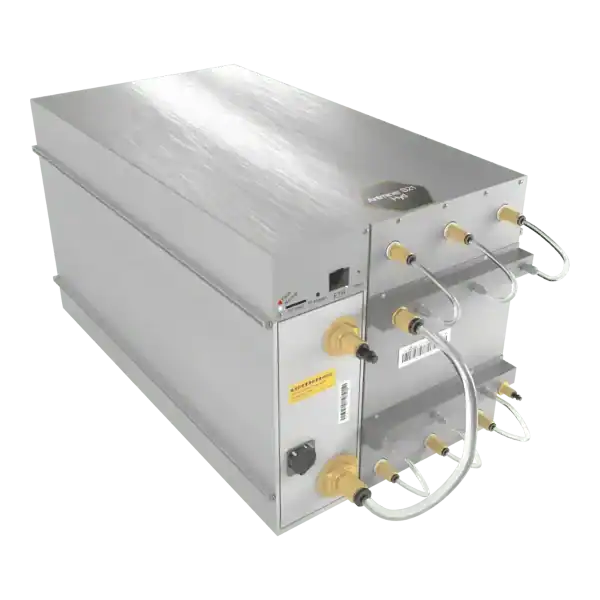

Pre-OrderFree Shipping
Hashrate
395TH
Efficiency
15W/TH
Power
5925W
Earns/kWh
£0.061
Compare complete Bitcoin mining hosting bills with worked monthly costs, setup charges and deposit examples. Prepare an exact-model, site-specific quote.

Bitcoin mining hosting pricing is often advertised as one electricity rate, but the invoice may include demand, cooling, setup, network, repair, tax and curtailment adjustments. A low headline can become expensive when the contract passes every variable cost to the customer.
All-in and pass-through are billing structures, not quality labels. Either can be fair when definitions, meters, evidence and risk allocation are clear. Compare the same delivered service over the same period.
Estimated reading time: 12 minutes
Bitcoin mining hosting pricing explains who pays each site cost and how it is measured. An all-in bill may be simple but include a risk margin. A pass-through bill may be transparent but expose the customer to changing power and service charges.
Host A quotes one rate including normal cooling and support. Host B quotes cheaper energy, then adds demand, transformer loss and technician fees. Host B is not necessarily worse, but the two headline numbers cannot be compared until every included item is placed in one table.
Illustrative assumptions, prepared 28 October 2026: one 3500W load, running for 24 hours a day over 30 days, uses 2520kWh. Both offers cover the same machine, period and service scope. The figures below are invented teaching inputs, not TMS tariffs, a competitor quote, current availability or a mining-income forecast.
| Monthly cost line | Example A: bundled rate | Example B: energy plus fees |
|---|---|---|
| Advertised rate | £0.065/kWh (6.5p) | £0.045/kWh (4.5p) |
| 2520kWh × stated rate | £163.80 | £113.40 |
| Cooling allocation | Included in this example | £35.00 |
| Management / network fee | Included in this example | £30.00 |
| Recurring monthly subtotal | £163.80 | £178.40 |
| Equivalent subtotal per miner-input kWh | 6.50p/kWh | 7.08p/kWh, rounded |
Example B’s energy rate is lower, but its recurring subtotal is £14.60 higher for this period. Divide the complete recurring subtotal by the same energy boundary to compare equivalent costs. The effective figure is a comparison result, not a new contractual unit rate.
These subtotals exclude hardware purchase, setup, deposits, shipping, repairs, finance, taxes and currency conversion. No demand charge or loss multiplier is assumed. Those are omissions from this teaching example, not evidence that a real quote has no such charges. Confirm every inclusion, tax treatment and allocation formula in the actual written quote. Do not add cooling or losses twice when already bundled into a billed energy figure.
Reduced-runtime check: at half the active hours, the load uses 1260kWh. If Example A still bills only that energy and Example B still charges the full £65 in fixed fees, the subtotals become £81.90 and £121.70. Real curtailment, minimum-billing and credit rules may differ; use the contract’s formula rather than assuming the whole bill falls with uptime. Lower runtime also changes mining output.
Now assume both examples also require a £120 non-refundable setup charge and a £200 deposit refundable only under the agreed terms. Neither is included in the monthly table above.
| Cash item | Example A | Example B |
|---|---|---|
| Recurring subtotal | £163.80 | £178.40 |
| One-off setup | £120.00 | £120.00 |
| Conditionally refundable deposit | £200.00 | £200.00 |
| First-month cash required | £483.80 | £498.40 |
Keep a refundable deposit in the cash schedule and check release, deductions and repayment conditions. Do not automatically treat it as electricity expense or assume recovery. For a simple 12-month planning comparison, allocating the £120 setup cost adds £10 per month to each example; it does not change the actual payment date or establish accounting or tax treatment.
Use the Bitcoin mining calculator for hashrate, electricity and pool-fee assumptions. It is not a substitute for this complete hosting bill: reconcile any separately billed services, deposits and one-off costs alongside its output.
| All-in Rate: | One stated charge covering a defined bundle. |
|---|---|
| Pass-through: | An underlying cost charged to the customer under contract rules. |
| Demand Charge: | A charge linked to peak power rather than energy alone. |
| Curtailment: | Planned reduction or stopping of load. |
| Power Loss: | Energy used between the billing point and miner input. |
An all-in contract normally combines energy and selected site services into one unit rate. The bundle must say whether it covers cooling, normal support, network, security, pool management and taxes. All-in does not mean every future event is free.
A pass-through contract starts with measured or supplier-billed costs and adds management or infrastructure charges. It can provide evidence but transfers more price variation to the customer.
Find the meter that creates the bill. A utility meter may include transformers, pumps and buildings; a branch meter may measure one rack; firmware estimates are not revenue-grade evidence. The boundary decides who pays losses and cooling.
Record meter serial, multiplier, time zone and interval. Agree what happens when data is missing or a meter is replaced.
Energy charges bill kilowatt-hours. Demand or capacity charges can depend on the highest interval in a month, reserved capacity or network rules. One short peak may therefore affect a whole invoice.
Ask whether the host spreads a site peak across customers and by which formula. A blended pence-per-kWh number should show the assumed load factor.
Air, hydro and immersion sites have different pumps, fans, towers, fluid and maintenance. A host may include these in the energy rate, charge a fixed rack fee or pass actual costs through.
Specify service levels, temperature limits and redundancy. Paying for cooling is not proof that the site operated within the miner manual.
One-off charges can include receiving, inspection, cabling, rack position, firmware, customs handling and deposits. Exit can involve drain-down, packaging, storage and shipping.
Separate non-refundable setup and exit costs from deposits or prepayments. Spread relevant one-off costs over a stated term only for a planning comparison; keep their actual due dates in the cash schedule. Check whether deposits are refundable, what deductions are allowed and how release works. The first-month example shows why a deposit and an operating charge should be recorded separately.
Define included diagnosis, labour rate, parts approval, warranty handling and who may change firmware. Require evidence before a repair is billed. Remote-hands minimums can make small tasks expensive.
Set approval thresholds and photograph serials and condition. The host should not replace parts or move units between customers without traceable authority.
A host may exclude utility outages, planned work, grid curtailment or customer-caused faults from uptime. Read the formula and available credits; a percentage without exclusions says little.
Compare powered hours with accepted pool work. A live ping does not prove the miner hashed effectively.
Overseas contracts may invoice in dollars while revenue and accounts use sterling. Exchange spreads, bank fees and tax treatment change the real cost. UK VAT depends on the facts and supplier arrangements.
Record invoice currency, conversion source and date. Obtain professional advice for tax and cross-border contracts rather than copying another operator's treatment.
Use the same exact machines, operating period, runtime and service boundary for each quote. Recurring cost = billed energy × the applicable rate + separate recurring charges − applicable credits. Apply the actual contract’s energy meter, allocation formula, minimums and taxes; the miner’s estimated input energy may not be the billed energy.
Keep setup, exit, hardware purchase and deposits in separate rows. Define a term when allocating non-refundable one-off costs for planning. Compare productive hashrate and downtime over the same window, without treating hashrate as energy. The worked monthly bill demonstrates the subtotal and effective-cost calculation.
Run higher-price and lower-runtime cases, retaining any fixed or minimum charges the contract still applies. Do not assume a pass-through charge stays at today’s value or that an all-in renewal keeps the same rate. Read the UK home-versus-hosting cost example when comparing operating locations.
Use the Bitcoin and ASIC hosting comparison, eligibility and quote route to discuss a specific deployment. TMS hosting eligibility remains limited to new miners purchased from The Mining Shop with an active warranty. Confirm suitability and capacity before buying; this guide does not offer bring-your-own-miner hosting.
Ask for the complete written schedule and terms before committing. Use the hosting due-diligence guide for operator and site evidence, and the hosting contract checklist for the wider review. Do not send wallet keys, recovery phrases or account passwords in a quote request.
Match machine serials, meter intervals, tariff period, curtailment log, tickets and pool records. Investigate gaps before paying. Keep the contract version that applied to the billed period.
A good host can reproduce the calculation. If the invoice cannot be checked from agreed evidence, the pricing model is not transparent enough for a mining business.
Where the provider’s minimum order and eligibility allow, test the quoted billing process on an initial deployment before expanding a fleet. Keep the same pool account, firmware policy and reporting window so the host's power and uptime evidence can be compared with accepted work. Record every manual intervention and excluded outage.
Use the pilot invoice to rebuild the quoted calculation from source records. Differences should be explained in writing before more machines arrive. A successful short test does not replace long-term contract rights, but it exposes unclear definitions while the exit remains manageable.
Hosting tariffs, taxes and service bundles change and must be checked in the signed current contract.
This guide does not quote a universal UK hosting rate because sites and billing boundaries differ.
Electrical safety and custody controls matter separately from price.
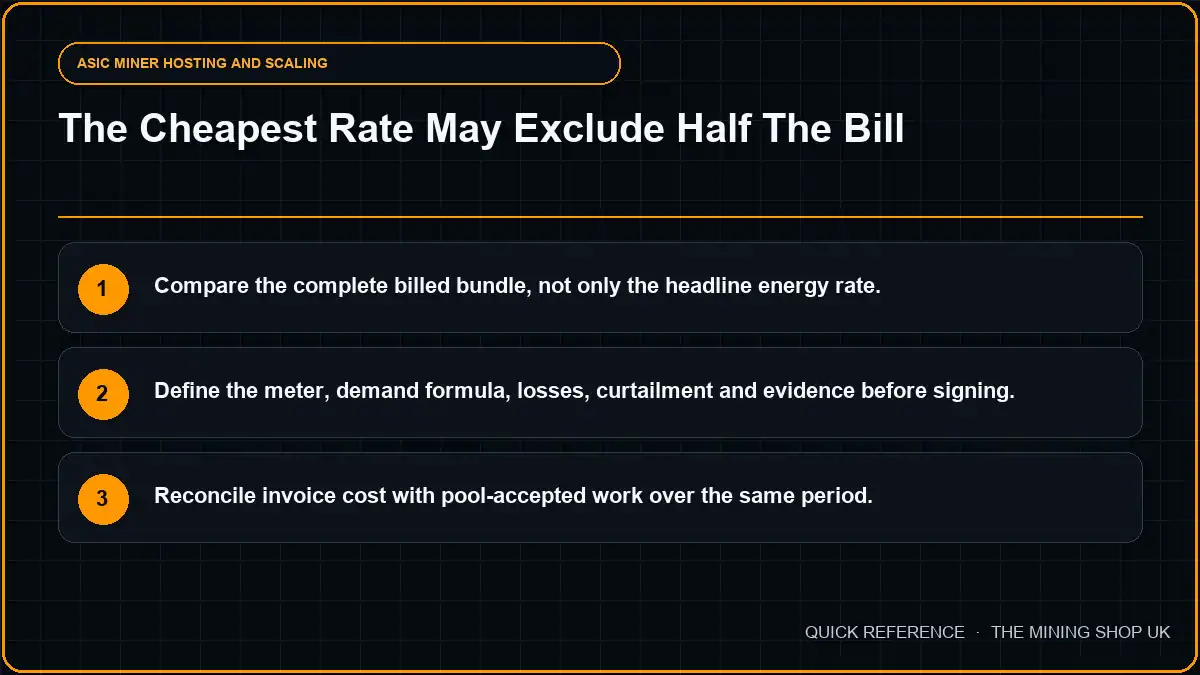
| Cost Line | All-in Question | Pass-through Question |
|---|---|---|
| Electricity | What load and losses are included? | Which supplier invoice and meter? |
| Demand | Included or capped? | How is the peak allocated? |
| Cooling | Which equipment and limits? | Which costs are passed through? |
| Repairs | Normal labour included? | Rate and approval threshold? |
| Exit | Packaging and release terms? | Actual cost plus what margin? |
A table is a starting point, not a promise. Verify current official sources and apply each detail to the decision you are actually making.
No. Compare the complete recurring bill for the same service, machine, runtime and energy boundary. In the illustrative 3500W example, a 6.5p/kWh bundle totals £163.80 while 4.5p/kWh energy plus £65 in fees totals £178.40. These are teaching inputs, not actual hosting offers.
At a constant 3500W for 24 hours a day over 30 days, input energy is 3500 ÷ 1000 × 24 × 30 = 2520kWh. Actual draw, runtime and the contract’s billing boundary can differ. Add auxiliary loads or allocations only where they are outside the figure already used.
For a stated comparison boundary, divide the complete recurring subtotal by the energy for that same period and boundary. In the example, £178.40 ÷ 2520kWh is about 7.08p/kWh. This equivalent comparison figure is not the provider’s contractual energy rate.
Keep it separate from recurring electricity cost. It is cash required upfront, with refund and deduction conditions to check. Do not assume it will be repaid or treat a non-refundable setup charge as the same kind of item. Use the first-month cash schedule alongside operating costs.
Not necessarily. Fixed fees, reserved capacity, minimum billing, curtailment and credits follow the contract. The reduced-runtime example keeps £65 in fees while energy falls; an actual agreement can apply different rules. Check productive work as well as billed hours.
No. Use the Bitcoin mining calculator for its stated mining and electricity assumptions, then reconcile separately billed services, setup, deposits and other exclusions against the written hosting schedule. Avoid adding an item twice if already bundled.
No. The rates and fees are illustrative and do not establish availability or final commercial terms. Use the hosting comparison and quote route for an exact model and site. TMS eligibility is for new miners purchased from The Mining Shop with an active warranty.
Prepare the exact model and variant, quantity, cooling type, preferred location and timing. Request the full billing boundary, inclusions, taxes, currency, deposits, uptime, curtailment, repairs and exit terms in writing. Review the operator and site evidence before committing.
Bitcoin mining hosting pricing becomes comparable only after every inclusion, pass-through and measurement boundary is listed. A simple all-in bill can be fair and a detailed pass-through bill can be fair. The test is whether cost and performance can be reproduced from the contract, meters and accepted work.
References checked 28 October 2026. Ofgem’s guidance concerns business energy contracts; a hosting service has its own contractual scope. HMRC’s notice explains place-of-supply rules, not a universal VAT answer for every hosting arrangement. Get advice for the actual transaction. The worked figures above are independent arithmetic on explicitly invented inputs.

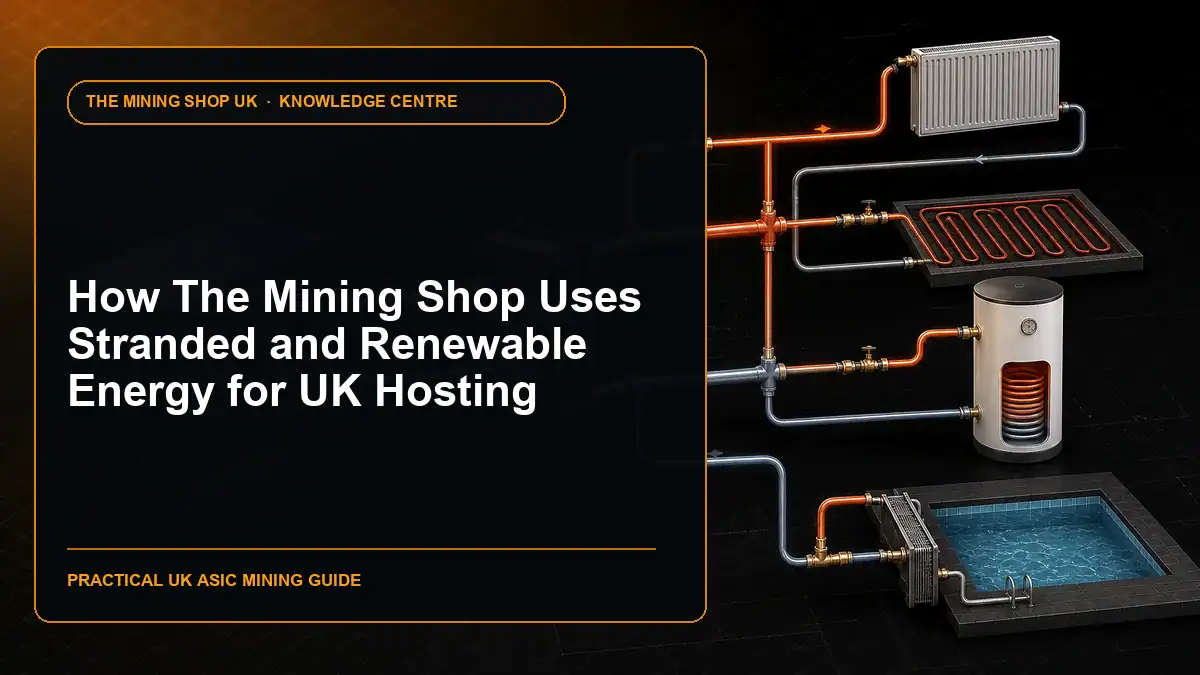
Renewable energy Bitcoin mining UK: UK guidance on contracts, cost, ownership, risk, records and practical checks to complete before committing equipment.

Use this Bitcoin mining handbook after commissioning to manage daily checks, maintenance, pools, security, cost reviews, records, incidents and end-of-life.
Cross border hashpower: Record where the hardware is located, who owns it, who operates it, who buys electricity, which entity contracts with the pool.
Join the ASIC Mining Discussion
Members can read and join the discussion
Log in to read comments from other miners. Create a free account if you would like to ask a question or share your experience.
Membership helps us protect the discussion from spam and keep answers useful.