

Sealminer A4 Ultra Hydro
Bitcoin & Bitcoin Cash ASIC Miner
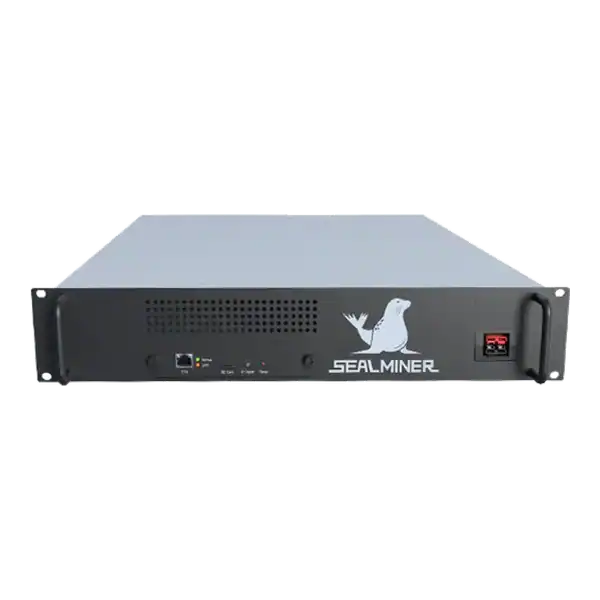

886TH
HASHRATE
9.45W/TH
EFFICIENCY
8373W
POWER
£916.50
EST. MONTHLY
NO PAYBACK
EST. ROI
Use this Bitcoin mining handbook after commissioning to manage daily checks, maintenance, pools, security, cost reviews, records, incidents and end-of-life.

This Bitcoin mining handbook is for the period after an ASIC has passed commissioning. It sets an operating rhythm for daily monitoring, weekly reconciliation, planned maintenance, firmware control, pool and payout security, financial review, incident response and end-of-life decisions. It deliberately does not repeat a first-installation guide or promise profitability. Its purpose is to keep a working fleet measurable and accountable.
A Bitcoin mining handbook earns its place by creating a repeatable operating rhythm. Register the fleet, reconcile accepted work and energy, maintain through controlled procedures and protect every configuration and payout change.
A miner wants to understand Bitcoin mining handbook. Then reassess economic usefulness rather than allowing a once-profitable machine to run indefinitely without evidence. If a machine moves site, retest circuit, cooling, network and accepted baseline.
Record every serial, model, variant, site, rack or position, PSU, controller, firmware, pool worker, warranty, purchase date and ownership. Link parts and repair history to the same asset.
Store payout destinations and credentials in controlled systems, not the general register. The register can identify the approved account without exposing secrets.
Add rated and measured stock performance, normal temperature range and safe site limit. These values make future alerts specific to the machine rather than generic.
Keep a change and movement history. If a machine moves site, retest circuit, cooling, network and accepted baseline.

Review powered and accepted worker count, pool accepted hashrate, rejects, temperatures, fan or pump state, restarts and alerts. Compare with the same time window and known curtailment.
Investigate a missing worker before assuming it is a pool display delay. Check site power, controller, network and pool status through independent evidence.
Look for trends, not just red thresholds. Rising fan speed at the same inlet temperature can indicate restriction. Slowly falling accepted work can precede a full board fault.
Record actions and owners. A warning acknowledged by several people but assigned to nobody remains unresolved.
| Measure | Source | Decision |
|---|---|---|
| Accepted work | Pool worker export | Output and anomaly |
| Energy | Site or circuit meter | Efficiency and cash cost |
| Rejects | Pool categories | Network or tuning fault |
| Availability | Power and accepted records | Uptime and service issue |
| Credit | Pool statement and wallet | Revenue reconciliation |
| Maintenance | Work order and parts | Reserve and repeat fault |
Calculate accepted efficiency over matched periods. Divide measured watts by accepted terahashes for SHA-256, or use the appropriate algorithm unit. Do not mix a local peak with a monthly meter.
Reconcile pool credit after the stated method and maturity. Keep bitcoin production separate from sterling price movement so technical and treasury issues remain visible.
Follow manufacturer and site procedures for cleaning, filters, fans, pumps, heat exchangers, connections and firmware. Isolate safely and use competent people for electrical work.
Do not use compressed-air methods that drive contamination deeper, overspeed fans or create unsafe dust exposure. The suitable method depends on equipment and environment.
Keep approved spare parts and record serial or board swaps. A repaired mixed unit may require different firmware or acceptance evidence.
After maintenance, run a stock acceptance check and compare with the pre-work baseline. Close the work order only when pool and site evidence agree.
Maintain an approved image list by exact model and controller. Record source, checksum where supplied, release notes, licence, developer fee and recovery method.
Test one non-critical miner before staged deployment. Do not combine a firmware release with a pool and electrical change because rollback evidence becomes ambiguous.
Remove default credentials, restrict management networks and use controlled remote access. Monitoring staff do not automatically need pool, wallet or firmware authority.
Review leavers, recovery codes, cloud accounts and outbound destinations. A secure machine can still be compromised through its email or management platform.
Update revenue, difficulty, tariff, pool fee, cooling, repair and uptime assumptions at a documented interval. Use a downside case and current accepted performance.
Separate avoidable cash margin from capital recovery. A paid-for miner can be rational to run while it covers avoidable cost. But that does not prove the original investment succeeded.
Compare major repair with reasonable used value and expected remaining contribution. Do not fit a costly board because the machine was once expensive.
Set keep, tune, repair, relocate, curtail and retire categories with review dates. Include freight, insurance, data removal, resale and recycling in exit decisions.
Confirm asset register, access, payouts, firmware, alarms, maintenance and incident actions are current. A dashboard without an accountable owner is not a control system.
Review concentration in one pool, one site, one energy contract and one firmware provider.
Use accepted efficiency and complete cost under a cautious case. Compare curtailment and upgrade choices with real contracts and exit value.
Retire equipment that cannot operate safely or has no justified repair and revenue route.
A Bitcoin mining handbook earns its place by creating a repeatable operating rhythm. Register the fleet, reconcile accepted work and energy, maintain through controlled procedures and protect every configuration and payout change.
Record every serial, model, variant, site, rack or position, PSU, controller, firmware, pool worker, warranty, purchase date and ownership.
Review powered and accepted worker count, pool accepted hashrate, rejects, temperatures, fan or pump state, restarts and alerts.
Calculate accepted efficiency over matched periods. Divide measured watts by accepted terahashes for SHA-256, or use the appropriate algorithm unit.
A Bitcoin mining handbook earns its place by creating a repeatable operating rhythm. Register the fleet, reconcile accepted work and energy, maintain through controlled procedures and protect every configuration and payout change. Then reassess economic usefulness rather than allowing a once-profitable machine to run indefinitely without evidence.
Use The Mining Shop UK profitability, safety, hosting and repair resources during the fleet’s scheduled monthly review.
Use pool accepted work, metered energy, temperatures, rejects and uptime as the daily operating record. Local hashrate alone is incomplete. Separate monitoring, configuration and payout authority. Plan maintenance and firmware as controlled changes with recovery paths.


Renewable energy Bitcoin mining UK: UK guidance on contracts, cost, ownership, risk, records and practical checks to complete before committing equipment.

Cross border hashpower: Record where the hardware is located, who owns it, who operates it, who buys electricity, which entity contracts with the pool.

ASIC mining in other countries: Some countries permit mining, some license it, some restrict it by region or energy source and some prohibit it.
Join the ASIC Mining Discussion
Members can read and join the discussion
Log in to read comments from other miners. Create a free account if you would like to ask a question or share your experience.
Membership helps us protect the discussion from spam and keep answers useful.