

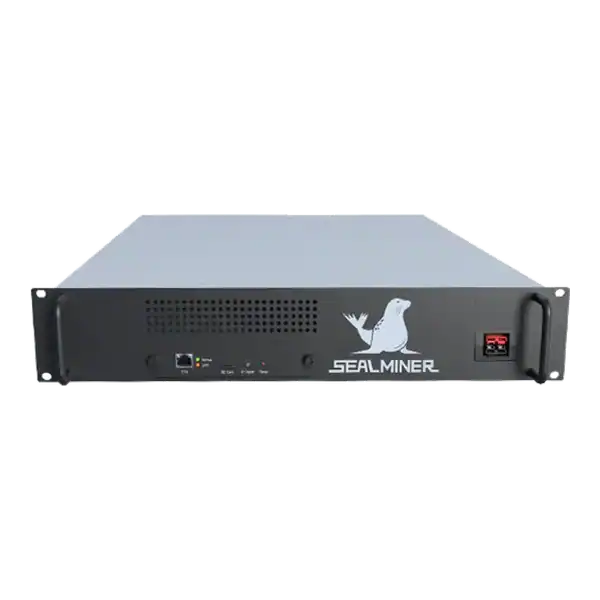
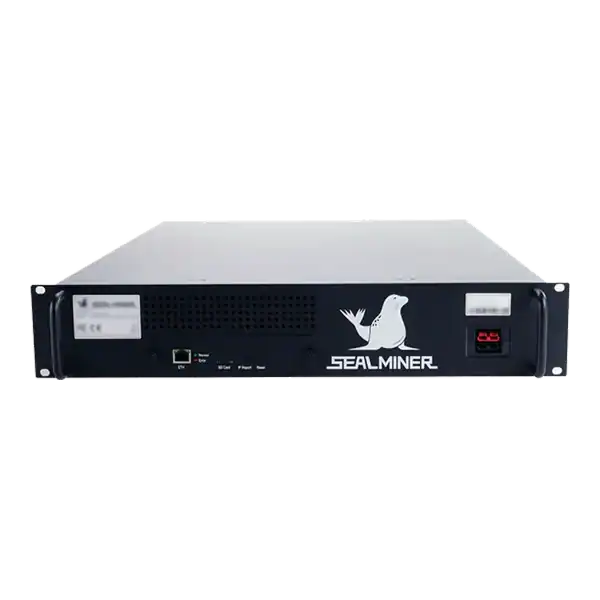
Sealminer DL1 Hydro
Litecoin & Dogecoin ASIC Miner
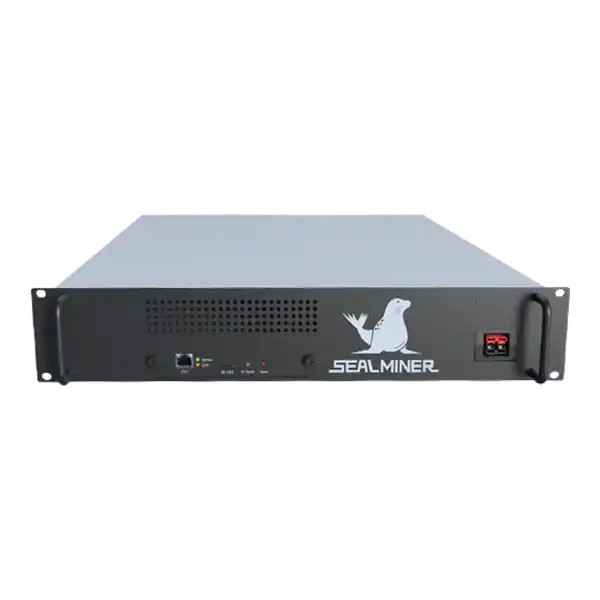

52.5GH
HASHRATE
149W/GH
EFFICIENCY
7823W
POWER
£774.73
EST. MONTHLY
NO PAYBACK
EST. ROI
Bitcoin energy estimate boundaries: read Bitcoin energy estimates by checking power versus energy, annualisation, ASIC efficiency, electricity assumptions.

Bitcoin energy estimate boundaries depends on a clear operating boundary and evidence that can be checked before money or equipment is committed. A Bitcoin energy estimate is a model, not a meter attached to the global network. Cambridge explains that decentralisation prevents exact observation.
So its methodology publishes lower, upper and best estimate cases using network hashrate, an assumed hardware mix, electricity price and facility overhead. Claims can change meaning when they move between instantaneous power in gigawatts, annualised energy in terawatt hours, electricity use and greenhouse gas emissions.
This guide concentrates on system boundaries and reproducibility, keeping it separate from the site's broader article about checking environmental marketing claims.
Bitcoin energy estimate boundaries: Good energy reporting begins with boundaries. Power, annualised energy, completed energy use and emissions answer different questions. Preserve the source method and uncertainty, use direct evidence for a specific site, and avoid turning a global estimate into a claim about local generation, carbon or heat recovery.
A site operator is checking Bitcoin energy estimate boundaries. Write the intended outcome before looking at a headline hashrate. The correct comparison changes when the available circuit, sound limit, heat demand, pool route or expected ownership period changes.
Electrical power describes a rate of demand at a point in time. Energy describes use across time. An annualised figure extends a current or smoothed rate across a year and is not the same as a completed calendar year measurement.
Cambridge uses a hybrid top down model because the exact operating fleet and its electricity demand are not directly visible. Its bounds and best estimate depend on profitability and hardware efficiency assumptions.
Greenhouse gas estimation adds another layer, including geographic distribution, electricity mix and life cycle emission factors. Electricity consumption alone does not state the emissions of a specific facility.
Write the intended outcome before looking at a headline hashrate. A learning device, a useful room heater, a quiet home miner and a commercially productive machine are different purchases. The correct comparison changes when the available circuit, sound limit, heat demand, pool route or expected ownership period changes.
Use a dated decision sheet and keep manufacturer claims separate from measured results. Record the exact model, variant, power supply, firmware and operating mode. Similar product names do not make accessories, voltage, firmware or thermal limits interchangeable.

Capture the exact source page, methodology version, observation date and whether the number is historical, live, smoothed or annualised. A screenshot without those fields is weak evidence.
Check whether facility overhead such as cooling is represented through power usage effectiveness and whether the estimate concerns miners alone or the complete site.
For a local claim, prefer site invoices, interval meters, generation evidence and contractual documents. A worldwide model cannot verify a particular operator’s renewable supply.
Prefer the manufacturer specification, manual and firmware portal for identity and limits. But treat them as the starting point rather than a promise of site performance. Keep a copy of the pages and files used because support pages, downloads and product revisions can change.
Ask the seller for a serial photograph, condition statement, included accessories and a recent operating record for the actual unit. A generic product image cannot prove board revision, power supply condition, repair history or whether the miner reaches stable accepted work.
Create an evidence register for public environmental statements. Assign an owner, review date, unit, scope, source and approval route to each claim.
Keep gross grid imports, on site generation, exported electricity, curtailment, auxiliary loads and recovered heat as separate measurements. Combining them can conceal the actual boundary.
Use careful language for renewable, stranded, lower carbon and waste heat claims. State the period and evidence rather than implying that every hour or every facility has the same attributes.
A competent person should confirm the electrical route for the real continuous load. Check voltage, protective device, earthing, cable, connector, socket, isolation and ventilation together. Do not assume that a plug physically fitting a socket proves that the circuit is suitable for sustained operation.
Place the miner on a trusted network segment with no unnecessary inbound exposure. Change supplied credentials, use a documented wallet and pool account, set approved backup endpoints and confirm that every endpoint belongs to the intended operator before power is applied.
Recalculate any comparison in consistent units and time periods. Do not compare annualised Bitcoin energy with one month’s national electricity use without stating the conversion and limitations.
Test the sensitivity to hardware efficiency, electricity price and facility overhead. A conclusion that changes when one reasonable assumption moves should be reported as a range.
Separate attribution from consequence. Even a sound estimate of network demand does not by itself prove what generation would otherwise have done or the emissions caused by one operator.
Measure power at the wall and compare local hashrate with accepted pool work over a representative period. Local display figures can look healthy while stale shares, invalid work, reconnects or a wrong payout address reduce useful output.
Calculate revenue and cost over a range, not one favourable day. Include electricity, pool fees, auxiliary cooling, maintenance, downtime, conversion costs and hardware value. For a heat-use case, credit only heat that replaces a cost the owner would otherwise incur.
| Risk | Evidence to get | Control |
|---|---|---|
| Power confused with energy | Units and time interval | Convert consistently |
| Annualised snapshot treated as actual year | Method and observation date | Label clearly |
| Global estimate used for one site | Site meter and supply evidence | Keep boundaries separate |
| Electricity equated with emissions | Generation mix and emission method | Report both carefully |
| Useful heat double counted | Metered displaced load | Use a conservative credit |
Rank each risk by consequence and by the practical ability to detect it before purchase. A low-priced machine with uncertain firmware, exhausted cooling or a weak algorithm market can require more working capital and attention than a newer unit with a higher invoice price.
Set written stop conditions. Examples include an unsafe supply, unavailable official firmware, rejected work above the approved limit, repeated thermal shutdown, no lawful payout route or an energy break-even price below the contracted rate. A stop condition prevents sunk cost from becoming the reason to continue.
Take one published figure and write its unit, period, model version, lower and upper bounds and key assumptions. Then identify what the figure does not measure.
Repeat the exercise with the business’s own site evidence. A responsible public statement should show which facts are metered. This are contractual and which are modelled.
Begin with one unit or the smallest sensible batch. Photograph labels and connections, export the original configuration, note ambient conditions and record the start time. Watch the kernel or system log, board detection, fan behaviour, temperatures, local hashrate, pool connection and accepted work.
Do not declare acceptance from a short dashboard snapshot. Run long enough to expose heat soak, intermittent network faults and pool variance. Retain the test record with the invoice, serial number, firmware file and any seller correspondence so a later repair or warranty question has a clear baseline.
The checklist is deliberately evidence based. Marketing language such as home friendly, efficient or profitable has no fixed meaning without a measured operating mode and a real site boundary. The record should make it possible for another competent person to reproduce the decision.
Bitcoin energy estimate boundaries: Good energy reporting begins with boundaries. Power, annualised energy, completed energy use and emissions answer different questions.
Electrical power describes a rate of demand at a point in time.
Capture the exact source page, methodology version, observation date and whether the number is historical, live, smoothed or annualised.
Create an evidence register for public environmental statements. Assign an owner, review date, unit, scope, source and approval route to each claim.
Good energy reporting begins with boundaries. Power, annualised energy, completed energy use and emissions answer different questions. Preserve the source method and uncertainty, use direct evidence for a specific site, and avoid turning a global estimate into a claim about local generation, carbon or heat recovery.
Use The Mining Shop UK tools and support pages to compare the exact hardware against your real electricity, installation, pool and operating constraints before ordering or commissioning it.
Ask whether a figure represents power, energy, annualised energy or greenhouse gas emissions before comparing it. Record the model version, date, hardware assumption, electricity price and facility boundary instead of quoting one live number without context.


Terahash describes Kläger Group’s Hartha energy park with a 1.6 MWp solar array, a 350 kWh battery and a mining container able to absorb up to 500 kW. The container is intended to buy surplus left by industrial production, with storage and grid export also available.
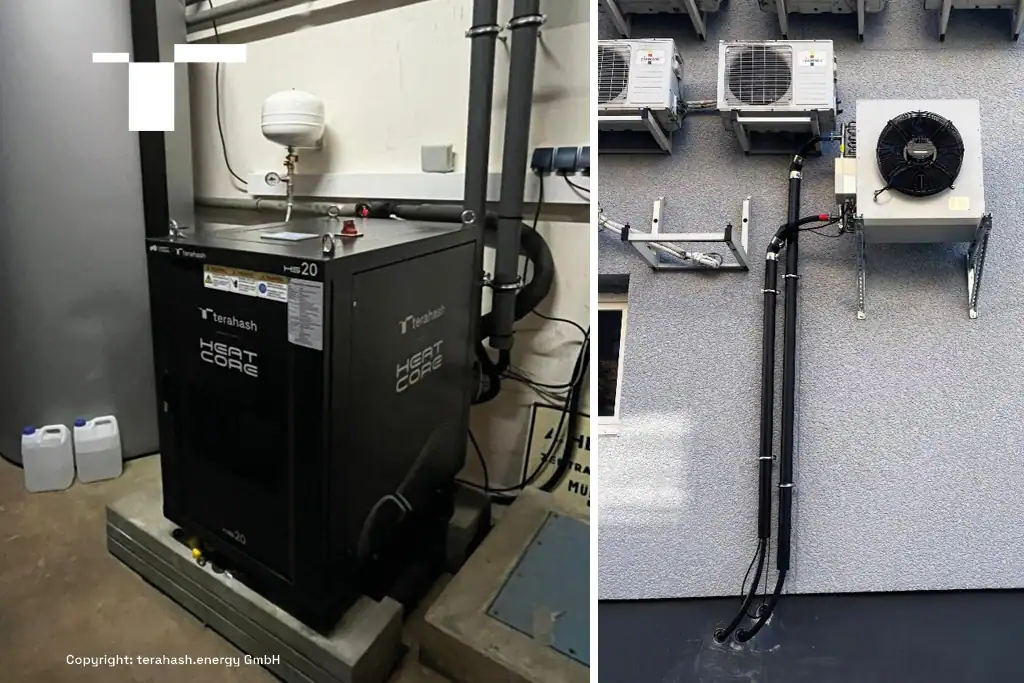
Terahash describes a commissioned system at Nebona’s spice factory: a Heatcore HS20 with two Whatsminer M63 units uses surplus rooftop solar power and supplies hot water to a buffer tank. The existing heating system remains available.

SunBit reports fitting a Bitcoin Boiler alongside the oil boiler in a 200 m² Kotka home. An outdoor unit rejects unwanted summer heat and allows additional use of solar surplus.
Join the ASIC Mining Discussion
Members can read and join the discussion
Log in to read comments from other miners. Create a free account if you would like to ask a question or share your experience.
Membership helps us protect the discussion from spam and keep answers useful.