
Bitcoin Core 29.1 Release: Mempool Policy and Logging Guide
Bitcoin Core 29.1 guide covering legacy sigop policy, lower relay fee defaults, logging quotas, dumptxoutset type, 32-bit caps and safe rollout.
Read article
Within Blog Posts & Articles
Bitcoin Core 29.1 guide covering legacy sigop policy, lower relay fee defaults, logging quotas, dumptxoutset type, 32-bit caps and safe rollout.
Assess Bitcoin mining pool reliability through ownership, endpoints, payout method, fee disclosure, accepted shares, incidents, security and exit testing.
Create a hybrid pool and solo mining policy with allocation limits, variance budget, accounting, failover, custody and review triggers for an ASIC fleet.
Compare Bitcoin mining pool payouts by reward method, fees, transaction-fee treatment and variance to understand what your hashrate may retain.
Complete an IceRiver AE0 setup with the correct 19 to 20 V supply, Ethernet, private interface, Aleo pool, accepted-proof checks and official firmware controls.
Understand Quai Network mining, KawPoW blocks, SHA-256 and Scrypt workshares, pool checks and operating risks for UK miners.
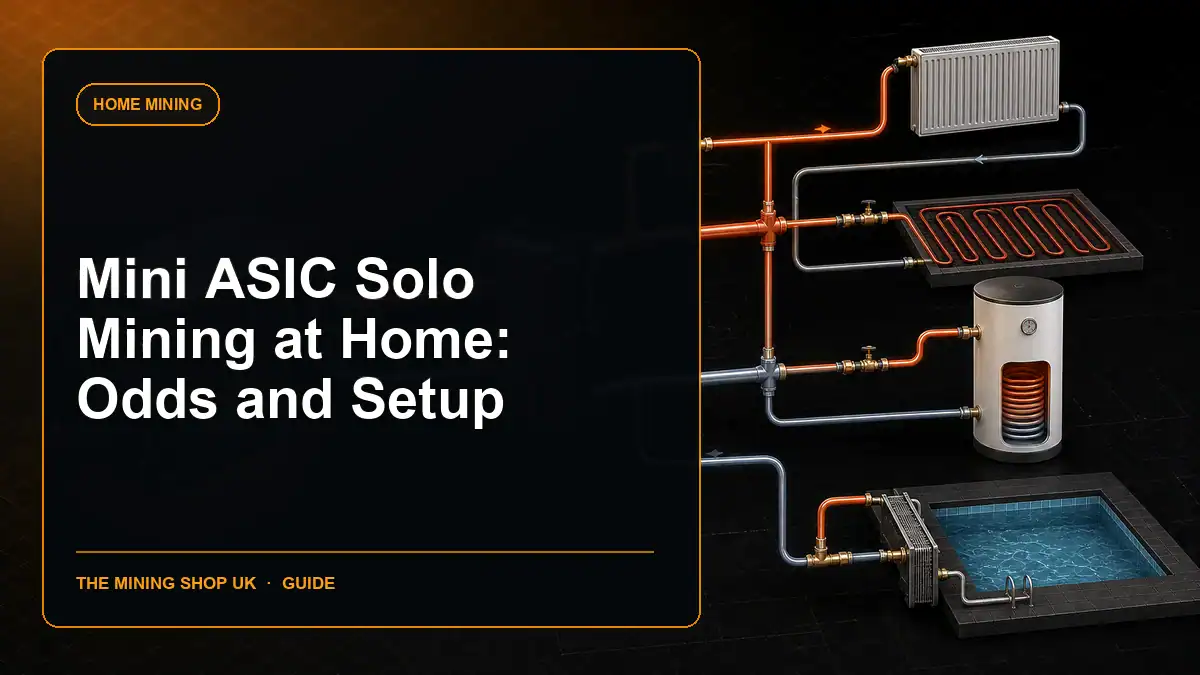
Understand mini ASIC solo mining at home through SHA 256 compatibility, block-finding probability, node and pool options, power, heat, noise and secure setup.
VolcMiner Scrypt payout setup: A VolcMiner D1-family machine mines Scrypt; a BTC balance can arise only through a pool or exchange conversion service, not.
Accepted vs local hashrate: compare accepted and local ASIC hashrate correctly, choose matching time windows and diagnose share, network, pool or hardware.
Understand When to Switch Mining Pools. Plan secure setup, pool configuration, monitoring and reliable operation before choosing equipment.
Audit Scrypt auxiliary reward accounting for merged-mined coins, pool allocation, donation or conversion rules, fees, minimums and final payout evidence.
Empty Bitcoin blocks made simple. See how the network works, which hardware matters and what to check before using electricity.