

How to Mine Bitcoin: from Site Survey to First Payout
Bitcoin mining first payout process: follow the Bitcoin mining process from purpose, power survey and ASIC selection through pool setup, safe commissioning.
Read article
Within Blog Posts & Articles
Bitcoin mining first payout process: follow the Bitcoin mining process from purpose, power survey and ASIC selection through pool setup, safe commissioning.
Understand mining pool KYC, why a provider may request identity evidence, how to verify the request and how to protect privacy, access and payouts.

Reconcile Scrypt payout currency accounting from Litecoin and Dogecoin work through pool method, conversion, fees, wallet receipt and sterling records.
Compare a hashrate marketplace vs mining pool through who buys the work, pricing, order limits, payouts, fees, custody, KYC and operational risk.
Mining pool luck explained: Pool luck compares observed valid blocks with the number statistically expected from work. Check current pool and network details.
Compare solo vs pool mining through block variance, fees, custody, payout methods, infrastructure and control before directing Bitcoin ASIC hashrate.
Stratum V2 Job Declaration explained: see how miner-selected templates, job tokens, missing transactions and pool payouts fit together.
Learn how Stratum V2 Translation Proxy works, what it can earn, the costs and security checks, and how a Bitcoin node can support SHA-256 miners.

Joining a Bitcoin mining pool: Create the pool account from its official site, enable two-step verification and verify payout details before pointing hashrate.
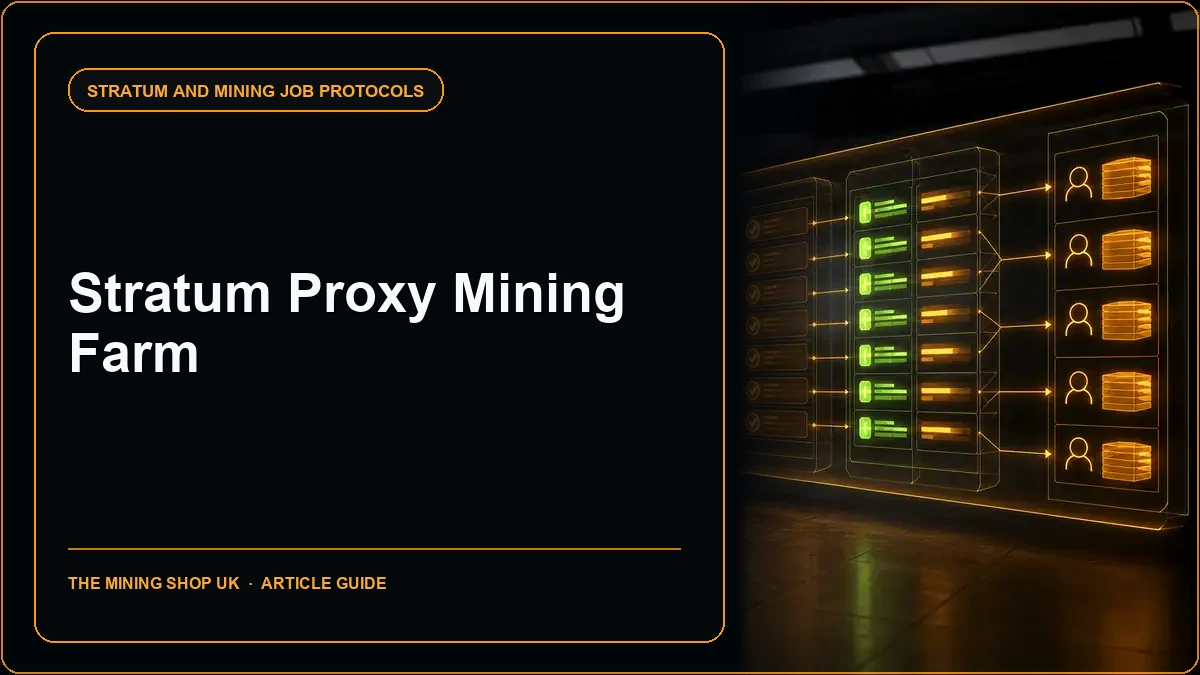
Learn how Stratum proxy mining farm works, what it changes for miners, the money and safety risks, and the checks to make before using it.
Stratum V2 explained in simple English. Learn how its mining, job declaration and template protocols affect security, pool choice and miner control.
Run a home solo mining node latency test covering template freshness, local network delay, internet loss, node synchronisation, failover and recovery.