

Sealminer A4 Ultra Hydro
Bitcoin & Bitcoin Cash ASIC Miner
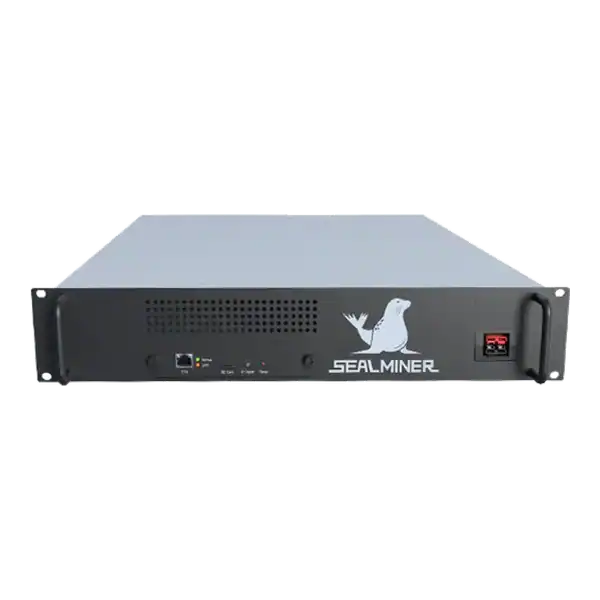

886TH
HASHRATE
9.45W/TH
EFFICIENCY
8373W
POWER
£796.02
EST. MONTHLY
NO PAYBACK
EST. ROI
Mining pool luck explained: Pool luck compares observed valid blocks with the number statistically expected from work. Check current pool and network details.
Mining pool luck explained properly begins with probability. Shares estimate contributed hashrate. At the same time, valid blocks occur much less often at the network target. A pool can submit the expected amount of share work and still find more or fewer blocks than the statistical mean in a short period.
Likewise, one worker's estimated hashrate can move above or below its rated value without its physical speed changing.
Mining pool luck explained: If a pool's hashrate implies ten expected blocks in a period and it finds twelve, the simple observed-to-expected ratio is 120 per cent.
A miner wants to understand mining pool luck explained. If it finds eight, the ratio is 80 per cent. So read the definition before interpreting the colour.
The Bitcoin network target is deliberately difficult. A pool assigns an easier target so workers submit qualifying hashes frequently enough to measure contribution. A share proves work at the pool target. A rare share can also meet the network target and become a block candidate.
Higher share difficulty means fewer expected shares for the same hashrate, with each share representing more work. Lower difficulty means more frequent messages. The correct comparison is credited work, not raw share count across different targets.
Pools can adjust difficulty per worker to maintain a manageable interval. Allow that variable-difficulty system to settle after a connection or major hashrate change.
Rejected, stale and duplicate shares do not contribute in the same way as accepted shares. Record them separately rather than subtracting an unexplained percentage from local hashrate.

If a pool’s hashrate implies ten expected blocks in a period and it finds twelve, the simple observed-to-expected ratio is 120 per cent. If it finds eight, the ratio is 80 per cent. Different dashboards may invert or label this measure differently. So read the definition before interpreting the colour.
The expected figure is not a quota. Block discovery follows a random process, and short runs can deviate widely. A pool that was unlucky yesterday is not ‘due’ a block today. Each valid attempt still depends on current work and target.
PPLNS participants normally feel pool luck more directly. PPS or FPPS services can smooth it for the miner while the provider prices and manages the exposure. The pool’s method decides how observed luck reaches an account.
Long-run results deserve review. But statistics alone do not prove honest or dishonest behaviour. Compare published block records, pool hashrate, fees and method using independent evidence.
Pool hashrate is an estimate derived from accepted shares and their difficulty over a chosen window. Share arrivals vary naturally. So a five-minute estimate can swing even when an ASIC runs at a stable physical rate.
Longer windows reduce random noise but respond more slowly to a real failure. Use a short view for alerts and a longer view for performance and billing. Label both clearly.
Local hashrate is calculated by the miner from its work. It helps diagnose boards and chips but does not prove that the pool received valid shares. Network loss, stale jobs, incorrect settings or hardware errors can create a persistent gap.
| Metric | Best use | Common mistake |
|---|---|---|
| Local hashrate | Hardware diagnosis | Treating it as paid output |
| Five-minute pool estimate | Fast outage alert | Judging profitability from noise |
| 24-hour accepted estimate | Operating comparison | Ignoring downtime within the window |
| Reject percentage | Connection and tuning diagnosis | Combining all reject types |
| Pool luck | Observed versus expected blocks | Assuming past luck predicts the next block |
| Credited reward | Commercial reconciliation | Ignoring method, fee and maturity |
An ASIC is rated at 200TH/s. Its local 24-hour average is 198TH/s. At the same time, the pool’s five-minute display moves between 160TH/s and 235TH/s. The pool’s 24-hour accepted estimate is 194TH/s with 0.7 per cent rejects.
The five-minute range alone is not alarming. Compare seven representative days, inspect reject categories and account for restarts. If the longer accepted average remains materially below the stable local figure, investigate network, firmware and job handling.
Do not average dashboard percentages that use different windows. Export the underlying time series where possible and align timestamps. A miner that was offline for maintenance should not be judged as though it ran the full period.
For hosted billing, agree in advance whether the commercial measure is pool accepted hashrate, powered uptime, energy, or another defined record. Do not invent the definition after a dispute.
There is no universal window. The lower the expected event count, the longer the observation needed. Worker shares may provide a useful daily estimate. At the same time, pool blocks can remain visibly variable over much longer periods.
Use at least a full operating cycle that includes normal temperature and workload conditions. Exclude or label commissioning, deliberate curtailment and known faults rather than hiding them.
Compare the same reward method and pool terms. A switch mid-window makes credited revenue hard to interpret, particularly when a PPLNS window or maturity period remains open.
Escalate immediately for security, payout or complete connection failure. Statistical patience is not a reason to ignore an obvious control incident.
A pool finding several blocks quickly may be operating well. But the sequence itself does not prove it will outperform another pool next month. Compare fees, uptime, method and controls.
Do not move a fleet solely because a luck gauge is green.
An estimated value can move below rating by chance. Persistent accepted underperformance across a fair sample deserves investigation.
A local overclocked peak is not the benchmark. Use stable accepted work per measured watt.
Mining pool luck explained: If a pool's hashrate implies ten expected blocks in a period and it finds twelve, the simple observed-to-expected ratio is 120 per cent.
The Bitcoin network target is deliberately difficult. A pool assigns an easier target so workers submit qualifying hashes frequently enough to measure contribution.
If a pool's hashrate implies ten expected blocks in a period and it finds twelve, the simple observed-to-expected ratio is 120 per cent.
Pool hashrate is an estimate derived from accepted shares and their difficulty over a chosen window.
With mining pool luck explained, short-term dashboard movement becomes easier to handle. Shares estimate work, valid blocks remain rare and both are probabilistic. Use a fast window to detect outages, a longer accepted-work window to judge a miner and the pool’s complete accounting period to reconcile revenue. Change hardware only after the evidence identifies a hardware problem.
Compare your pool accepted hashrate with measured power in The Mining Shop UK profitability tools.
Pool luck compares observed valid blocks with the number statistically expected from work. It does not prove skill, misconduct or future performance on its own. Estimated hashrate is inferred from submitted shares over time. Short windows are noisy, especially when share difficulty is high.

Mining pool ownership due diligence: check mining pool ownership, legal entity, beneficial control, infrastructure, payout custody, related services, sanctions.
Plan a solo mining variance reserve around fixed costs, expected block intervals, uptime, liquidity, accounting and a documented stop or pool-switch rule.
Verify a mining pool Bitcoin chain policy made simple. See how the network works, which hardware matters and what to check before using electricity.
Join the ASIC Mining Discussion
Members can read and join the discussion
Log in to read comments from other miners. Create a free account if you would like to ask a question or share your experience.
Membership helps us protect the discussion from spam and keep answers useful.