
OCEAN DATUM Gateway: Build Bitcoin Blocks with Your Own Node
See how OCEAN DATUM Gateway mining lets your node build Bitcoin work while a compatible pool records shares, plus the setup, security and failover checks.
Read article
Within Blog Posts & Articles
See how OCEAN DATUM Gateway mining lets your node build Bitcoin work while a compatible pool records shares, plus the setup, security and failover checks.
Learn how Stratum V2 pool fallback works, what it can earn, the costs and security checks, and how a Bitcoin node can support SHA-256 miners.
Stratum V2 Job Declaration explained: see how miner-selected templates, job tokens, missing transactions and pool payouts fit together.
Learn how Stratum V2 Translation Proxy works, what it can earn, the costs and security checks, and how a Bitcoin node can support SHA-256 miners.
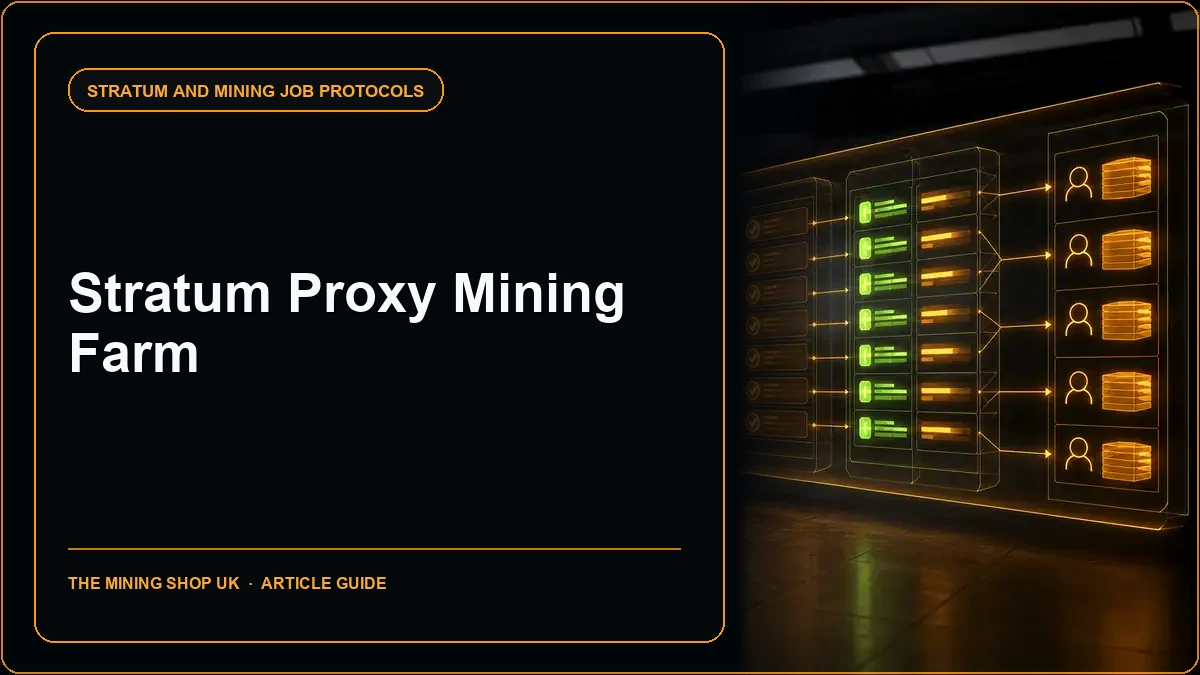
Learn how Stratum proxy mining farm works, what it changes for miners, the money and safety risks, and the checks to make before using it.
Stratum V2 explained in simple English. Learn how its mining, job declaration and template protocols affect security, pool choice and miner control.
Use a Stratum endpoint migration runbook to change pool regions or operators while preserving workers, payouts, failover and accepted-work evidence.
Who chooses Bitcoin transactions in a mined block? Trace control across nodes, pool templates, Stratum V1, Stratum V2 and individual ASIC miners.
Compare Stratum V1 vs Stratum V2 for ASIC miners across encryption, bandwidth, job negotiation, binary framing, proxies and deployment readiness.
Learn how BetterHash mining protocol works, what it changes for miners, the money and safety risks, and the checks to make before using it.
Stratum V1 explained for ASIC operators: follow subscriptions, authorisation, mining jobs, share difficulty, extranonce handling and pool control.

Learn how original Stratum mining protocol works, what it changes for miners, the money and safety risks, and the checks to make before using it.