

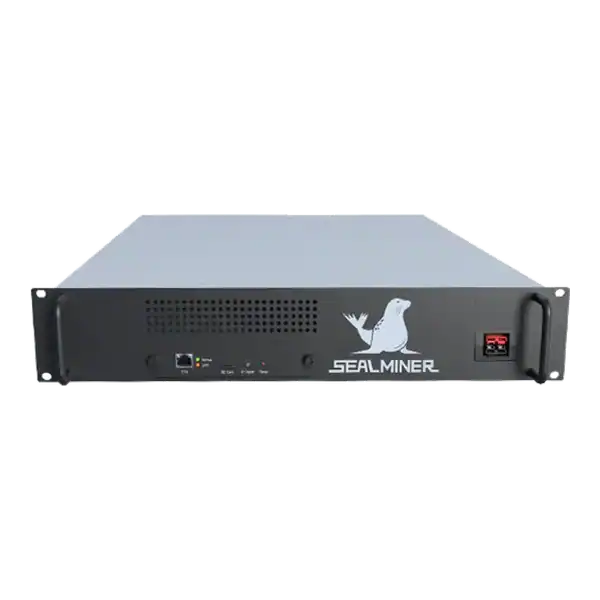
Sealminer A4 Ultra Hydro
Bitcoin & Bitcoin Cash ASIC Miner

886TH
HASHRATE
9.45W/TH
EFFICIENCY
8373W
POWER
£844.64
EST. MONTHLY
NO PAYBACK
EST. ROI
Compare a hashrate marketplace vs mining pool through who buys the work, pricing, order limits, payouts, fees, custody, KYC and operational risk.
A hashrate marketplace vs mining pool comparison starts with the counterparty. A conventional pool coordinates mining and allocates block-related revenue under its reward method. A marketplace matches sellers of compatible computing work with buyers who direct it to an accepted destination, paying the seller under marketplace rules. The ASIC may use a similar connection screen. But revenue, pricing, order constraints and legal relationships differ.
Hashrate marketplace vs mining pool: Choose a pool when the objective is to receive rewards linked directly to mining a supported network under a clear method.
A miner wants to understand hashrate marketplace vs mining pool. Test one stock-profile machine before moving a fleet. Incompatibility produces rejected work even when local hashrate is normal.
A pool builds candidate work for a supported network and uses shares to measure each miner. It then applies PPS, FPPS, PPLNS or another defined reward method. The participant is economically exposed to the pool’s method, fees and accounting.
A marketplace lets buyers place orders for an algorithm and sellers provide compatible work. The buyer may direct purchased hashrate to a pool or other permitted destination. The seller is paid by the marketplace according to accepted marketplace work and current terms rather than directly receiving the mined coin.
This can change payout currency. A Scrypt or kHeavyHash ASIC sold through a marketplace may be paid in bitcoin even though the underlying work targets another network. That does not make the ASIC a Bitcoin algorithm miner.
Read how the service describes the transaction, custody and counterparty. Similar Stratum-looking fields do not create identical contracts.

Pool revenue follows the network reward, the participant’s accepted contribution and the pool method. Marketplace seller revenue follows available buyer orders, the service’s pricing process and accepted delivery.
Marketplace demand can produce a premium for a period. But an order may end, change price or impose limits. A pool can also change fees or experience luck and fee variation. Compare time series, not a single dashboard moment.
Use the same unit and period. Convert net credited receipts to pounds per accepted terahash-day or another algorithm-appropriate unit. Deduct service, conversion and withdrawal fees without double-counting.
| Question | Marketplace | Pool |
|---|---|---|
| Who pays? | Marketplace under order rules | Pool under reward method |
| Price basis | Buyer demand and accepted delivery | Network rewards and pool accounting |
| Interruption | Order or market can end | Pool outage or method window |
| Payout asset | Marketplace-specified | Pool-specified, often mined asset |
| Key fees | Trading/service and withdrawal | Pool, payout and conversion |
| Main evidence | Order history and accepted speed | Shares, blocks, method and credit |
The marketplace must support the ASIC’s algorithm and communication method. Buyers can specify pool destinations and order limits. At the same time, the service may require a minimum share difficulty or speed. Incompatibility produces rejected work even when local hashrate is normal.
Use the current generator or setup instructions from the service. Do not reuse a normal pool URL if the marketplace provides a dedicated endpoint, and do not force a difficulty value without confirming units.
Monitor accepted marketplace speed separately from local hashrate. If the order ends, confirm how failover behaves. A miner left connected to an inactive route consumes energy without intended revenue.
Test one stock-profile machine before moving a fleet. Aggressive tuning can add hardware errors to an already variable protocol comparison.
Both routes involve service risk unless the operator runs its own solo infrastructure. Review entity, jurisdiction, terms, privacy, KYC, sanctions controls, account security and complaint routes.
A marketplace adds the matching and order layer. Confirm whether the service guarantees payment for accepted delivery, how disputes are measured and what happens during buyer or platform failure.
Pools and marketplaces can hold balances until thresholds. Set a deliberate exposure limit and protect payout changes with multi-factor authentication and independent approval.
A UK business should retain transaction, wallet, invoice and valuation records appropriate to its accounting and tax duties. The service’s downloadable report is helpful but should reconcile to controlled wallet and bank records.
Run matched tests with the same ASIC model, stock profile, site and measurement method. Account for warm-up, share-difficulty adjustment and any unpaid balance still inside the first service.
Record metered energy, local hashrate, accepted service hashrate, rejects, uptime, gross credit, all fees and the valuation time. Use at least a representative multi-day window unless order availability makes that impossible.
If the marketplace earns more only during one short order, model the likely utilisation across a month. If the pool payout method has a PPLNS window, allow it to close before judging missing revenue.
The winning route is the one with stronger risk-adjusted net receipts and controls for the operator’s objective, not automatically the highest observed hour.
Choose a pool when the objective is to receive rewards linked directly to mining a supported network under a clear method. Compare fees, decentralisation, custody and operational reliability.
A pool is not risk-free, but its revenue logic may be easier to relate to the mined network.
A marketplace can fit an operator who wants its payout asset or can capture buyer demand without taking unacceptable interruption and counterparty risk.
Do not treat a temporary premium as a guaranteed contract. Model inactive periods and a safe failover route.
Hashrate marketplace vs mining pool: Choose a pool when the objective is to receive rewards linked directly to mining a supported network under a clear method.
A pool builds candidate work for a supported network and uses shares to measure each miner.
Pool revenue follows the network reward, the participant's accepted contribution and the pool method.
The marketplace must support the ASIC's algorithm and communication method. Buyers can specify pool destinations and order limits.
The hashrate marketplace vs mining pool decision concerns what is sold, how it is priced and which counterparty holds the obligation. Compare matched net receipts, protocol fit and inactive periods, then assess custody, KYC and account controls. A temporary premium is useful evidence. But it is not a guaranteed monthly result.
Use The Mining Shop UK profitability tools with your measured accepted speed and the complete fees from each route.
A pool pays according to mining contribution and its reward method. A marketplace pays under a buy-and-sell order system for compatible hashrate. Compare net receipts after fees, rejected work, order interruption, conversion, thresholds and withdrawal costs, not the quoted headline rate.


Mining pool ownership due diligence: check mining pool ownership, legal entity, beneficial control, infrastructure, payout custody, related services, sanctions.
Plan a solo mining variance reserve around fixed costs, expected block intervals, uptime, liquidity, accounting and a documented stop or pool-switch rule.
Verify a mining pool Bitcoin chain policy made simple. See how the network works, which hardware matters and what to check before using electricity.
Join the ASIC Mining Discussion
Members can read and join the discussion
Log in to read comments from other miners. Create a free account if you would like to ask a question or share your experience.
Membership helps us protect the discussion from spam and keep answers useful.