

Sealminer A4 Ultra Hydro
Bitcoin & Bitcoin Cash ASIC Miner
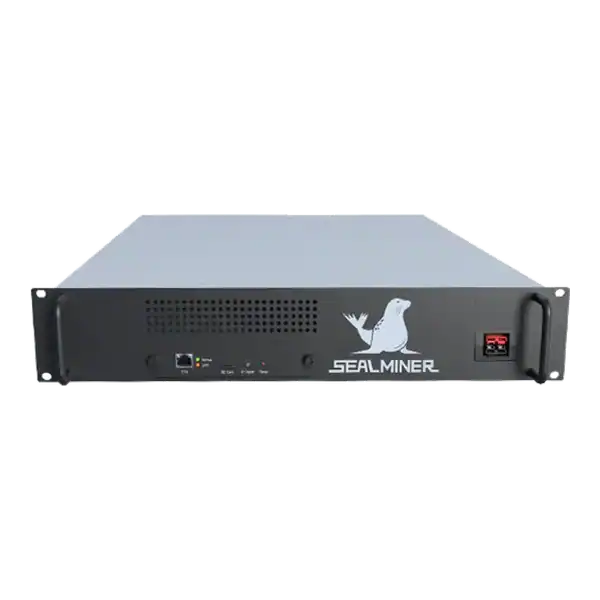

886TH
HASHRATE
9.45W/TH
EFFICIENCY
8373W
POWER
£903.43
EST. MONTHLY
NO PAYBACK
EST. ROI
Stratum V2 explained in simple English. Learn how its mining, job declaration and template protocols affect security, pool choice and miner control.
Stratum V2 explained accurately is a family of protocols for distributing Bitcoin mining work, submitting shares and optionally letting miners declare their own block templates. It improves connection security and scalability over informal Stratum V1 designs. But full benefits depend on the pool, proxy, firmware and optional Job Declaration components actually deployed.
A V2-looking endpoint alone does not prove miner transaction selection or end-to-end security.
Stratum V2 explained: Stratum V2 is not one switch. The Mining Protocol modernises jobs, shares, channels and connection security. Proxies can aggregate fleets.
A node operator is checking Stratum V2 explained. Use The Mining Shop UK's pool, security and firmware guidance to map your current route, then test Stratum V2 on one supported miner or proxy group before changing a production fleet.
Mining hardware needs jobs describing a search space and must return shares proving completed work. Pools need to validate those shares, account for miners and propagate a valid block.
The widely used Stratum V1 approach grew without one formal industry specification and normally leaves block-template construction with the pool. Its text-style messages and connection model also create scaling and security limitations.
Stratum V2 defines binary protocols and roles so devices, proxies, pools, job declarators and template providers can interoperate more deliberately.

The Mining Protocol distributes jobs and submits shares. It is the direct successor to V1 and is required in every V2 mining scenario.
The Job Declaration Protocol lets a miner-side client propose custom work to a pool-side declaration service. Template Distribution provides block templates, often from the miner’s Bitcoin node, to the job declarator.
| Component | Role | Required for basic V2 mining? |
|---|---|---|
| Mining Protocol | Jobs, channels, targets and shares | Yes |
| Mining Proxy | Aggregates downstream devices | No, but common |
| Job Declaration | Coordinates miner-created jobs | No |
| Template Distribution | Delivers block templates | No |
| Template Provider | Usually a Bitcoin node | Only for miner template selection |
The V2 specification defines authenticated encryption using the Noise Protocol Framework. This can protect mining traffic from passive observation and unauthorised alteration while authenticating the upstream endpoint under the chosen mode.
Encryption is not automatic merely because marketing says V2. The device or proxy must connect to the correct V2 endpoint and validate the pool’s authority information. A V1 connection from miner to local proxy remains a separate trust boundary.
Protect configuration, proxy host and keys. Encrypted transport does not stop an authorised but compromised dashboard from changing the payout or pool.
V2 uses channels to allocate unique work across devices or groups. A proxy can aggregate many downstream miners while maintaining target and share accounting.
The protocol can send future jobs so devices can start promptly after a new block, reducing wasted transition time. Binary encoding also reduces unnecessary message overhead.
Actual efficiency depends on implementation, latency, device support and proxy capacity. Measure rejects and transition behaviour rather than relying on a generic percentage claim.
Without Job Declaration, a V2 pool can still create and distribute all work. The connection gains V2 protocol benefits but not miner transaction selection.
With the complete miner-side stack, a template provider supplies a block template, a Job Declarator Client declares the job and the pool accounts for shares and rewards. The specification describes fallback when valid declared work is rejected or the declaration service fails.
This can reduce pool control over transaction selection. It also requires a maintained Bitcoin node, template and declaration software, policy decisions and monitoring.
Some miners speak V2 directly. At the same time, others connect through a translation proxy. Identify the exact firmware and protocol version rather than assuming a model supports every feature.
A V1-to-V2 proxy can improve the upstream connection and fleet scaling. But the downstream V1 network still needs segmentation and protection. It does not add Job Declaration to firmware automatically.
Confirm pool endpoint, authority key, channel type, worker format and current firmware instructions. Test one miner or proxy group before changing a farm.
Protocol support is one part of pool selection. Compare payout method, pool fee, transaction-fee treatment, threshold, custody, jurisdiction, uptime, support and verifiable accepted work.
Ask whether the advertised route is native Mining Protocol, a hosted translator, or full Job Declaration. Record which party selects transactions.
Use at least two independently verified failover endpoints where practical. A backup within the same infrastructure may not protect against account or provider failure.
Place the proxy near the miners on a protected network with stable time, power, storage and updates. Restrict administration and outbound destinations.
Capacity-test expected connections and share rate. Monitor CPU, memory, file descriptors, latency, rejected shares and reconnects. Preserve logs without credentials.
Test proxy stop, restart, upstream failover and configuration restore. Decide whether downstream miners continue, fail over themselves or stop when the proxy is unavailable.
V2 is valuable when the pool and software are current, authenticated encryption is configured, the proxy reduces fleet connections and operators can maintain the added components.
Full Job Declaration makes sense for miners willing to operate a Bitcoin node and template stack for transaction-selection control.
Wait when the exact miner or pool route is unsupported, the authority information cannot be verified, translation creates an unmanaged single point of failure or payout evidence is weaker than the existing route.
A stable V1 pool can remain preferable until a tested migration exists.
Mining hardware needs jobs describing a search space and must return shares proving completed work. Pools need to validate those shares, account for miners and propagate a valid block.
The Mining Protocol distributes jobs and submits shares. It is the direct successor to V1 and is required in every V2 mining scenario.
Without Job Declaration, a V2 pool can still create and distribute all work. The connection gains V2 protocol benefits but not miner transaction selection.
Place the proxy near the miners on a protected network with stable time, power, storage and updates. Restrict administration and outbound destinations.
V2 is valuable when the pool and software are current, authenticated encryption is configured, the proxy reduces fleet connections and operators can maintain the added components.
Stratum V2 is not one switch. The Mining Protocol modernises jobs, shares, channels and connection security. Proxies can aggregate fleets. And optional Job Declaration gives a maintained miner-side stack more control over block templates. Verify exactly which pieces the miner and pool support, where any V1 segment remains and how payout and failover work.
A careful pilot should improve security or operation without sacrificing accepted hashrate.
Use The Mining Shop UK’s pool, security and firmware guidance to map your current route, then test Stratum V2 on one supported miner or proxy group before changing a production fleet.
The Mining Protocol is the required core. Job Declaration and Template Distribution are separate components for miner-selected work. Authenticated encryption protects supported V2 connections. At the same time, proxies can aggregate legacy miners. Check where any V1 segment begins and ends.

See how OCEAN DATUM Gateway mining lets your node build Bitcoin work while a compatible pool records shares, plus the setup, security and failover checks.
Learn how Stratum V2 pool fallback works, what it can earn, the costs and security checks, and how a Bitcoin node can support SHA-256 miners.
Stratum V2 Job Declaration explained: see how miner-selected templates, job tokens, missing transactions and pool payouts fit together.
Join the ASIC Mining Discussion
Members can read and join the discussion
Log in to read comments from other miners. Create a free account if you would like to ask a question or share your experience.
Membership helps us protect the discussion from spam and keep answers useful.