

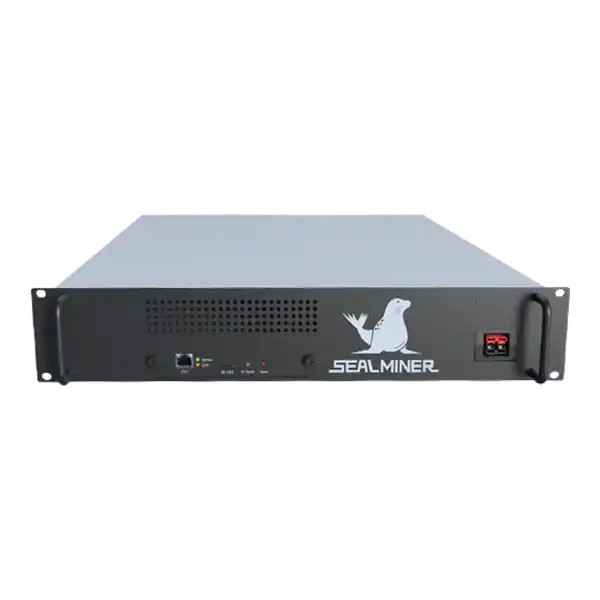
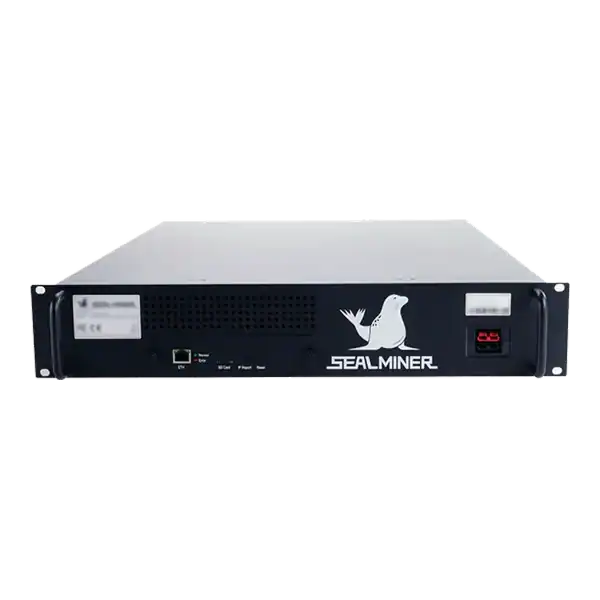
Sealminer A4 Ultra Hydro
Bitcoin & Bitcoin Cash ASIC Miner
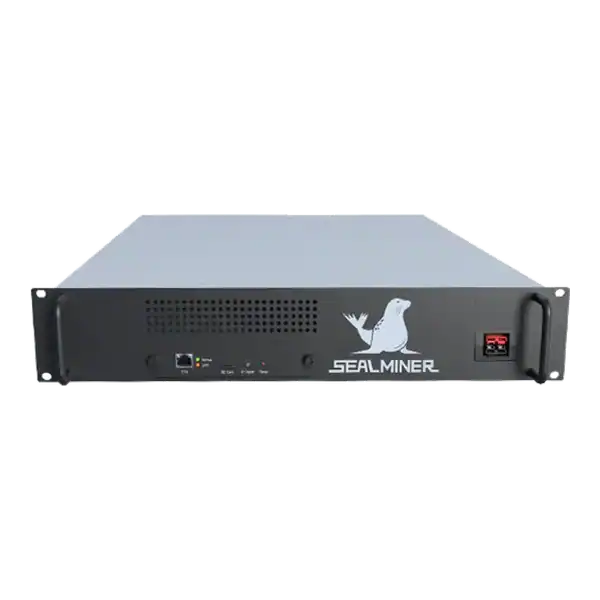

886TH
HASHRATE
9.45W/TH
EFFICIENCY
8373W
POWER
£898.19
EST. MONTHLY
NO PAYBACK
EST. ROI
Compare solo vs pool mining through block variance, fees, custody, payout methods, infrastructure and control before directing Bitcoin ASIC hashrate.
Solo vs pool mining is a choice about variance, infrastructure and counterparty exposure, not a way to change the expected amount of valid work produced by an ASIC. A solo miner keeps the reward when its own work finds a valid block. But may wait far longer than a business can fund.
A pool records easier shares and distributes revenue under its method, producing more regular receipts while introducing fees, accounting rules and service risk.
Solo vs pool mining: Solo infrastructure needs redundant, fully validating nodes and fast block propagation. Mining on an invalid parent wastes work.
A miner wants to understand solo vs pool mining. A Bitcoin solo miner constructs or receives candidate work associated with a node and submits a block if the resulting header meets the Bitcoin network target.
A Bitcoin solo miner constructs or receives candidate work associated with a node and submits a block if the resulting header meets the Bitcoin network target. Ordinary hashes and near misses earn nothing. A valid block can claim the permitted subsidy and included transaction fees, subject to maturity and the operator’s payout arrangements.
Solo does not mean disconnected. The operation still needs maintained Bitcoin nodes, accurate candidate construction, reliable block propagation, time, networking, monitoring and a secure reward destination. A third-party solo service can simplify parts of this but reintroduces a counterparty.
The key variable is expected blocks. Divide the operator’s hashrate by the estimated network hashrate and apply that fraction to expected network blocks. The result is an average, not a schedule. Variance remains high even when the arithmetic is correct.
A small miner can run perfectly for years without finding a block. That outcome is not proof of faulty hardware if submitted work and the probability model are sound.

A pool supplies jobs and uses an easier share target to measure contributed work. Most accepted shares are not Bitcoin blocks. They give the pool enough observations to allocate rewards under PPS, FPPS, PPLNS or another published method.
Pay-per-share methods can reduce the miner’s exposure to block luck, usually in exchange for a fee and the pool taking or pricing that risk. PPLNS normally passes more luck variance through a rolling contribution window. Names are not enough. Review the exact current formula.
The pool can hold accrued balances until a threshold, estimate fees, change service terms or experience an outage. Account security, payout-address controls, jurisdiction and incident history therefore belong in the decision.
A pool does not make an inefficient miner profitable. It changes receipt variance and administration while the ASIC still consumes the same site energy.
Suppose an operation controls one millionth of the effective network hashrate. With about 144 blocks expected across the whole network per day, its simple expected rate is 0.000144 blocks a day, or roughly one block per 6,944 days. This is only an illustrative mean and not a promise that a block arrives on that date.
A pool can credit that hashrate far more frequently because its share target is easier than the network target. The gross expected value before differences in fees and execution is linked to the same work. But the shape and timing of receipts are different.
For a business with monthly energy invoices, the solo distribution may be unfinanceable even if the long-run expectation appears attractive. A large fleet with strong reserves may accept more variance. But should still model an extended unlucky period.
| Factor | Solo | Pool |
|---|---|---|
| Receipt pattern | Rare and concentrated | Frequent under stated method |
| Block luck | Borne by operator | Shared or priced by pool |
| Service fee | No ordinary pool fee | Published pool and payout fees |
| Infrastructure | Nodes and block path under operator control | Pool supplies jobs and accounting |
| Counterparty | Lower if fully self-run | Pool account, balance and terms |
| Cash reserve | Potentially very large | Still needed for thresholds and volatility |
A fully self-run solo setup gives the operator direct control over node policy, candidate construction and reward address. That control carries responsibility for security, updates, backups and monitoring.
A pool sees account, worker, network and payout information. Some services require identity checks or restrict jurisdictions. Review privacy and KYC before committing a fleet, particularly where a business has confidentiality or sanctions duties.
Protect pool accounts with unique credentials and multi-factor authentication. Use a wallet destination independently verified by the business, not an address pasted during a remote support session.
Where a service holds balances, set a deliberate exposure limit. A high payout threshold can save transaction fees but increases the amount dependent on the pool.
Solo infrastructure needs redundant, fully validating nodes and fast block propagation. Mining on an invalid parent wastes work. Pool mining transfers much of that engineering to the provider. But a provider outage can affect every connected worker.
Configure verified backup endpoints and test failover. Three regional names on one control plane may not offer true independence. Check whether the backup has the intended reward method and payout address.
Monitor pool accepted hashrate, stales and rejects in addition to the miner’s local display. A stable local figure with no accepted work produces no pool entitlement and cannot find a solo block through the intended route.
Preserve logs around incidents. Switching pools immediately can restore work but also erase the evidence needed to reconcile missing credit.
A pool is normally easier to fund where hashrate is small relative to the network and energy invoices recur. Choose it for its evidenced method and controls, not because recent pool luck was favourable.
Compare net credited bitcoin per accepted unit of work over a fair period, including fees and downtime.
Solo may fit an operator with enough hashrate, infrastructure, expertise and reserves, or a technically motivated miner who understands that no receipt is guaranteed.
Do not finance a solo plan with a precise block date. Probability does not create a payment schedule.
A Bitcoin solo miner constructs or receives candidate work associated with a node and submits a block if the resulting header meets the Bitcoin network target. Ordinary hashes and near misses earn nothing.
A pool supplies jobs and uses an easier share target to measure contributed work. Most accepted shares are not Bitcoin blocks.
A fully self-run solo setup gives the operator direct control over node policy, candidate construction and reward address. That control carries responsibility for security, updates, backups and monitoring.
Solo infrastructure needs redundant, fully validating nodes and fast block propagation. Mining on an invalid parent wastes work.
A pool is normally easier to fund where hashrate is small relative to the network and energy invoices recur. Choose it for its evidenced method and controls, not because recent pool luck was favourable.
Solo vs pool mining is chiefly a decision about variance, operational control and counterparty exposure. The expected work begins with the same ASIC. But the timing and risk of receipts differ. Use current network data, a realistic probability range and a cash-flow model before choosing. Then monitor accepted work rather than relying on a lucky or unlucky anecdote.
Compare the complete operating cost of your ASIC and the current pool terms before directing material hashrate.
Solo mining concentrates block luck: the full valid-block reward belongs to the successful miner. But long periods without a block are normal for small hashrate. Pool mining exchanges some control and fees for frequent accounting credit. Read the reward method, fee, threshold, custody and payout rules.

Run a mini miner pool failover test covering verified endpoints, worker identity, payout destination, timeout, accepted shares, recovery and residual balances.
Compare Bitcoin mining pool payouts by reward method, fees, transaction-fee treatment and variance to understand what your hashrate may retain.
Audit Scrypt auxiliary reward accounting for merged-mined coins, pool allocation, donation or conversion rules, fees, minimums and final payout evidence.
Join the ASIC Mining Discussion
Members can read and join the discussion
Log in to read comments from other miners. Create a free account if you would like to ask a question or share your experience.
Membership helps us protect the discussion from spam and keep answers useful.