

Sealminer DL1 Hydro
Litecoin & Dogecoin ASIC Miner
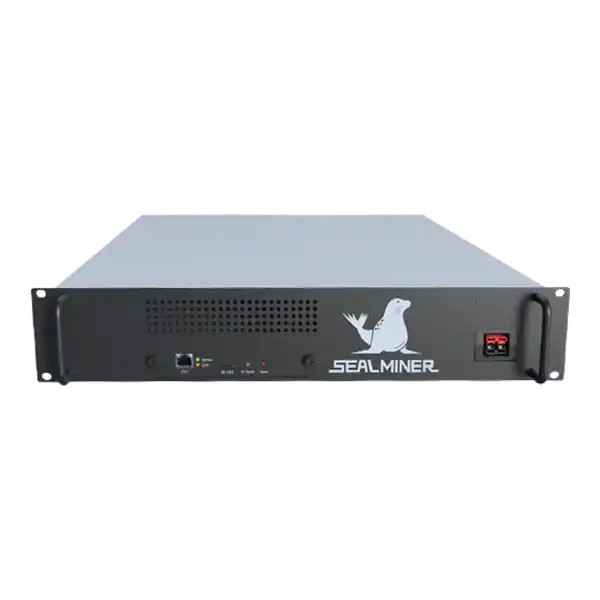

52.5GH
HASHRATE
149W/GH
EFFICIENCY
7823W
POWER
£715.87
EST. MONTHLY
NO PAYBACK
EST. ROI
Choose a quiet home Bitcoin miner by checking measured noise, power, heat, placement, ventilation, electrical safety and realistic home profitability.
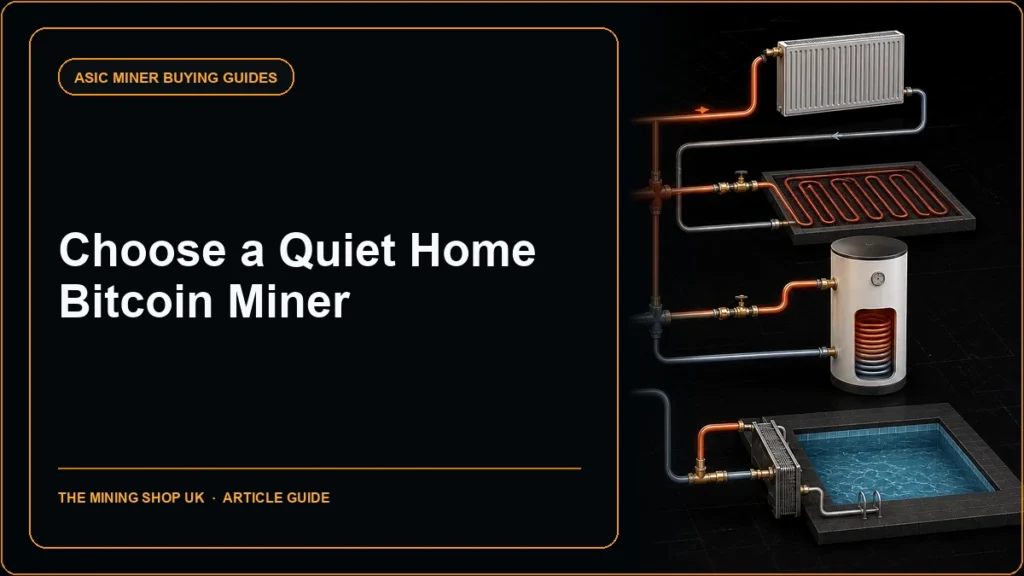
A quiet home Bitcoin miner is a complete installation, not simply an ASIC with a lower decibel figure. The machine, fans, power supply, airflow, enclosure, room and listening position all affect the result. A home setup must also be electrically suitable, reject continuous heat and remain acceptable to occupants, neighbours, insurers and any landlord while producing enough accepted hashrate to justify its cost.
Choosing a quiet home Bitcoin miner starts with a low and manageable power level, then a verified electrical circuit, full-load heat route and representative acoustic test.
A miner is checking quiet home Bitcoin miner. If the installation disrupts occupants, neighbours or safe operation, a smaller learning miner or a properly contracted hosting service is the better fit.
Quiet has no useful meaning without a location and duration. A sound that is tolerable for a short workshop visit can disturb sleep or conversation when it operates every hour. Record where the miner will sit, who occupies adjacent rooms, the nearest neighbour and the intended operating schedule.
Ask for sound pressure in dB(A), the measurement distance, fan speed, power profile and ambient temperature. A reading taken one metre in front of a cool miner cannot be compared fairly with a value at another distance or under maximum fan demand.
Decibels are logarithmic. HSE explains that a 3 dB increase represents a doubling of sound energy, even though it may sound like a small numerical change. Two identical sources together can therefore raise the level by about 3 dB in the same conditions.

A miner’s electrical input becomes almost entirely heat. A 400 W learning miner adds roughly the heat of a small room heater. At the same time, a 3.5 kW industrial ASIC adds several times more and may need high-speed airflow. Lower heat usually allows lower airflow and an easier acoustic design.
Calculate daily energy by multiplying kilowatts by 24. A 1.0 kW device uses 24 kWh per day. A 3.5 kW device uses 84 kWh. Apply the full tariff and decide whether the heat is useful in winter and unwanted in summer.
| Question | Evidence | Reason to stop |
|---|---|---|
| Electrical load | Exact manual and competent circuit assessment | Unknown current, plug or protection |
| Heat route | Full-load airflow or heat-recovery design | Exhaust returns to the intake |
| Noise | Representative measurement at occupied position | Sleep, work or neighbour impact |
| Network | Wired or supported secure connection | Publicly exposed administration |
| Economics | Accepted hashrate and delivered tariff | Gross calculator only |
Small open-source or desk miners can be suitable for learning, solo-lottery participation and low-heat experimentation. Their hashrate is far below industrial machines. So they should not be sold as a dependable household income source.
Some industrial models support manufacturer or reputable firmware power profiles. Underclocking can reduce watts and fan demand. But measure accepted hashrate, wall power and stability. Check warranty before installing custom firmware or changing the cooling system.
Hydro or immersion cooling can move heat into a liquid loop and remove the original high-speed fans. But pumps, heat exchangers and dry coolers still make noise. These systems introduce leak, water-quality, electrical and maintenance duties and are rarely a simple living-room solution.
Do not wrap an ASIC or place it in an unventilated box. Any enclosure needs an inlet and exhaust sized for full-load airflow, a path that avoids recirculation, fire-suitable materials, access for inspection and a response to fan or duct failure.
Duct silencers, lined plenums and bends can reduce transmitted sound. But every restriction adds pressure. The miner fans may speed up to overcome it, cancelling the benefit and increasing temperature. Measure inlet temperature and fan behaviour after each change.
Keep hot exhaust away from occupied air and combustion appliances. A window insert or external duct may need landlord, building, planning or neighbour consideration. Condensation and rain ingress also need control.
Fan and PSU vibration can travel through a shelf, wall or floor and be audible elsewhere. Use a stable non-combustible support and vibration isolation appropriate to the load without blocking ventilation. Tighten only the fasteners intended for ordinary maintenance.
High-pitched tonal noise is often more intrusive than a broadband reading suggests. Listen at the likely bedroom, office and boundary positions after the system reaches normal temperature. A phone application can help compare changes. But it is not a calibrated workplace or nuisance assessment.
Do not remove fan guards, defeat fan detection or substitute unsuitable fans. Cooling protection is part of the equipment’s safe operating system.
Ask a competent electrician to verify the supply, protection, earthing, isolation, cable and connection for continuous operation. A domestic socket or adaptor is not automatically suitable because the nominal wattage appears below a headline limit.
For a workplace, the Control of Noise at Work Regulations require employers to assess and reduce risk. HSE states lower and upper daily or weekly exposure action values of 80 and 85 dB(A), with an 87 dB(A) exposure limit after hearing protection is accounted for. Home nuisance and planning questions are separate from those worker values.
Tell the insurer and landlord the truth about the equipment and use. Confirm smoke detection, access, emergency isolation and what happens during internet, fan or cooling failure.
Run a short controlled commissioning test while monitoring wall power, inlet temperature, fan speed, errors, accepted hashrate and noise at occupied positions. Then test during a warm period or use a conservative thermal design rather than assuming winter performance applies all year.
Check overnight disturbance and neighbour-facing exhaust. If the miner must be switched off frequently, include that availability in the economics. Pool payouts depend on accepted work, not the hashrate that the device could have produced while stopped.
A home miner can make sense when the electrical circuit is verified, the heat is useful or safely rejected, representative noise is acceptable and the operator values learning or a clearly modelled mining outcome.
A lower-power machine that can run reliably may deliver more useful experience than an industrial model that must be stopped whenever the room is occupied.
Use professional hosting when the home cannot safely provide the power, airflow, noise separation or continuous operation. Compare the hosting contract, tariff, siting charge, uptime and repair route rather than moving the same risks out of sight.
Do not force an industrial ASIC into a residential setting because its purchase price looks attractive.
Choosing a quiet home Bitcoin miner starts with a low and manageable power level, then a verified electrical circuit, full-load heat route and representative acoustic test.
Quiet has no useful meaning without a location and duration. A sound that is tolerable for a short workshop visit can disturb sleep or conversation when it operates every hour.
A miner's electrical input becomes almost entirely heat. A 400 W learning miner adds roughly the heat of a small room heater.
Small open-source or desk miners can be suitable for learning, solo-lottery participation and low-heat experimentation.
Choosing a quiet home Bitcoin miner starts with a low and manageable power level, then a verified electrical circuit, full-load heat route and representative acoustic test. Treat enclosures, ducts and firmware as engineered changes rather than shortcuts. If the installation disrupts occupants, neighbours or safe operation, a smaller learning miner or a properly contracted hosting service is the better fit.
Compare ASIC power, efficiency and cooling on The Mining Shop UK, then ask for help selecting a home-suitable model or a hosting route before changing household electrics or ordering equipment.
Compare sound measurements only when distance, operating mode, room and test method are stated. Decibels are logarithmic. Choose power and heat output before hashrate. Every kilowatt consumed becomes roughly a kilowatt of heat that must leave the space or be usefully recovered.
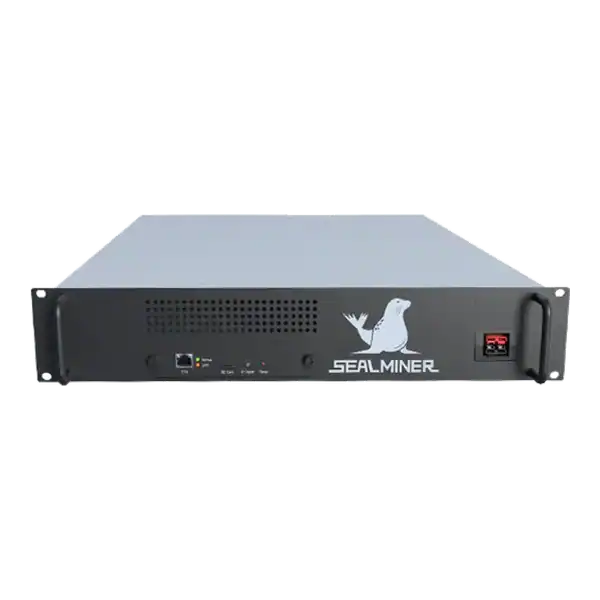

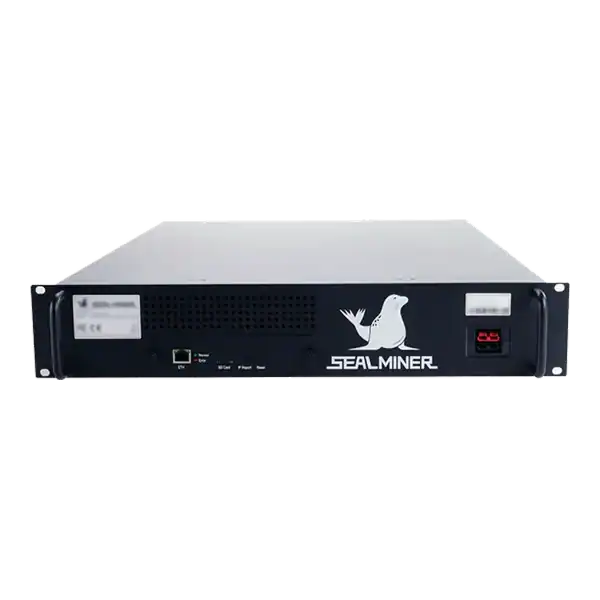
Bitcoin ASIC Compatibility made simple. Compare performance, power, cooling, noise and practical risks before choosing or operating mining hardware.
Practical guide to SEALMINER A4 review, covering efficiency and wall power. Compare costs, measured performance and site fit before buying hardware.
Unproven home ASIC launch review: assess an unproven home ASIC launch through manufacturer identity, samples, specifications, certification, firmware, delivery.
Join the ASIC Mining Discussion
Members can read and join the discussion
Log in to read comments from other miners. Create a free account if you would like to ask a question or share your experience.
Membership helps us protect the discussion from spam and keep answers useful.