

Sealminer A4 Ultra Hydro
Bitcoin & Bitcoin Cash ASIC Miner
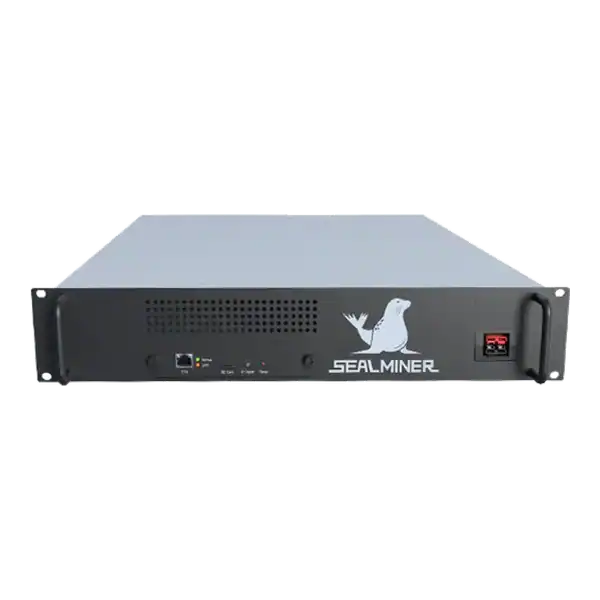

886TH
HASHRATE
9.45W/TH
EFFICIENCY
8373W
POWER
£903.43
EST. MONTHLY
NO PAYBACK
EST. ROI
Practical guide to SEALMINER A4 review, covering efficiency and wall power. Compare costs, measured performance and site fit before buying hardware.
This guide explains SEALMINER A4 review for UK ASIC buyers and operators. It covers efficiency, wall power, electricity cost and deployment fit, identifies the checks that change the decision and separates useful operating evidence from headline claims. Verify current specifications, prices and service terms before acting, then apply your own electricity cost, site limits and risk tolerance.
A useful SEALMINER A4 review has to begin with the fact that A4 is a series, not one machine.
A site operator is checking SEALMINER A4 review. That matters because electricity continues to be paid when gross mining revenue weakens. Bitdeer announced three SHA-256 models in April 2026: the air-cooled A4 Pro Air, the hydro-cooled A4 Pro Hydro and the higher-density A4 Ultra Hydro.
A useful SEALMINER A4 review has to begin with the fact that A4 is a series, not one machine. Bitdeer announced three SHA-256 models in April 2026: the air-cooled A4 Pro Air, the hydro-cooled A4 Pro Hydro and the higher-density A4 Ultra Hydro. They share a generation name.
But their electrical load, cooling plant and practical deployment requirements are very different. A buyer who asks only for an A4 price can therefore end up comparing machines that do not fit the same site.
The attraction is straightforward. Bitdeer published efficiency figures of 10.9 J/TH for both Pro models and 9.45 J/TH for the Ultra Hydro. Those numbers put energy use at the centre of the proposition. That matters because electricity continues to be paid when gross mining revenue weakens.
A lower J/TH figure gives an operator more room between revenue per terahash and electricity cost per terahash. It does not remove hardware cost, downtime, pool fees, cooling power, maintenance or network risk.
Treat the launch figures as the manufacturer’s specification for the announced range, not as a result measured on your delivered machine. Bitdeer states that final delivered performance governs and gives tolerances of plus or minus 5% for power efficiency and plus or minus 10% for hashrate and power consumption.
Your acceptance test should therefore record the exact model, serial, operating profile, inlet conditions, wall power and sustained pool-side hashrate.

| Model | Cooling | Hashrate | Power | Efficiency |
|---|---|---|---|---|
| A4 Pro Air | Air | 336 TH/s | 3,662.4 W | 10.9 J/TH |
| A4 Pro Hydro | Hydro | 680 TH/s | 7,412 W | 10.9 J/TH |
| A4 Ultra Hydro | Hydro | 886 TH/s | 8,372.7 W | 9.45 J/TH |
These figures are a shortlist, not a complete site specification. Before committing funds, get the current product manual, rated voltage and current, connector or busbar arrangement, permitted inlet conditions, coolant requirements for hydro models, network interface, physical dimensions, weight and packaging information. Confirm whether the quotation includes the complete power supply and every connection component needed for the intended market.
Also confirm commercial facts separately from engineering facts. Check whether the unit is in stock, a forward order or an allocation. Which legal entity supplies it. The Incoterm. VAT treatment. Delivery estimate. Warranty owner. Repair route. And the exact remedy if the delivered machine is outside the agreed acceptance standard. Do not let an attractive efficiency figure substitute for a complete written order.
Efficiency is calculated by dividing watts by terahashes per second. The launch figures reconcile: 3,662.4 W divided by 336 TH/s is 10.9 J/TH. At the same time, 8,372.7 W divided by 886 TH/s is about 9.45 J/TH.
The Ultra uses more power in total but less energy for each terahash. This distinction is important when a site is limited by total megawatts rather than by the number of rack positions.
| Model | Energy per 24 hours | Illustrative electricity cost |
|---|---|---|
| A4 Pro Air | 87.90 kWh | £8.79 per day |
| A4 Pro Hydro | 177.89 kWh | £17.79 per day |
| A4 Ultra Hydro | 200.94 kWh | £20.09 per day |
The table is an electricity calculation, not a profitability forecast. Multiply rated kilowatts by 24, then multiply by the tariff. Replace £0.10 with the complete price that reaches your bill or hosting invoice. Add pumps, dry coolers, extraction, networking and other shared loads where they are not already included.
For a real machine, use suitable wall-level metering and a stable accepted hashrate average after commissioning.
The A4 Pro Air is the only model in the announced range that can be considered without a water loop. But a 3.66 kW continuous load still demands a correctly designed electrical supply and a clear route for hot exhaust air. It is not an ordinary plug-in appliance.
HSE guidance says equipment must suit its electrical supply, the voltage must be correct and the supply must be able to deliver the required current. A competent electrician should assess the circuit, protective devices, connections, isolation and the installation environment.
The hydro models move heat into a liquid circuit. They require more than a convenient pipe connection. The design needs compatible coolant, adequate flow, pressure control, heat rejection, leak management, water treatment where specified, pumps, monitoring and a safe shutdown response.
Their 7.4 kW and 8.37 kW equipment loads also change rack density and distribution design. The result can be very effective at scale. But only where the site already supports industrial hydro mining or has been engineered for it.
Plan the failure states as carefully as normal running. Ask what happens after loss of flow, pump failure, network loss, a high inlet temperature, a leak alarm or a power interruption. A machine that can produce attractive J/TH on a test bench is not a good deployment if the site cannot protect it through those events.
The A4 range deserves a shortlist where electricity cost is material, the buyer values newer-generation efficiency and the site can operate the chosen cooling method properly. The Pro Air may fit an air-cooled location that can support its continuous load and airflow. The hydro models suit higher-density sites with an engineered loop and enough electrical capacity.
It can also make sense where the operator models a long service period and values extra operating margin more than the lowest acquisition price. Compare the extra capital cost with the electricity saving against a realistic alternative.
It does not make sense to buy a hydro model for a site without the required loop, or an air model where noise and heat cannot be controlled. A very efficient miner can still lose money at an expensive tariff. It can also be poor value if an early purchase premium is greater than the discounted operating savings you reasonably expect to keep.
Delay the decision if the delivered specification, warranty route, lead time or compatibility documentation is unclear. New hardware should be judged by evidence from delivered units as it becomes available, not by launch language alone.
Commission one unit or a controlled group before releasing a larger fleet. Record cold start, warm stability, wall power, hashrate, rejects, temperatures, alarms and restart behaviour. Keep the original settings and logs. A staged acceptance process is cheaper than discovering a site-wide incompatibility after every machine is energised.
A useful SEALMINER A4 review has to begin with the fact that A4 is a series, not one machine.
A useful SEALMINER A4 review has to begin with the fact that A4 is a series, not one machine.
These figures are a shortlist, not a complete site specification. Before committing funds, get the current product manual, rated voltage and current, connector or busbar arrangement, permitted inlet conditions, coolant requirements for hydro models, network interface, physical dimensions, weight and packaging information.
Efficiency is calculated by dividing watts by terahashes per second. The launch figures reconcile: 3,662.4 W divided by 336 TH/s is 10.9 J/TH.
The strongest case for the SEALMINER A4 series is energy efficiency. But the decision still begins with the site. Choose the exact cooling variant, verify the delivered specification and calculate the complete electrical and cooling cost. The Ultra Hydro offers the lowest published J/TH.
At the same time, the Pro Air is a materially smaller individual load. Neither fact decides value without the purchase price, tariff, infrastructure and acceptance evidence. Use launch data for a shortlist, then make the order conditional on current documents and a measured commissioning result.
Compare the A4 assumptions with the live efficiency and profitability tables from The Mining Shop UK using your own electricity price. If the hydro or electrical requirements are uncertain, ask us to review the proposed site before you order.
Assess SEALMINER A4 review against the actual site, tariff and operating objective. Compare measured wall power and sustained pool-side hashrate, not headline specifications alone.
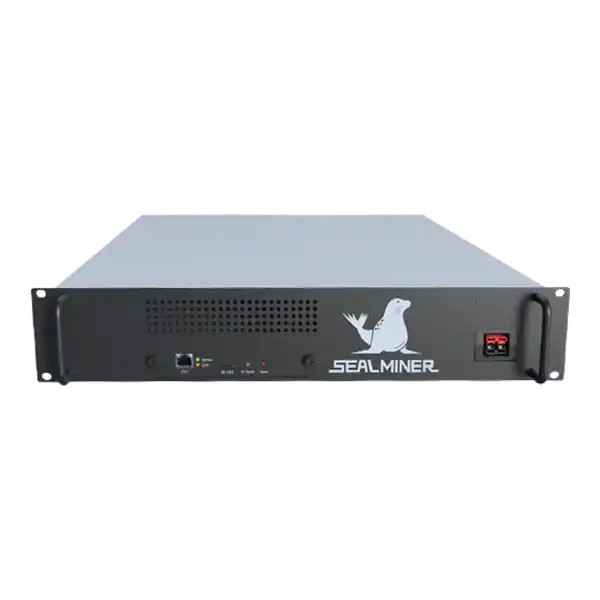

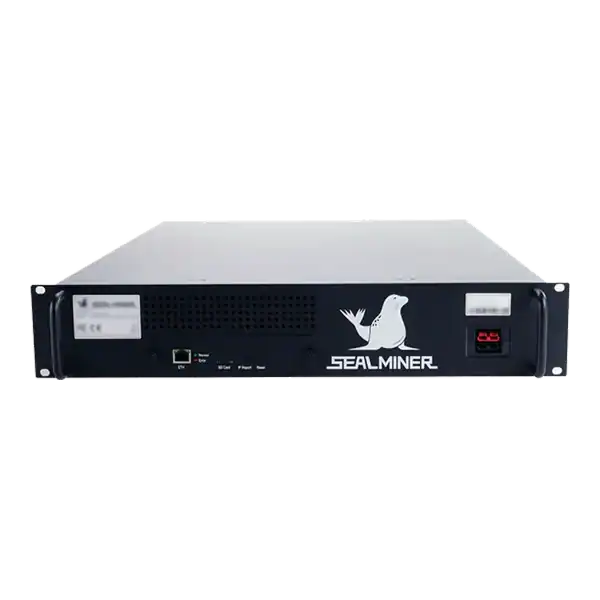
Bitcoin ASIC Compatibility made simple. Compare performance, power, cooling, noise and practical risks before choosing or operating mining hardware.
Unproven home ASIC launch review: assess an unproven home ASIC launch through manufacturer identity, samples, specifications, certification, firmware, delivery.
Set algorithm-locked ASIC obsolescence triggers from network support, efficiency gap, pool access, firmware, repair parts, resale and remaining contribution.
Join the ASIC Mining Discussion
Members can read and join the discussion
Log in to read comments from other miners. Create a free account if you would like to ask a question or share your experience.
Membership helps us protect the discussion from spam and keep answers useful.