

Sealminer A4 Ultra Hydro
Bitcoin & Bitcoin Cash ASIC Miner
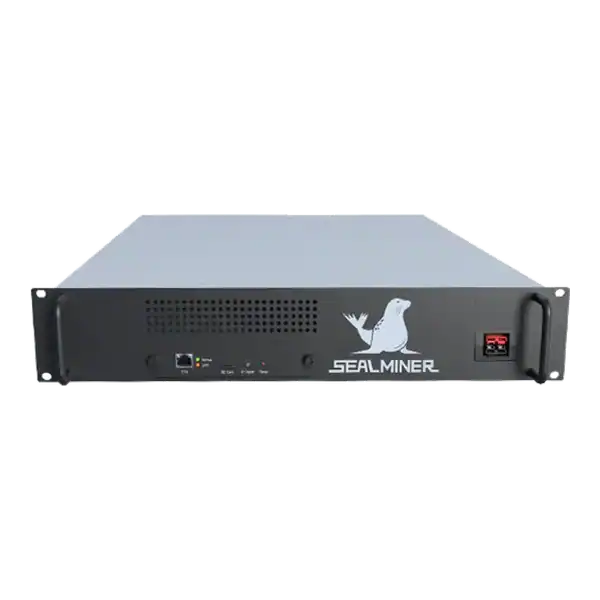

886TH
HASHRATE
9.45W/TH
EFFICIENCY
8373W
POWER
£823.22
EST. MONTHLY
NO PAYBACK
EST. ROI
Assess overseas ASIC hosting risks across power, law, sanctions, customs, tax, insurance, connectivity, custody, payment and practical hardware recovery.
Overseas ASIC hosting risks extend beyond the advertised electricity rate. A UK customer must verify the local facility and legal entity, power entitlement, mining rules, customs position, tax reporting, sanctions exposure, insurance, connectivity, currency, dispute route and ability to recover the machines. Country risk can change during a multi-year hardware life.
So the agreement also needs relocation, curtailment and exit procedures. This guide provides a country-level due-diligence method and remains distinct from the site's broader guide to choosing any hosting location or comparing home and hosted mining.
Overseas ASIC hosting risks: Score the country and provider separately. A stable country does not make an unverified operator safe, and a competent operator cannot remove every sovereign, grid or legal risk.
A miner is checking overseas ASIC hosting risks. Approve a controlled first deployment before committing the complete fleet. Get local legal and tax advice before material deployment.
A country name is not a hosting specification. Record the facility address, grid region, climate, operator, asset custodian, power counterparty and contracting entity. Verify company registration, beneficial ownership where available, authorised signatory and local licences relevant to the activity.
Establish whether the provider owns the site, leases it, operates inside another data centre or only resells capacity. Get evidence that its term and power rights last at least as long as the customer commitment and that the arrangement permits mining loads.
Use official UK Overseas Business Risk and market guidance as a starting point, then get local legal and tax advice. UK government country-cover indications explicitly do not mean a market is risk free and should not replace the buyer’s due diligence.

Ask for the source, tariff mechanism, contracted capacity, demand limits, curtailment rights, grid connection and evidence of recent invoices or settlement. A headline energy rate may exclude transmission, taxes, demand, auxiliary cooling, capacity or local levies.
Review mining-specific rules, energy permits, environmental approvals, building and fire requirements, import restrictions and any registration or licence. Local counsel should confirm the current position and who bears the risk if rules change.
Model seasonal generation, drought, heat, fuel supply, grid instruction and political intervention. Renewable generation can be valuable. But its label does not prove continuous availability or a right to consume otherwise curtailed power.
Decide who exports the ASIC, who imports it. This Incoterm or delivery allocation applies, who pays duties and tax, and what documents prove title. Retain commercial invoice, packing list, serial schedule, transport record, import entry and evidence of any temporary admission or relief.
Moving the miner again can create a second customs event. The hosting contract should not allow cross-border relocation without checking duty, tax, sanctions, warranty and insurance consequences.
The country where hardware operates, the pool, wallet, contracting entity and UK owner can create separate reporting questions. Mining rewards and overseas business activity require advice based on the actual facts. Do not infer the tax result from the location of the pool server alone.
UK financial sanctions can apply to UK persons and to conduct with a UK nexus. Screen the provider, beneficial owners, bank, insurer, logistics parties and material contractors against current official lists, and repeat the check during the contract.
A cheap tariff is not useful if lawful payment becomes impossible. Identify payment currency, bank route, conversion method, charge allocation, invoice evidence and what happens when a transfer is delayed by compliance review rather than customer default.
Model currency movement separately from energy-rate movement. If the contract bills power in a local currency but accepts a cryptoasset or US-dollar equivalent, state which reference rate, timestamp and spread govern conversion.
| Risk area | Evidence before shipping | Contract response |
|---|---|---|
| Power | Supply right, capacity and tariff formula | Curtailment, change and termination rules |
| Customs | Importer, code, value and entry route | Cost allocation and return documents |
| Sanctions | Entity and ownership screening | Ongoing checks and lawful suspension |
| Insurance | Local policy and insured interest | Perils, excess, valuation and claims |
| Currency | Invoice and conversion method | Reference source and payment timing |
| Exit | Recovery route and logistics quote | Notice, release, storage and relocation |
Review electrical design, cooling, fire detection and suppression, access control, CCTV retention, spare parts, repair capability, network diversity and backup pool routing. Photographs and video calls help but do not replace an independent site visit or engineering report for a material fleet.
Give each miner a stable serial and worker identity. Agree customer access to pool and device-level evidence, maintenance logs and incident reports. A provider dashboard should be reconciled with pool-accepted work and site events.
Control remote-management permissions. The customer may need read-only visibility while the host retains operational authority for safety. Use multi-factor authentication, unique accounts, audit logs and documented emergency changes.
Confirm which policy covers customer-owned equipment in the named country and facility, whether transit and internal movement are included, and whether political violence, flood, fire, theft, machinery breakdown or business interruption are excluded. Check the insurer, policy period, limit, excess and valuation basis.
Write a response for prolonged power loss, regulatory shutdown, operator insolvency, landlord dispute, conflict, natural disaster and communications failure. Decide when equipment may be moved, who pays and when the customer can stop.
Price the physical recovery route before shipping. Include disconnection, packaging, inland transport, export clearance, duty or tax on return and insured carriage. A contractual right to collect has limited value if the facility will not release assets or the customer cannot lawfully access the site.
Score the country and provider separately. A stable country does not make an unverified operator safe, and a competent operator cannot remove every sovereign, grid or legal risk. Approve a controlled first deployment before committing the complete fleet.
Overseas ASIC hosting risks: Score the country and provider separately. A stable country does not make an unverified operator safe, and a competent operator cannot remove every sovereign, grid or legal risk.
A country name is not a hosting specification. Record the facility address, grid region, climate, operator, asset custodian, power counterparty and contracting entity.
Ask for the source, tariff mechanism, contracted capacity, demand limits, curtailment rights, grid connection and evidence of recent invoices or settlement.
Decide who exports the ASIC, who imports it. This Incoterm or delivery allocation applies, who pays duties and tax, and what documents prove title.
Overseas ASIC hosting can access useful power and specialist infrastructure. But the tariff is only one line of the decision. Verify legal identity, power rights, local rules, customs, sanctions, payments, insurance, operations and recoverability. Use a country risk register, a provider review and a tested first deployment. A credible exit path should exist before the first miner leaves the UK.
Compare the overseas proposal with the hosting-contract checklist and Mining Shop hosting terms, then get local advice and a written recovery quote before deployment.
Verify the exact country, facility, operating entity and legal right to use both the site and the promised power before comparing tariffs. Model customs, tax, payment, sanctions, currency, insurance and hardware-recovery risk alongside electricity and uptime.

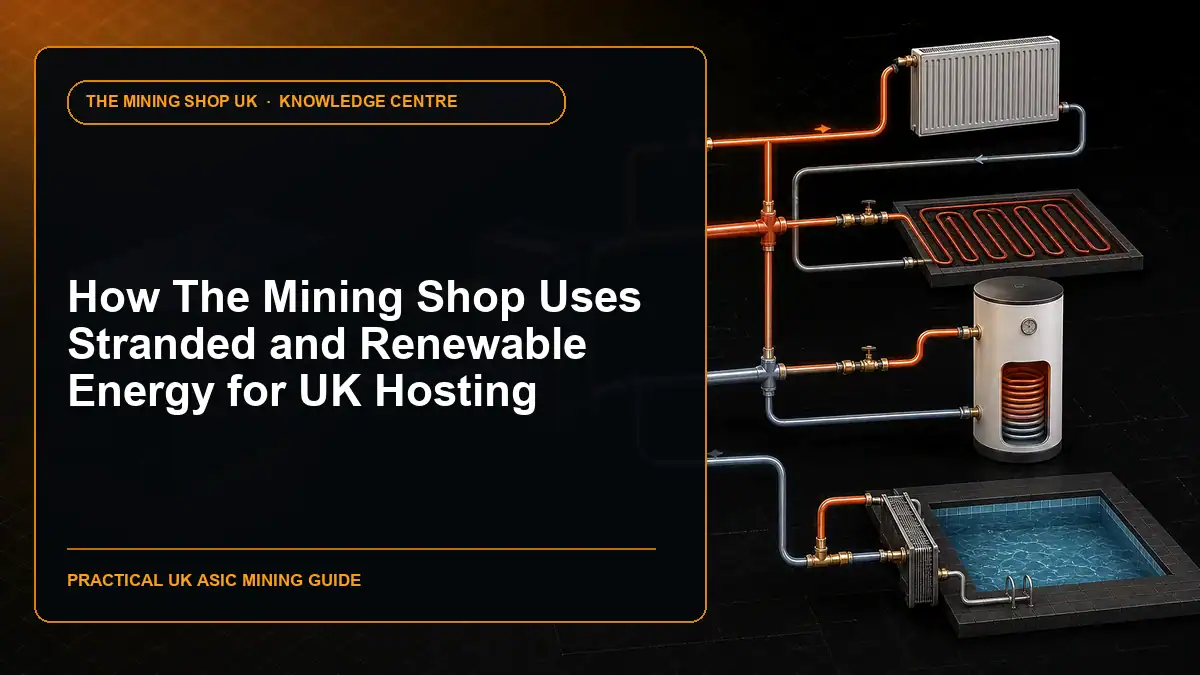
Renewable energy Bitcoin mining UK: UK guidance on contracts, cost, ownership, risk, records and practical checks to complete before committing equipment.
Use this Bitcoin mining handbook after commissioning to manage daily checks, maintenance, pools, security, cost reviews, records, incidents and end-of-life.
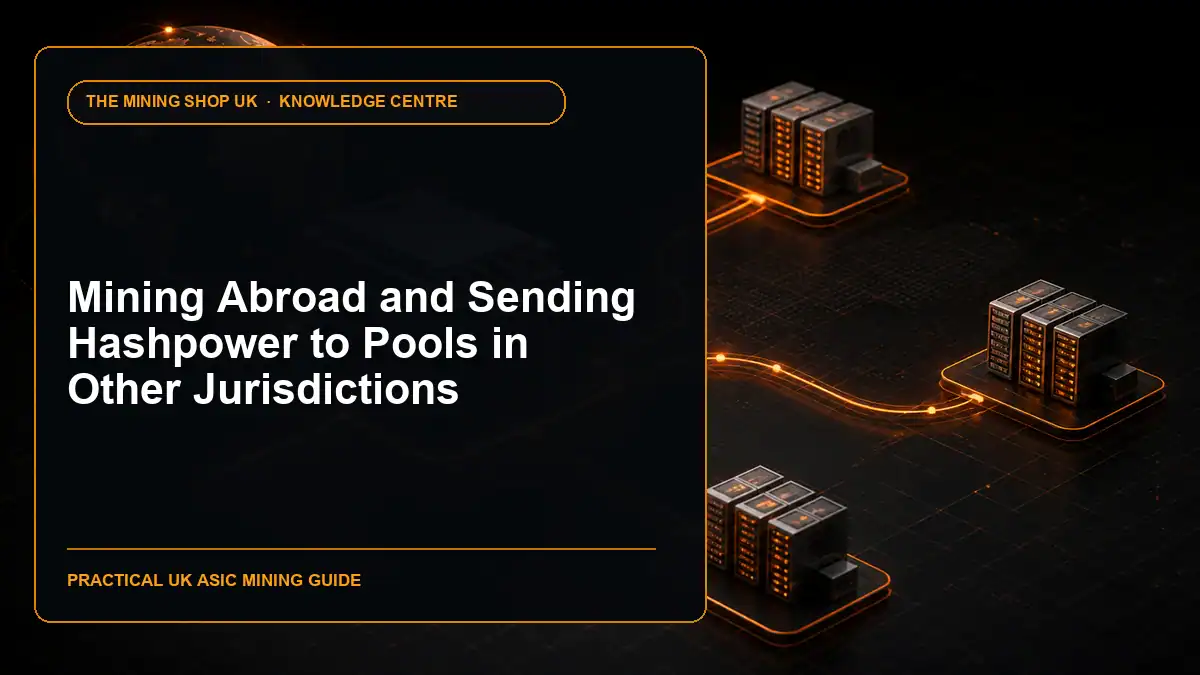
Cross border hashpower: Record where the hardware is located, who owns it, who operates it, who buys electricity, which entity contracts with the pool.
Join the ASIC Mining Discussion
Members can read and join the discussion
Log in to read comments from other miners. Create a free account if you would like to ask a question or share your experience.
Membership helps us protect the discussion from spam and keep answers useful.