

Sealminer A4 Ultra Hydro
Bitcoin & Bitcoin Cash ASIC Miner
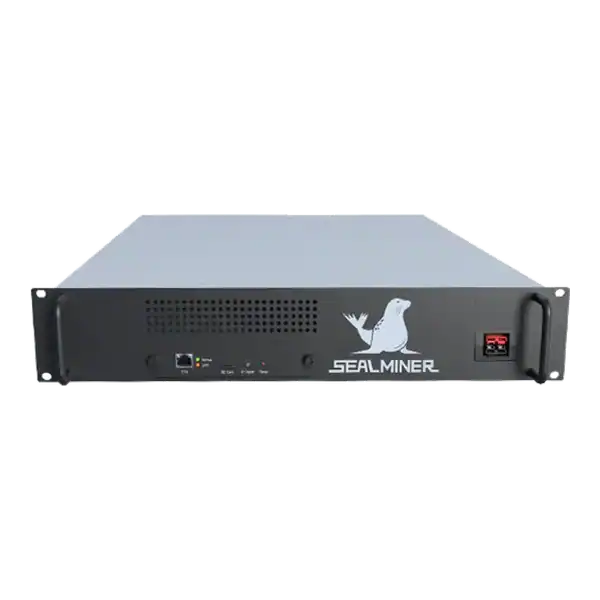

886TH
HASHRATE
9.45W/TH
EFFICIENCY
8373W
POWER
£903.43
EST. MONTHLY
NO PAYBACK
EST. ROI
Foreign mining pools UK tax: UK guidance on HMRC treatment, records, valuations, costs and evidence to retain before filing or taking qualified advice.
Foreign mining pools UK tax: UK guidance on HMRC treatment, records, valuations, costs and evidence to retain before filing or taking qualified advice.
Foreign mining pools UK tax: In a conventional mining pool, participants contribute work and receive a share of rewards under the pool's payout method.
A UK business owner wants to understand foreign mining pools UK tax. So its contracts, invoices, fees and payout records should not be treated automatically as if they came from an ordinary pool.
In a conventional mining pool, participants contribute work and receive a share of rewards under the pool’s payout method. A hashpower marketplace is different. The operator may be supplying measured computing capacity to a buyer or platform rather than participating directly in a block reward. NiceHash describes itself as a hashpower marketplace.
So its contracts, invoices, fees and payout records should not be treated automatically as if they came from an ordinary pool.
Read the current terms for the exact service. Identify the contracting entity, governing law, payment asset, point at which a balance becomes available, dispute route and whether the platform acts as principal, agent or marketplace.

No. A UK resident individual or UK company does not escape UK tax merely because a pool server, marketplace or paying entity is abroad. HMRC looks at the person, company and activity. For a business, the commercial scale, organisation, risk and expectation of profit help determine the tax treatment. A foreign account can also fall within international reporting arrangements.
The location shown by a stratum address is not necessarily the legal location of the service provider. A server can be in one country, the company in another and the buyer in a third. Keep evidence for the legal counterparty rather than relying on latency or a domain suffix.
HMRC says a bank of dedicated mining computers operated for expected net profit would probably amount to trading activity. Mining rewards can enter the accounts as receipts, valued in pounds sterling. If crypto is retained and later sold, swapped or spent, a second tax calculation may arise. Selling hashpower under a contract may instead create service revenue, even where the marketplace pays in Bitcoin.
A payout in crypto does not make the underlying sale tax free. Record the sterling value using a reasonable, consistent method at the relevant time, then connect that value to any later disposal record.
HMRC says Bitcoin received for mining is generally outside the scope of VAT because there may be an insufficient direct link between a service and consideration. That statement does not automatically cover a separately contracted sale of hashpower to an identifiable buyer. A cross border business service can instead engage the place of supply rules and, depending on the facts, the customer’s reverse charge.
This distinction also affects input VAT. VAT on equipment and electricity is not recoverable simply because the purchaser is VAT registered. There must be a enough link to business outputs carrying a right to deduct, with apportionment or partial exemption where relevant. Get advice before treating marketplace revenue as the same as decentralised mining rewards.
From 2026, HMRC’s Cryptoasset Reporting Framework rules increase the information collected and exchanged by participating cryptoasset service providers. UK users may have to give tax identification and business details to overseas providers. Where the foreign jurisdiction participates, information can be shared with HMRC.
Platform reporting does not replace your ledger. Download statements regularly and keep versions of the terms, as an account can be restricted or closed and historic data may not remain available.
UK sanctions rules apply to UK persons and businesses even when a counterparty or service is abroad. Screen the contracting entity and relevant payment counterparties, avoid sanctioned destinations and investigate unusual routing or ownership. Ordinary pool use is not automatically an export controlled activity. But controlled technology, sanctioned services, restricted end users and hardware exports need separate checks.
Commercial due diligence matters too. Check withdrawal controls, two factor authentication, custody exposure, insurance claims, uptime history, fee changes and the legal route for recovering funds.
Ask if you are mining through a pool or selling hashpower, who owes the payment, when the right to payment arises. This country governs the contract, whether the counterparty is a business, what happens to rejected work and how tax data is reported. Those answers are more useful than asking only where the server is hosted.
Foreign mining pools UK tax: In a conventional mining pool, participants contribute work and receive a share of rewards under the pool's payout method.
In a conventional mining pool, participants contribute work and receive a share of rewards under the pool's payout method.
A UK resident individual or UK company does not escape UK tax merely because a pool server, marketplace or paying entity is abroad.
HMRC says a bank of dedicated mining computers operated for expected net profit would probably amount to trading activity.
Using an overseas pool is normally possible. But it does not remove UK tax or record keeping obligations. Direct pool mining and selling hashpower through a marketplace are commercially and legally different arrangements.
For foreign mining pools, check current official guidance and retain the evidence used for the decision. Rules and official guidance can change. Check the current source before making a decision.


ASIC insurance coverage exclusions: review ASIC insurance exclusions for wear, electrical breakdown, overheating, corrosion, firmware, cyber events, unattended.
ASIC hardware insurance UK: prepare ASIC hardware insurance evidence for UK-owned miners: asset schedule, valuation, site, electrical controls, custody.
Claim VAT on ASIC Miners made simple. Check the UK rules, records, figures and evidence before filing a return or taking professional advice.
Join the ASIC Mining Discussion
Members can read and join the discussion
Log in to read comments from other miners. Create a free account if you would like to ask a question or share your experience.
Membership helps us protect the discussion from spam and keep answers useful.