

Antminer Z15 Pro
Zcash & Horizen ASIC Miner
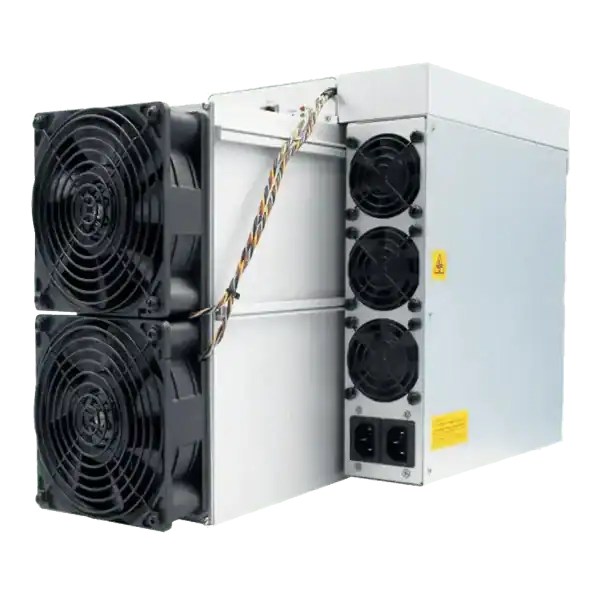

840KSOL
HASHRATE
3.3W/KSOL
EFFICIENCY
2772W
POWER
£1390.70
EST. MONTHLY
9
Months
EST. ROI
Compare Mining Pools for ASIC Hardware using payout rules, fees, accepted shares, latency, custody, security and a fair test with matched evidence.
Compare Mining Pools for ASIC Hardware by measuring what happens to the same machine under clearly stated rules. A large pool, low fee or famous name does not prove that one operator will receive the best net result.
The comparison needs payout method, fee treatment, accepted and rejected shares, latency, uptime, withdrawal rules, account security and custody. Pool information changes, so this guide teaches a repeatable test rather than ranking providers forever.
Estimated reading time: 7 minutes
A mining pool combines work from many machines and uses its own published method to calculate credits. The pool does not make an ASIC faster. It changes how often the miner is paid, which fees and luck it carries, and which company or system holds the records.
One pool reports a higher gross credit but deducts a larger fee and excludes some transaction fee income. Another pays less on one lucky day but gives a clearer long term formula. The operator compares matched weeks and wallet receipts instead of choosing from one screenshot.
| Share: | Proof that a miner completed work at the pool's assigned target. |
|---|---|
| PPS: | Pay Per Share, where the pool prices valid shares under its stated formula. |
| PPLNS: | A method linked to shares in a defined window around blocks found. |
| Stale Share: | Work that reaches the pool after it is no longer useful. |
| Payout Threshold: | The balance required before the pool sends a withdrawal. |
The pool must support the exact algorithm and intended network. A SHA-256 endpoint is not interchangeable with Scrypt. Copy the current server address, port, username format and regional options from the pool's own documentation.
Check whether the pool or firmware expects a wallet address, account name or subaccount. Record backup endpoints separately. A miner that connects to the wrong but valid endpoint may send work without creating the expected credit.
PPS style methods can move more block luck to the pool, while PPLNS usually leaves more variance with the miner. FPPS and PPS plus labels may include transaction fees differently. The name alone does not define the exact calculation.
Read how the pool values a share, which fees are included, when a round or window closes and whether orphaned blocks or transaction fees affect credit. Compare written formulas rather than assuming two pools use the same meaning.
Compare Mining Pools for ASIC Hardware only after listing the advertised pool fee, withdrawal charge, conversion spread, minimum payout and any firmware developer fee. A small percentage difference can be less important than delayed access to a balance or an unfavourable conversion route.
Compare the asset actually received in the wallet. Do not mix a pool dashboard's estimated sterling value with another pool's confirmed coin amount. Keep coin quantity and later market value as separate records.

The ASIC dashboard measures local work. The pool pays from work it receives and accepts. Export accepted shares, stale shares, invalid shares, reconnects and worker uptime for the same test window.
High rejects can come from network delay, unstable tuning, duplicate work, pool problems or incorrect difficulty. Diagnose the cause before blaming the payout method. A lower fee does not help if useful work repeatedly misses the destination.
Choose the documented region that gives stable round trip performance from the real site. The nearest city name is not proof of the best route. Internet routing and pool infrastructure can change during the day.
Monitor connection loss, failover time and stale rate rather than ping alone. A backup pool should be configured and tested, but the operator must know which wallet and payout rules apply when failover begins.
Use unique credentials, multifactor authentication where available and a payout address under controlled recovery. Restrict address changes and require confirmation if the pool provides that option.
Keep the pool account separate from general email and shopping accounts. Record who may change workers, wallets or withdrawals. A compromised administrator can redirect value while the machines appear healthy.
Useful evidence includes current terms, status history, payout records, support routes and a clear company identity. Hashrate charts are helpful, but they do not replace a contract or explain every deduction.
Read recent operational notices and test support with a precise question before sending a fleet. Do not rely on copied comparison sites for a pool's present fee or threshold. Use the pool's own documents and save the date.
Compare Mining Pools for ASIC Hardware with the same ASIC, firmware, operating mode, power limit and network for each trial. Pick periods long enough to reduce share noise and avoid changing several variables at once. Save starting and ending balances.
Compare accepted work, rejected work, credited coin, fees, uptime and wallet receipts. If payout methods carry different luck, note that a short test cannot prove the long term expected value. The result should explain uncertainty rather than hide it.
A small home operator may value simple withdrawals and clear support. A large site may need subaccounts, APIs, regional redundancy and detailed worker exports. A solo focused miner may prefer a pool that exposes block construction choices.
Write the selection reason and a review date. Compare Mining Pools for ASIC Hardware again when the pool changes fees, terms, endpoints or custody. The best choice is conditional, not permanent.
Compare Mining Pools for ASIC Hardware again when fees, endpoints, thresholds or payout formulas change. Verify every value on the provider's current pages on the day of the test.
Pool statistics are provider records. Reconcile them with miner logs and wallet transactions rather than treating one dashboard as independent proof.
| Pool Test | Matched Evidence |
|---|---|
| Compatibility | Algorithm, network and endpoint |
| Work quality | Accepted, stale and invalid shares |
| Net credit | Coin received after every fee |
| Reliability | Disconnects, failover and uptime |
| Control | Wallet security and account recovery |
A table is a starting point, not a promise. Verify current official sources and apply each detail to the decision you are actually making.
There is no permanent answer. Compare the exact formula, fees, accepted work and coin received over a matched period.
No. Rejects, payout method, withdrawal costs, reliability and support can outweigh a small headline fee difference.
Pools estimate hashrate from shares received. Random arrival, stale work, outages and different averaging windows move the display.
Long enough to cover normal operation and reduce short term share noise. Record the limits of any test, especially with luck based methods.
Yes, when it is supported and tested. Confirm its account, wallet, fees and failover behaviour before an outage.
Compare Mining Pools for ASIC Hardware with matched evidence and a written objective. The right choice combines a clear payout formula, acceptable fees, strong account controls, low rejected work and dependable operation. Recheck the decision whenever terms or endpoints change.
Mining pool ownership due diligence: check mining pool ownership, legal entity, beneficial control, infrastructure, payout custody, related services, sanctions.
Plan a solo mining variance reserve around fixed costs, expected block intervals, uptime, liquidity, accounting and a documented stop or pool-switch rule.
Verify a mining pool Bitcoin chain policy made simple. See how the network works, which hardware matters and what to check before using electricity.
Join the ASIC Mining Discussion
Members can read and join the discussion
Log in to read comments from other miners. Create a free account if you would like to ask a question or share your experience.
Membership helps us protect the discussion from spam and keep answers useful.