

Sealminer A4 Ultra Hydro
Bitcoin & Bitcoin Cash ASIC Miner
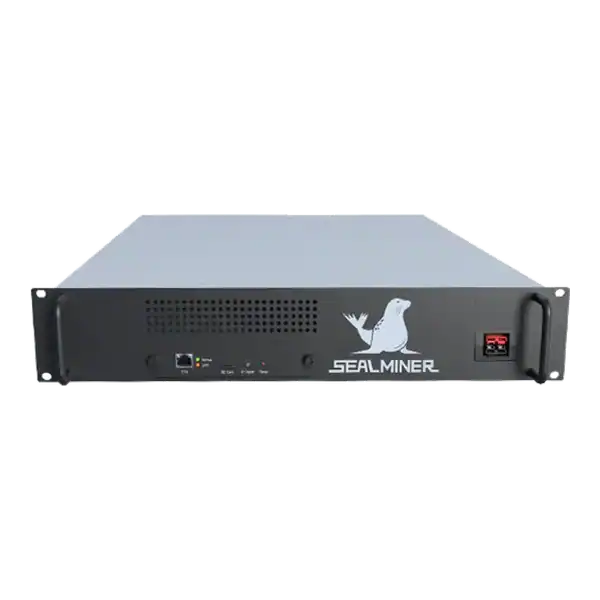

886TH
HASHRATE
9.45W/TH
EFFICIENCY
8373W
POWER
£903.43
EST. MONTHLY
NO PAYBACK
EST. ROI
What is BIP-110? Learn what Bitcoin’s reduced-data soft-fork proposal restricted, why it was controversial and why it later closed.

What is BIP-110? It was a proposed temporary Bitcoin soft fork intended to restrict several ways of placing large or arbitrary data in transactions.
It was announced to the Bitcoin Development mailing list in October 2025, assigned BIP number 110 in December 2025 and later closed in August 2026 following a chain split with stalled mining. It did not become an ordinary Bitcoin mainnet upgrade.
BIP-110, titled Reduced Data Temporary Softfork , described a one-year set of extra Bitcoin consensus rules. The stated aim was to limit several methods of embedding large amounts of non-payment data in Bitcoin transactions.
A node operator is checking BIP-110. The proposal was publicly discussed on the Bitcoin Development mailing list in October 2025. The current official BIP-110 specification records an initial draft dated 24 October 2025, assignment on 3 December 2025 and closure on 9 August 2026.
BIP-110, titled Reduced Data Temporary Softfork, described a one-year set of extra Bitcoin consensus rules. The stated aim was to limit several methods of embedding large amounts of non-payment data in Bitcoin transactions. Its author argued that unrestricted data storage places continuing cost on node operators and competes with Bitcoin’s monetary use.
The proposal was publicly discussed on the Bitcoin Development mailing list in October 2025. The current official BIP-110 specification records an initial draft dated 24 October 2025, assignment on 3 December 2025 and closure on 9 August 2026.
A BIP is a technical proposal and record. Assignment of a number does not prove broad agreement, software adoption or mainnet activation. This distinction matters especially for BIP-110 because the proposal was contentious from its first public discussion.
A soft fork tightens the rules. Blocks valid under the new rules remain valid under the old rules. But some blocks accepted by old nodes are rejected by upgraded nodes. A hard fork normally expands or changes validity so that blocks accepted by upgraded nodes may be rejected by old nodes.
BIP-110 proposed extra restrictions. An enforcing node would reject certain transactions and blocks that an ordinary older node could accept. That makes its protocol classification a consensus soft fork.

The classification does not guarantee a smooth outcome. If part of the mining network enforces stricter rules while another part mines blocks that break them, the groups may build different chain tips. Users can then experience confirmation uncertainty, reorganisations or a minority chain that stops progressing. That practical disruption can resemble a hard-fork event even though the rule change itself is a soft fork.
The final BIP text lists seven extra checks for blocks during the temporary deployment. In simplified terms, they covered the following areas.
| Area | Proposed restriction | Why it mattered |
|---|---|---|
| Output scripts | New scriptPubKeys above 34 bytes would be invalid, with an OP_RETURN allowance up to 83 bytes. | Large outputs can carry data and, when spendable, increase the UTXO-set burden. |
| Data pushes | Most OP_PUSHDATA payloads and script-argument witness items above 256 bytes would be invalid. | This targeted contiguous arbitrary data placed inside scripts or witness arguments. |
| Undefined witness versions | Spending undefined witness or Tapleaf versions would be invalid during deployment. | Unused upgrade space can otherwise carry unrestricted witness data. |
| Taproot annex | Witness stacks containing a Taproot annex would be invalid. | The annex is reserved for possible future use and can hold data. |
| Taproot control blocks | Control blocks above 257 bytes would be invalid. | The rule limited very large script trees while the temporary rules applied. |
| OP_SUCCESS | Tapscripts containing OP_SUCCESS opcodes would be invalid. | These opcodes are reserved as upgrade hooks. |
| Conditional Tapscript | Executing OP_IF or OP_NOTIF in Tapscript would be invalid. | The proposal treated this as a commonly used route for inscription data. |
The specification included exceptions and definitions that matter to implementation. For example, scripts themselves were treated differently from script arguments, and certain defined witness programmes were listed by reference to SegWit, Taproot, Tapscript and P2A.
The supporting argument began with node cost and Bitcoin’s intended scope. A miner receives the fee for including a transaction once. At the same time, every validating node may be required to download, verify and retain the resulting chain data. The BIP author argued that this difference creates distorted incentives for permanent arbitrary-data storage.
The proposal also argued that large output scripts can increase the UTXO set. This nodes need to access efficiently, and that some future-upgrade features were being used for data before they had a defined consensus purpose. Supporters therefore saw temporary restrictions as a way to preserve lower node-operating costs and keep block space focused on payments.
Opponents challenged both the technical effectiveness and the premise. The mailing-list discussion pointed out that determined users can split, transform or disguise data, and that neutral transaction rules avoid subjective judgements about permitted use. Other contributors questioned whether consensus rules were the right layer when relay policy, encoding or fee incentives could be changed without creating incompatible block validation.
This is why a balanced article should not reduce BIP-110 to “stopping spam”. It was a disagreement about consensus scope, node externalities, upgrade space, censorship resistance, activation safety and who gets to define supported use.
An enforcing pool would need block-template software that excludes transactions breaking the temporary rules. The BIP used the deployment name reduced_data and version bit 4. During its proposed mandatory-signalling window, that bit would also be required in GetBlockTemplate output. A miner using an incompatible pool, proxy or custom template path could therefore produce work for a chain that other enforcing participants rejected.
ASIC hardware itself does not decide Bitcoin consensus. The pool, node, template generator and any job-negotiation infrastructure determine which candidate block is built. Operators should separate a miner’s SHA-256 performance from the software and payout path directing its work. Our Stratum V2 guide explains why pool protocol and transaction selection are separate from the ASIC’s hashing function.
A node that implemented BIP-110 would enforce the extra checks only during the intended active period. The proposal included grandfathering for UTXOs created before activation, designed to reduce the risk that existing coins became unspendable under the temporary rules. That protection did not remove every theoretical wallet or pre-signed-transaction risk.
Ordinary payment users were not the proposal’s target. But businesses cannot treat a disputed chain as an abstract developer matter. Exchanges, merchants, custodians and mining operators need a defined confirmation policy, node software policy and incident plan when network participants may disagree about valid blocks.
The current status is therefore closed. BIP-110 should not be described as an active Bitcoin mainnet rule or a successfully deployed upgrade. Its value now is historical and technical: it provides a case study in contentious soft-fork design, miner signalling and the difference between a proposal’s classification and its network outcome.
For wider context, read our plain-English guide to Bitcoin soft forks.
What is BIP-110 in one sentence? It was a proposed temporary soft fork, not a conventional hard fork and not an adopted Bitcoin upgrade. It tried to restrict several forms of large arbitrary data by narrowing block-validity rules for one year.
The proposal combined a broad technical rule set with an unusually low 55% signalling threshold and mandatory signalling. So chain-split risk was part of the design discussion from the start.
For miners, the lasting lesson is that consensus disputes live above the ASIC. Pool software, nodes, templates, version bits, confirmation policy and payout controls decide which chain an operator supports and whether its work is accepted. Read the current specification and status directly, distinguish proposal dates from activation claims, and never treat hashrate signalling alone as proof of network consensus.
BIP-110, titled Reduced Data Temporary Softfork , described a one-year set of extra Bitcoin consensus rules. The stated aim was to limit several methods of embedding large amounts of non-payment data in Bitcoin transactions.
A soft fork tightens the rules. Blocks valid under the new rules remain valid under the old rules.
The supporting argument began with node cost and Bitcoin's intended scope. A miner receives the fee for including a transaction once.
An enforcing pool would need block-template software that excludes transactions breaking the temporary rules. The BIP used the deployment name reduced_data and version bit 4.
The current status is therefore closed. BIP-110 should not be described as an active Bitcoin mainnet rule or a successfully deployed upgrade.

BIP 128 guide to Draft timelock-recovery plan storage, presigned transaction pairs, relative delay, checksums, monitoring, cancellation and reorg safety.
BIP 433 guide to Draft keyless Pay to Anchor outputs, CPFP fee bumping, standardness, ephemeral dust, TRUC anti-pinning and wallet safety.
What is a satoshi? Learn the exact Bitcoin unit relationship, how wallets display sats, where rounding causes mistakes and what Draft BIP 172 proposes.
Join the ASIC Mining Discussion
Members can read and join the discussion
Log in to read comments from other miners. Create a free account if you would like to ask a question or share your experience.
Membership helps us protect the discussion from spam and keep answers useful.