

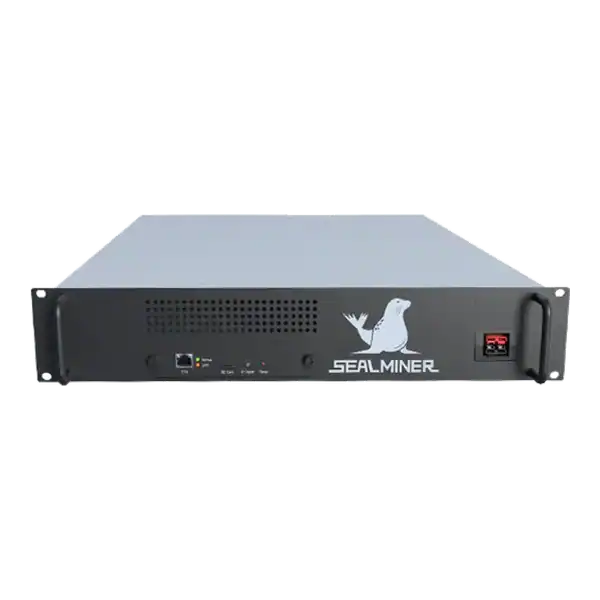
Sealminer A4 Ultra Hydro
Bitcoin & Bitcoin Cash ASIC Miner

886TH
HASHRATE
9.45W/TH
EFFICIENCY
8373W
POWER
£793.67
EST. MONTHLY
NO PAYBACK
EST. ROI
BIP 128 guide to Draft timelock-recovery plan storage, presigned transaction pairs, relative delay, checksums, monitoring, cancellation and reorg safety.
This guide explains BIP 128 Timelock-Recovery Storage Format in plain English. It covers the problem behind the BIP, why it matters and whether the proposal is part of Bitcoin today.
BIP 128 Timelock-Recovery Storage Format: Test parsing, checksum failure, unavailable inputs, fee spikes, delayed monitoring, replacement, shallow and deep reorgs, cancellation during the response window and restoration from an independent backup.
A node operator is checking BIP 128 Timelock-Recovery Storage Format. Record source commit, binary hash, network, chain identity, configuration and dependencies. Build a revision-pinned evidence pack on an isolated node, wallet or protocol harness.
A plan contains presigned transaction stages that eventually direct funds to secondary wallets. A relative nSequence delay in the second stage creates time for the owner to detect and cancel an unintended trigger.
Unlike a single future-nLockTime transaction, the staged construction avoids requiring the owner to refresh solely before a fixed date, while preserving a response window after activation.
The format lets one wallet generate a plan and another application monitor or execute it. Interoperability does not transfer responsibility for custody, availability, fee funding or chain interpretation.

The first transaction may need fee acceleration without moving most funds to recovery. Services must model CPFP or other supported mechanisms, dust, package policy and changing relay conditions.
Track the trigger transaction, confirmation state, relative timelock and successor transaction across replacements and reorganisations. Persist checkpoints and make actions idempotent.
Treat the JSON and transaction material as sensitive: encrypt at rest and in transit, authenticate origin, validate the specified checksum, maintain offline copies and inventory every service that can access it.
Test parsing, checksum failure, unavailable inputs, fee spikes, delayed monitoring, replacement, shallow and deep reorgs, cancellation during the response window and restoration from an independent backup. Build a revision-pinned evidence pack on an isolated node, wallet or protocol harness. Record source commit, binary hash, network, chain identity, configuration and dependencies.
BIP 128 Timelock-Recovery Storage Format: Test parsing, checksum failure, unavailable inputs, fee spikes, delayed monitoring, replacement, shallow and deep reorgs, cancellation during the response window and restoration from an independent backup.
A plan contains presigned transaction stages that eventually direct funds to secondary wallets.
Unlike a single future-nLockTime transaction, the staged construction avoids requiring the owner to refresh solely before a fixed date, while preserving a response window after activation.
The format lets one wallet generate a plan and another application monitor or execute it.
A timelock-recovery file is a living operational plan, not passive backup paperwork. Its value depends on authenticated storage, continuous chain monitoring, viable fee strategy and repeated proof that cancellation works within the intended delay.
Check the current specification status and the documentation for the exact implementation you operate before moving production funds or changing a mining node.

BIP 433 guide to Draft keyless Pay to Anchor outputs, CPFP fee bumping, standardness, ephemeral dust, TRUC anti-pinning and wallet safety.

What is BIP-110? Learn what Bitcoin’s reduced-data soft-fork proposal restricted, why it was controversial and why it later closed.
What is a satoshi? Learn the exact Bitcoin unit relationship, how wallets display sats, where rounding causes mistakes and what Draft BIP 172 proposes.
Join the ASIC Mining Discussion
Members can read and join the discussion
Log in to read comments from other miners. Create a free account if you would like to ask a question or share your experience.
Membership helps us protect the discussion from spam and keep answers useful.