

Sealminer A4 Ultra Hydro
Bitcoin & Bitcoin Cash ASIC Miner
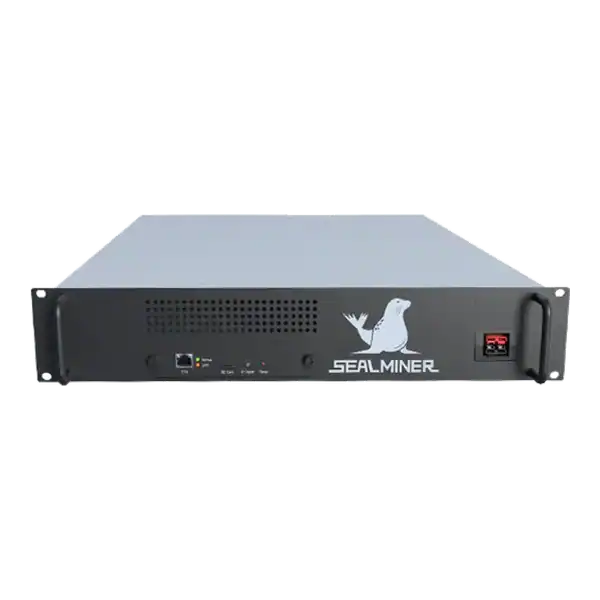

886TH
HASHRATE
9.45W/TH
EFFICIENCY
8373W
POWER
£903.43
EST. MONTHLY
NO PAYBACK
EST. ROI
What is a satoshi? Learn the exact Bitcoin unit relationship, how wallets display sats, where rounding causes mistakes and what Draft BIP 172 proposes.
What is a satoshi? It is the smallest unit normally represented by Bitcoin's base-layer accounting: one bitcoin equals exactly 100,000,000 satoshis. A satoshi is often shortened to sat, with sats used as the informal plural.
BIP 172 is a Draft informational proposal about naming and writing Bitcoin subunits. It did not create the unit or change consensus. This guide explains exact conversion, wallet display, rounding and why the proposal's status must remain visible.
Estimated reading time: 7 minutes
A satoshi is to bitcoin what a penny is to a pound, except the scale is different. There are 100 million satoshis in one bitcoin. The Bitcoin network records integer amounts, while wallets choose whether to show BTC, sats or another display unit.
A wallet receives 125,000 satoshis. Dividing by 100,000,000 gives 0.00125 BTC. If the wallet later displays the balance in sats, the value has not changed; only the label and decimal position changed.
| Satoshi: | One hundred-millionth of a bitcoin. |
|---|---|
| Sat: | A common abbreviation for satoshi. |
| BTC: | The common ticker and display unit for bitcoin. |
| BIP: | A Bitcoin Improvement Proposal document, not automatic activation. |
| Rounding: | Changing a value to fewer displayed decimal places. |
Bitcoin amounts at the protocol and software level are represented as integer base units. The conventional relationship is fixed: 100,000,000 satoshis equal one BTC.
This means 50,000,000 sats equal 0.5 BTC, 1,000 sats equal 0.00001 BTC and one sat equals 0.00000001 BTC. The market price does not change the unit relationship.
The name honours Satoshi Nakamoto, the author of the Bitcoin whitepaper and early software. The community adopted the term long before BIP 172 was drafted.
A name used by wallets and people does not need a consensus fork. Nodes validate integer amounts and transaction rules, not the capitalisation chosen in an interface.
BIP 172 is titled Define Bitcoin Subunits as Satoshis. It proposes terminology including satoshi and satoshis, plus sat and sats abbreviations, and discusses capitalisation and accessibility.
The proposal is informational at the applications layer. Its Draft status means it should be described as a terminology proposal, not an active consensus rule.

A wallet can show the same amount as 0.001 BTC or 100,000 sats. Switching display unit does not make a transaction or alter the underlying balance.
Always check the selected unit before copying an amount. A missing decimal or mistaken BTC label can change the intended payment by a huge factor.
Binary floating point cannot represent many decimal fractions exactly. Money software should use integer satoshis or a decimal type with explicit precision and rounding.
Convert at clear boundaries and test maximum values, negative inputs and overflow. Never round each small line separately when the correct rule is to total exact units first.
An interface should show the unit beside every amount, keep enough contrast and avoid ambiguous tiny decimals. Copy and paste should preserve both value and unit.
Invoices can include a Bitcoin amount, a fiat reference and an expiry. The exchange rate is separate from the satoshi conversion and must have its own timestamp.
Lightning implementations may use millisatoshis internally for routing fee calculations. A millisatoshi is one thousandth of a satoshi in that accounting context, but it cannot be settled as a fractional satoshi in an ordinary base-layer output.
Software must define how sub-satoshi channel amounts are rounded or allocated when settling. Users should not assume every displayed internal unit can become its own on-chain output.
A fee rate may be quoted in satoshis per virtual byte. Wallets estimate transaction size and select an integer fee. Exchange and service fees may use separate rounding rules.
Check whether a service rounds up, rounds down or applies a minimum. The total wallet debit can differ from the recipient amount because the miner fee is paid separately.
Do not confuse satoshis with a token issued by a company, a mining share or a guaranteed reward. A sat is simply a Bitcoin denomination.
Do not use an online converter without checking the decimal relationship yourself. Keep currency conversion separate: one BTC always contains the same sats even when its sterling price moves.
Read the unit, count decimals, convert through 100,000,000 and confirm the destination and network. For a large payment, compare both BTC and sat displays before signing.
In software, store integer units, validate ranges and retain test cases for 1 sat, 100 million sats and the maximum permitted amount. Make rounding visible at every external boundary.
A payment record answering what is a satoshi should show the integer satoshi amount, the chosen BTC display and any separate sterling exchange rate with its timestamp.
Software testing for what is a satoshi should include one sat, 100 million sats, maximum values, invalid negatives and every rounding boundary exposed to a user.
A mining pool may credit a fraction of a bitcoin, but the operator should reconcile the exact satoshi amount sent to the wallet. Pool dashboard decimals, withdrawal fees and the final transaction output can differ, so each stage needs its own labelled value.
For accounting, retain the original satoshi amount and the sterling valuation method used on that date. Do not overwrite the exact Bitcoin quantity when a later market price changes. This keeps unit conversion separate from tax and market valuation.
BIP 172 is Draft and informational at the review date.
One BTC equals exactly 100,000,000 satoshis regardless of market price.
Lightning sub-satoshi accounting does not create fractional-satoshi base-layer outputs.
| Amount | Equivalent |
|---|---|
| 1 satoshi | 0.00000001 BTC |
| 1,000 sats | 0.00001 BTC |
| 100,000 sats | 0.001 BTC |
| 50,000,000 sats | 0.5 BTC |
| 100,000,000 sats | 1 BTC |
A table is a starting point, not a promise. Verify current official sources and apply each detail to the decision you are actually making.
It is one hundred-millionth of a bitcoin.
Exactly 100,000,000 satoshis.
No. It documents proposed terminology for a unit already widely used.
Yes. It is a display choice for the same underlying Bitcoin amount.
Ordinary base-layer outputs use integer satoshi amounts, though Lightning may account in smaller internal units.
What is a satoshi? It is Bitcoin's familiar smallest base unit, fixed at one hundred-millionth of a bitcoin. BIP 172 helps discuss consistent names but does not change consensus. Clear unit labels and exact arithmetic prevent mistakes that no market prediction can repair.

BIP 128 guide to Draft timelock-recovery plan storage, presigned transaction pairs, relative delay, checksums, monitoring, cancellation and reorg safety.
BIP 433 guide to Draft keyless Pay to Anchor outputs, CPFP fee bumping, standardness, ephemeral dust, TRUC anti-pinning and wallet safety.
What is BIP-110? Learn what Bitcoin’s reduced-data soft-fork proposal restricted, why it was controversial and why it later closed.
Join the ASIC Mining Discussion
Members can read and join the discussion
Log in to read comments from other miners. Create a free account if you would like to ask a question or share your experience.
Membership helps us protect the discussion from spam and keep answers useful.