
SHA512/256d Mining Explained: Radiant Hardware
SHA512/256d mining: Radiant mining is a specialised hardware decision tied to a comparatively small network. Check current pool and network details.
Read article
Within Blog Posts & Articles
SHA512/256d mining: Radiant mining is a specialised hardware decision tied to a comparatively small network. Check current pool and network details.
Radiant Mining made simple. See how the network works, which hardware matters and what to check before using electricity.
Assess ASIC hosting security through ownership, physical access, accounts, wallet and pool changes, network segmentation, incidents, insurance and SOC 2 scope.
ASIC contribution margin reconciliation: reconcile ASIC contribution margin from pool receipts, measured energy, fees, cooling, downtime and settlement instead.
Learn how ASIC underclocking profit works, what it changes for miners, the money and safety risks, and the checks to make before using it.
Learn how FiroPoW mining nodes works, what it can earn, the costs and security checks, and how a Firo node can support FiroPoW miners.
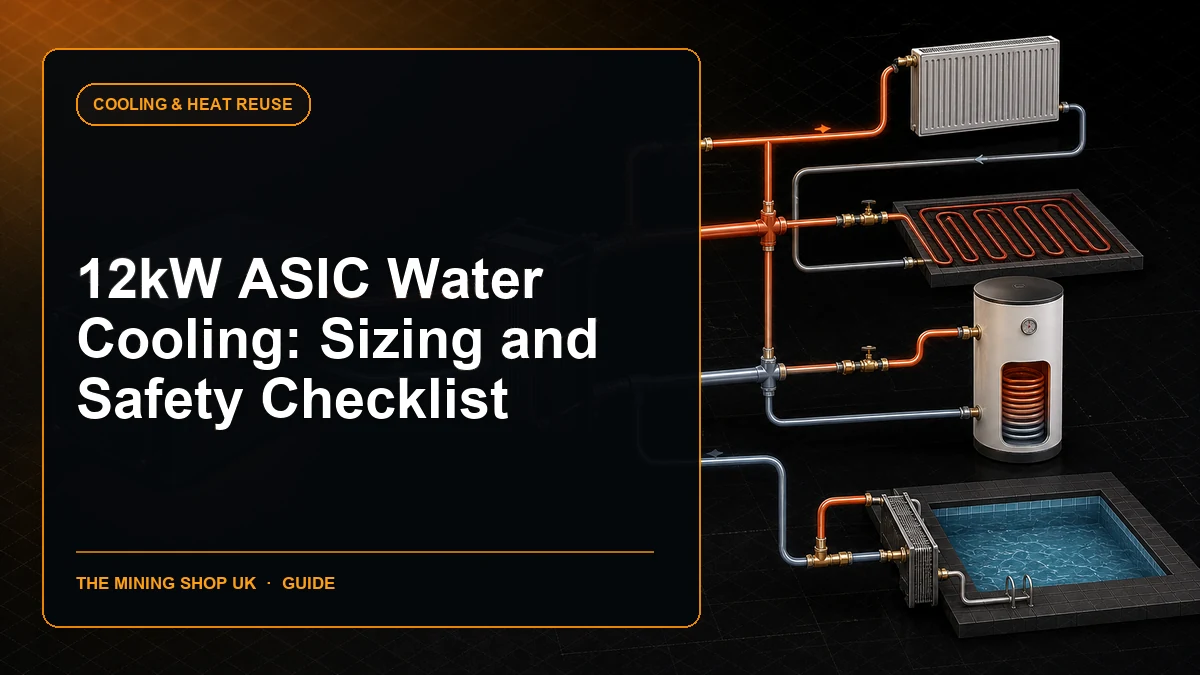
Size 12kW ASIC water cooling with heat-load and flow calculations, exchanger margin, coolant checks, leak controls and commissioning tests.
Extend the Working Life of an ASIC Miner made simple. Compare performance, power, cooling, noise and practical risks before choosing or operating mining hardware.
Learn how Neoxa mining nodes works, what it can earn, the costs and security checks, and how a Neoxa node can support KawPoW miners.
Learn how Alephium mining nodes works, what it can earn, the costs and security checks, and how a Alephium node can support Blake3 miners.
Learn how Kaspa nodes for miners works, what it can earn, the costs and security checks, and how a Kaspa node can support KHeavyHash miners.
Stratum V2 explained in simple English. Learn how its mining, job declaration and template protocols affect security, pool choice and miner control.