

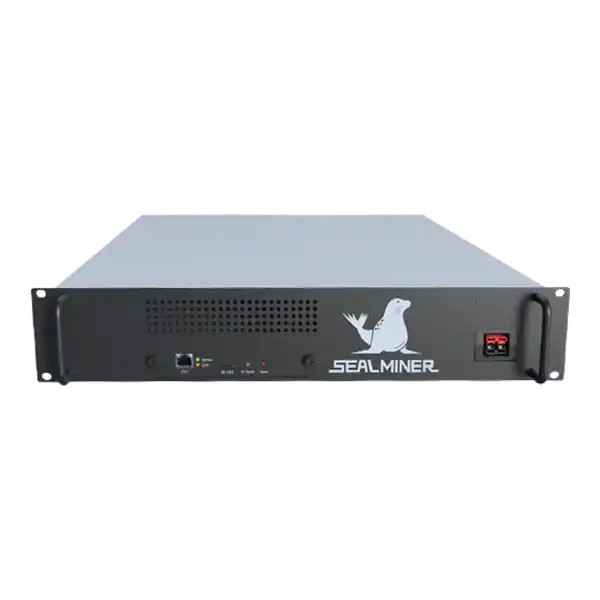
Sealminer DL1 Hydro
Litecoin & Dogecoin ASIC Miner

52.5GH
HASHRATE
149W/GH
EFFICIENCY
7823W
POWER
£774.73
EST. MONTHLY
NO PAYBACK
EST. ROI
Size 12kW ASIC water cooling with heat-load and flow calculations, exchanger margin, coolant checks, leak controls and commissioning tests.
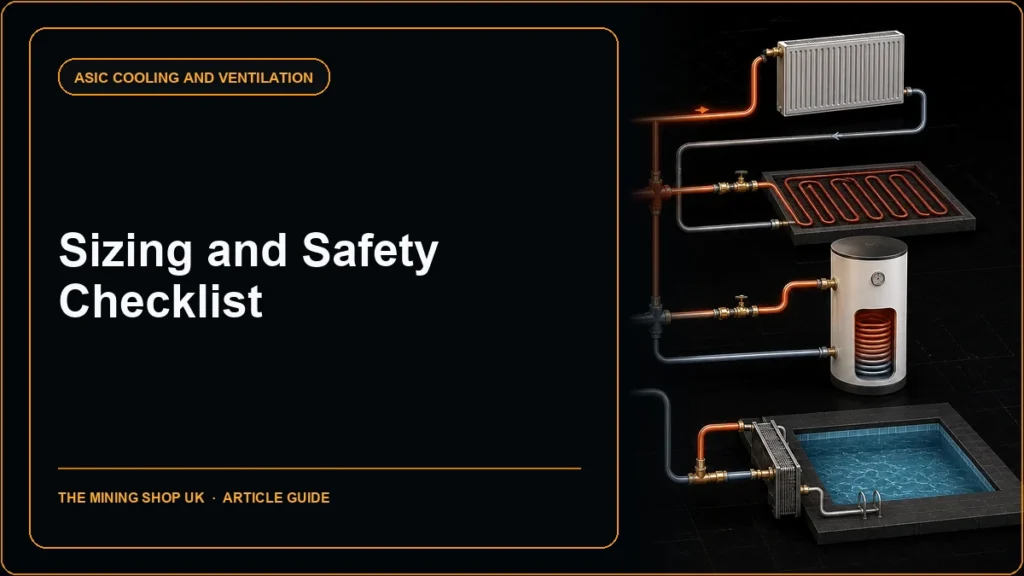
A 12kW ASIC water cooling system must remove the miners’ continuous heat load, pump heat and environmental gains at the intended operating condition. A 12kW ASIC water-cooling loop must remove roughly 12kW of continuous miner heat plus pump and environmental gains at its design condition.
For water, the theoretical flow is about 34.4 litres per minute at a 5°C temperature rise or 17.2 litres per minute at 10°C, before design margin and coolant-property correction. The selected miner's required inlet temperature, per-unit flow, pressure, water quality and connector limits take priority over that system estimate.
12kW ASIC water cooling: A dependable 12kW ASIC water-cooling system is designed from heat duty, temperature rise and component curves, then constrained by the exact miners.
A site operator is checking 12kW ASIC water cooling. Sizing from miner hashrate instead of wall power. But exchanger performance, branch balance, coolant chemistry, pressure, leak response and outdoor heat rejection decide whether the loop works.
Nearly all electrical power entering a hydro miner appears as heat in the coolant and surroundings. Use measured wall power at the intended profile, not just the hashrate name.
Add pump heat, pipe gains and any equipment sharing the loop. Then apply a design margin for power tolerance, fouling, ambient conditions and expansion. Do not add an arbitrary margin twice across every component.
| Item | Example | Evidence needed |
|---|---|---|
| Miner wall power | 12.0 kW | Measured or specified at design inlet |
| Auxiliary heat | 0.4 kW | Pump and loop equipment |
| Design margin | 15% | Agreed engineering allowance |
| Selected duty | 14.3 kW | Used consistently for exchanger and sink |
| Availability | Continuous | Worst-duration operating requirement |

Heat carried by a liquid equals mass flow multiplied by specific heat capacity and temperature rise. For water near normal operating temperatures, use about 4.186 kJ/kg°C for an initial calculation.
At 12kW and a 5°C rise, mass flow is 12 divided by 4.186 times 5. This is about 0.573 kg/s or 34.4 L/min. At a 10°C rise it is about 17.2 L/min.
Antifreeze mixtures have different heat capacity, density and viscosity. So use supplier data at the design concentration and temperature. The final flow must also meet every parallel miner’s minimum and balance requirement.
A plate heat exchanger needs a duty, primary and secondary inlet temperatures, permitted approach, flows, pressure drop, materials and fouling allowance. A nominal 20kW label without those conditions is not a design.
The dry cooler, radiator, cooling tower, pool or building circuit must reject the selected duty at the worst relevant ambient or receiving-water temperature. A radiator rated in cold air can deliver far less on a hot day.
Protect the miner loop from unsuitable building, spa or process water through an exchanger. This preserves coolant chemistry and prevents contamination crossing circuits.
Bitmain’s S19 Pro+ Hyd example specifies 8 L/min with a 10 per cent tolerance per miner, inlet water of 20 to 40°C and maximum pressure of 3.5 bar. Other models differ and the complete system must use their own manual.
Do not infer that three miners simply need three times the pump nameplate flow. Parallel branches need balanced pressure drop, valves and measured branch flow.
Wrong inlet temperature, pressure or flow can create thermal shutdown, leakage or damage and can affect warranty. Record the design range on the operating dashboard.
Use the manufacturer’s permitted coolant and water-quality limits. Bitmain’s Antspace guidance defines pH, hardness, ions, conductivity, biological and corrosion indicators for different circuits and calls for periodic testing.
Map every wetted material: miner cold plate, manifolds, exchanger, pump, valves, seals and pipe. Mixed metals and incorrect inhibitors can accelerate galvanic corrosion.
Do not top up indefinitely with untreated mains water. Record concentration, make-up volume, test results and change history so a leak or chemistry drift is visible.
Plot the system curve from pipe, fittings, miners, valves, filters and exchanger at the design flow, then select a pump at that duty. Free-flow pump litres per minute are not available after pressure loss.
Provide expansion volume, fill, vent, drain, air separation and pressure relief suitable for the closed loop. Place sensors where they measure actual miner supply and return.
Use filtration that protects channels without creating an unmonitored restriction. Add differential pressure or a maintenance trigger across filters and exchangers.
Fit leak detection below miners, manifolds, pumps and exchangers. A detected leak should stop the affected electrical and pumping equipment in a defined safe sequence.
Interlock miners against low flow, high inlet temperature, high outlet temperature, abnormal pressure and pump failure. Use fail-safe states and an independent hardwired limit where the risk assessment requires it.
Provide a bypass or heat-rejection route for pump coast-down and residual heat. Redundant pumps or cooling can be valuable only when changeover is tested and maintained.
Pressure-test and flush under the component manufacturer’s limits before connecting clean miners. Remove air, verify direction and inspect every joint.
Start pumps with miners off, balance each branch and record flow, pressure and temperatures. Then add electrical load in stages while confirming temperature rise and heat-rejection response.
Trip every alarm and interlock deliberately. Simulate pump loss, high inlet temperature, sensor failure and power restoration. Keep the signed commissioning values as the baseline.
Trend supply and return temperature, branch flow, pump status, pressure, differential pressure, coolant condition, room temperature, miner power and thermal alarms.
A rising temperature difference can indicate lower flow or more heat. A falling difference can indicate excessive flow or lost miner load. Interpret it with measured power.
Inspect for staining, deposits, hose softening, corrosion and small make-up additions. Replace coolant and service equipment under test results and manufacturer intervals.
12kW ASIC water cooling: A dependable 12kW ASIC water-cooling system is designed from heat duty, temperature rise and component curves, then constrained by the exact miners.
Nearly all electrical power entering a hydro miner appears as heat in the coolant and surroundings.
Heat carried by a liquid equals mass flow multiplied by specific heat capacity and temperature rise.
A plate heat exchanger needs a duty, primary and secondary inlet temperatures, permitted approach, flows, pressure drop, materials and fouling allowance.
A dependable 12kW ASIC water-cooling system is designed from heat duty, temperature rise and component curves, then constrained by the exact miners. The first water-flow estimate is straightforward. But exchanger performance, branch balance, coolant chemistry, pressure, leak response and outdoor heat rejection decide whether the loop works. Commission every alarm at staged load and retain measured baseline values for maintenance.
Send The Mining Shop UK the exact hydro-miner models, measured power, coolant limits and intended heat sink before selecting pumps or exchangers, and use a competent mechanical and electrical designer for the final system.
Calculate heat, flow and heat rejection separately. The loop, heat exchanger and outdoor sink must all meet the same worst credible duty. At 12kW, water needs roughly 34.4 L/min for a 5°C rise or 17.2 L/min for 10°C in an ideal calculation. Add margin and verify every miner's flow and pressure range.

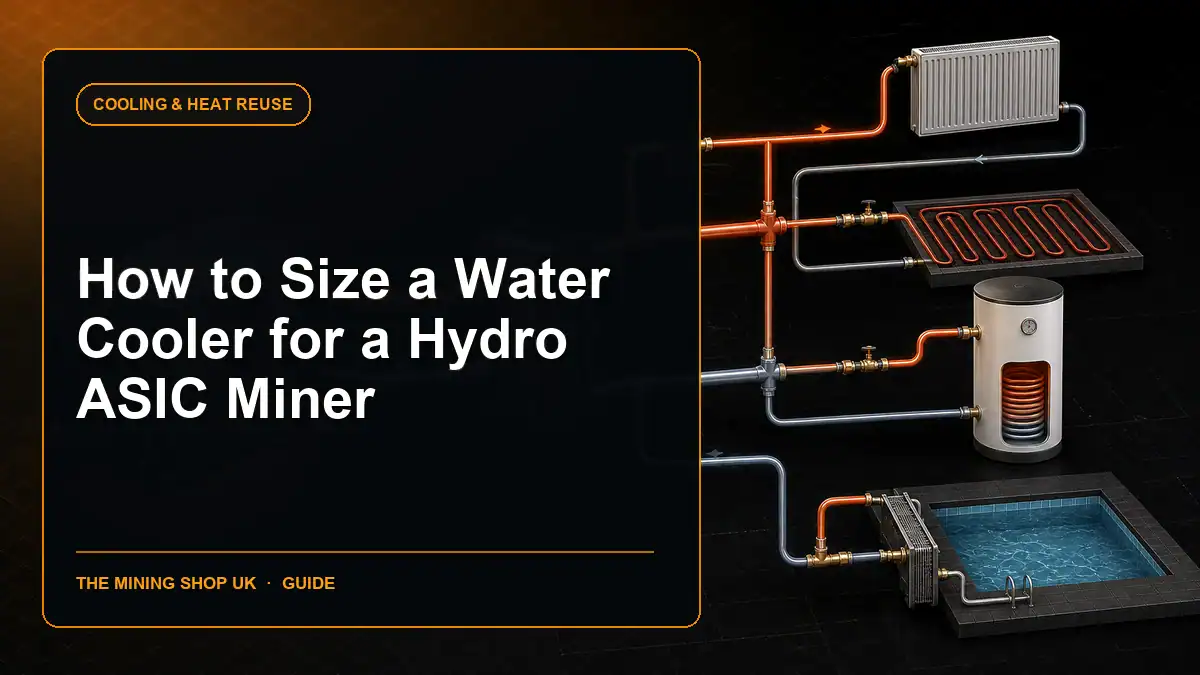
Calculate hydro ASIC water cooler sizing from measured kW, coolant flow, temperature rise, ambient design, pump head, redundancy and safe rejection margin.
Understand Immersion Cooled ASIC Miners for UK. Plan electrical load, airflow, heat, noise and cooling for a UK mining site before choosing equipment.
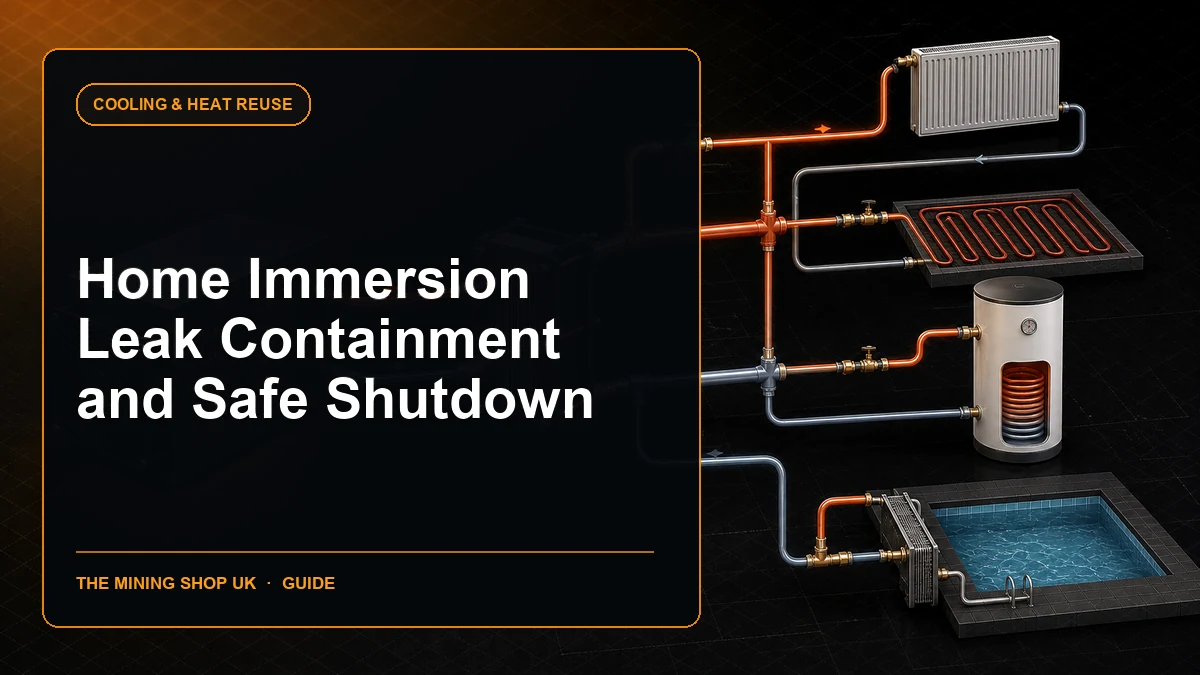
Plan home immersion leak containment through tank siting, secondary containment, sensors, isolation, fluid handling, heat rejection and emergency response.
Join the ASIC Mining Discussion
Members can read and join the discussion
Log in to read comments from other miners. Create a free account if you would like to ask a question or share your experience.
Membership helps us protect the discussion from spam and keep answers useful.