Radiant Mining Guide: SHA512/256d Hardware and Risks explains where Radiant fits in proof of work, what hardware is relevant and which facts must be checked before committing power or equipment.
TL;DR
Radiant Mining Guide: SHA512/256d Hardware and Risks explains where Radiant fits in proof of work, what hardware is relevant and which facts must be checked before committing power or equipment.
- Confirm the current Radiant consensus rules and active mining algorithm before choosing hardware.
- SHA512/256d compatibility does not by itself prove that a network has useful liquidity, pool support or sustainable demand.
- Use current pool, wallet, exchange and network documentation because smaller projects can change or become inactive.
- Treat revenue estimates as a comparison only and include electricity, fees, downtime and hardware resale risk.
Enter Radiant (RXD), a cryptocurrency that’s not trying to replace your morning coffee routine or tokenize your pet hamster. Instead, it’s tackling some of the most fundamental problems in blockchain technology with the kind of technical innovation that matters. What’s compelling about Radiant is how it combines the best parts of Bitcoin and Ethereum while fixing the worst parts of both.
The Problem: Why Current Blockchains Are Basically Broken
Before we dive into what makes Radiant special, let’s talk about why we need something like it in the first place. Current blockchain technology is kind of like trying to run a modern city with infrastructure from the 1800s, technically possible, but painfully inefficient and expensive.
The fundamental issue about Radiant addresses is this artificial choice between security and scalability. Traditional blockchain wisdom says you can have a secure, decentralized network, or you can have fast, cheap transactions, but not both. This assumption has held back the entire industry for years, forcing developers to make compromises that ultimately serve nobody well.
Most “solutions” to these problems involve complex layer-2 networks, sidechains, or proof-of-stake mechanisms that trade away decentralization for speed. These approaches are like building increasingly complicated bridges over a broken highway instead of just fixing the road itself. What’s significant about Radiant is that it throws out these assumptions and builds something fundamentally different from the ground up.
Technical design
Now, before your eyes glaze over at the mention of “technical specifications,” let’s break down what makes Radiant tick in terms that won’t require a computer science PhD to understand.
Radiant uses something called a UTXO (Unspent Transaction Output) model, which is the same fundamental architecture as Bitcoin. Treat UTXOs like digital cash, each “coin” has a specific history and can only be spent once. This model provides excellent security and parallelism, meaning transactions can be processed simultaneously rather than one at a time.
But here’s where things get interesting about Radiant: it combines this UTXO foundation with Turing-complete smart contracts, similar to what Ethereum offers. Normally, this combination would be impossible, UTXOs are simple by design, while smart contracts require complex state management. Radiant solves this through something called “induction proofs” that allow the network to verify complex computations without storing all the intermediate states.
The mining algorithm powering this innovation is SHA512/256d, which is specifically designed to transition from GPU mining to ASIC mining as the network grows. This might sound counterintuitive, don’t we want GPU mining to stay democratic? The clever part about Radiant’s approach is that the SHA512/256d algorithm simplifies ASIC manufacturing, making it easier for multiple manufacturers to produce miners rather than concentrating all the hashpower with one or two companies.
Unlike Bitcoin’s SHA-256 algorithm, which requires massive amounts of energy and highly specialised hardware, or Ethereum’s previous mining algorithm that favored memory-intensive graphics cards, SHA512/256d strikes a balance. It can be mined efficiently with both GPUs and ASICs, providing a smooth transition path as the network evolves.
The algorithm’s design ensures that miners can participate profitably without requiring massive data center operations. This means individual miners with a few graphics cards can still earn meaningful rewards, while also allowing the network to scale with dedicated ASIC hardware as adoption grows.
Mining Radiant: Your Gateway to Passive Income
GPU mining for Radiant works with most modern graphics cards, using mining software like SRBMiner, ccminer variants, or specialised miners like “Radiator.” The SHA512/256d algorithm performs well on both NVIDIA and AMD cards, with hashrate depending primarily on the GPU’s processing power rather than memory bandwidth. This means even older graphics cards can participate effectively.
What miners appreciate about Radiant is the predictable block structure and fair emission schedule. Blocks are mined every 5 minutes (compared to Bitcoin’s 10 minutes), with current rewards of 25,000 RXD per block following the project’s first halving in April 2024. The network started with 50,000 RXD per block and follows a halving schedule every two years, similar to Bitcoin but with faster emission initially.
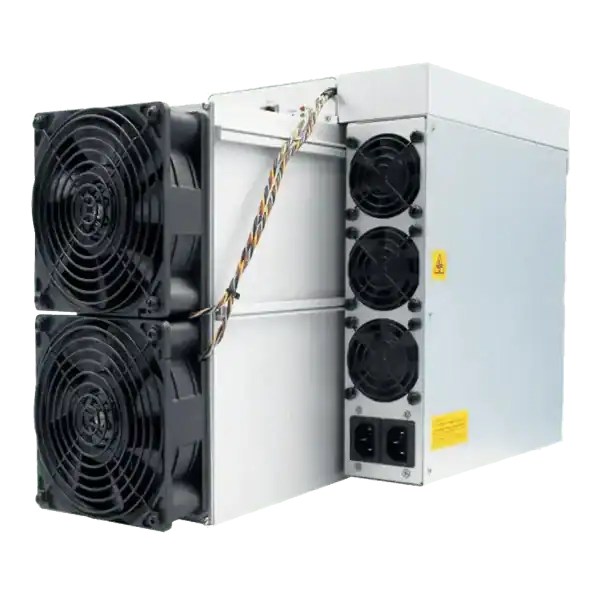
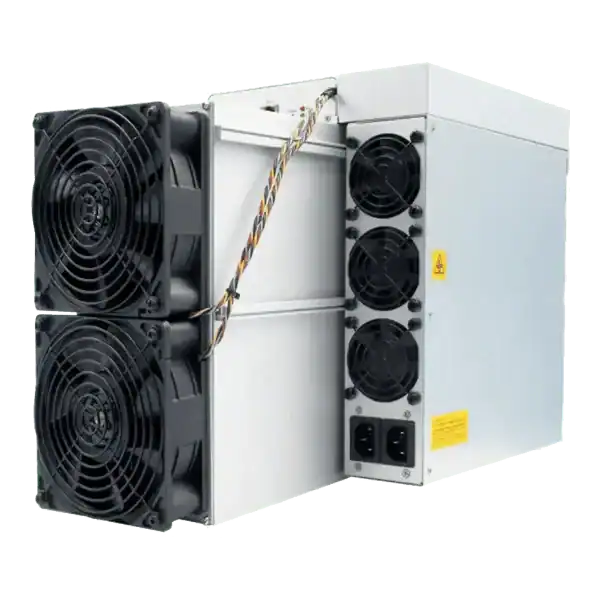
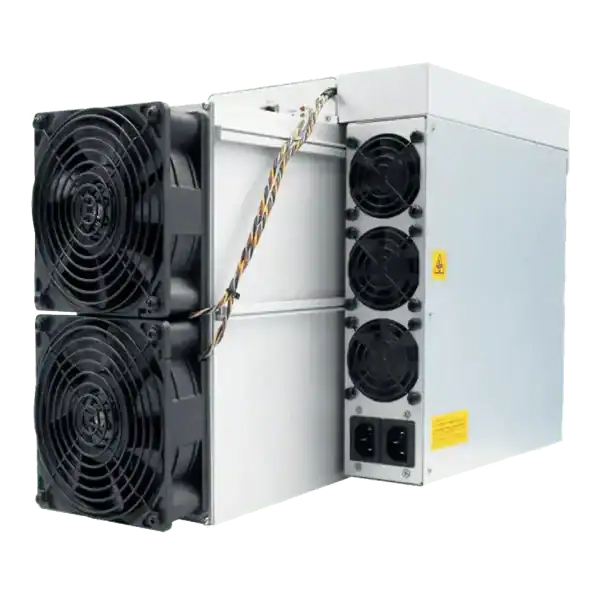
The transition to ASIC mining began in September 2024 with the introduction of dedicated SHA512/256d miners from manufacturers like DragonBall Miner (A11 Dual) and IceRiver (RX0). This transition doesn’t immediately obsolete GPU miners, the algorithm remains efficient for graphics cards, but ASICs provide higher hashrates for dedicated mining operations.
Mining pools for Radiant include established operators like K1Pool, WoolyPooly, and CoinMinerz, offering PPLNS (Pay Per Last N Shares) and solo mining options. Pool fees typically range from 1-2%, with automatic payouts and support for both GPU and ASIC miners. The beauty about Radiant mining pools is their focus on transparency and fair distribution rather than maximising pool operator profits.
For those interested in getting started, the barrier to entry remains relatively low. A mid-range gaming computer can mine Radiant profitably, especially during periods when other SHA512/256d coins aren’t competing for the same hashpower. The key is understanding that profitability fluctuates with network difficulty and coin price, so successful miners develop strategies for long-term participation rather than chasing short-term gains.
The UTXO development: Why This Architecture Matters
One of the most misunderstood aspects about Radiant is why its UTXO architecture is such a big deal. Most people dismiss UTXOs as “old technology” because Bitcoin uses them, but this misses the point entirely. UTXOs aren’t outdated, they’re superior for many use cases, but previous implementations couldn’t handle complex smart contracts.
The UTXO model provides natural parallelism, meaning multiple transactions can be processed simultaneously without conflicts. In account-based systems like Ethereum, every transaction potentially affects global state, creating bottlenecks. With UTXOs, transactions are independent units that can be verified in parallel, dramatically improving throughput.
Radiant’s breakthrough is making UTXOs programmable through induction proofs and account emulation. This allows developers to write smart contracts that feel like Ethereum applications but execute with the parallelism and security of Bitcoin-style UTXOs. The practical result about Radiant is smart contracts that can scale to thousands of transactions per second without the congestion issues that plague Ethereum.
Real-World Applications: Beyond the Hype
What sets Radiant apart from many blockchain projects is its focus on solving practical problems rather than creating solutions looking for problems. The combination of fast transactions, low fees, and Turing-complete programming opens up use cases that simply aren’t viable on other platforms.
The instant transaction feature (0-conf) allows for real-time payments without waiting for block confirmations. This makes Radiant suitable for point-of-sale systems, online gaming, and other applications where immediate settlement matters. Traditional cryptocurrencies require users to wait minutes or hours for transaction finality, making them impractical for everyday commerce.
Smart contract applications about Radiant can handle high-frequency operations that would be prohibitively expensive on Ethereum. Think automated trading systems, gaming applications with thousands of micro-transactions, or IoT devices that need to process payments autonomously. The low fees and high throughput make these applications economically viable for the first time.
The platform’s support for complex financial instruments like tokens, auctions, and multi-signature contracts provides the foundation for decentralized finance applications. But unlike Ethereum-based DeFi, which often requires hundreds of dollars in gas fees for complex operations, Radiant enables micro-DeFi applications that work for regular users rather than just crypto whales.
The Community: Building Something Different
The community aspect about Radiant reflects its grassroots, technology-first approach to blockchain development. The project launched without ICO funding, venture capital investment, or pre-mined tokens for founders. This creates a fundamentally different dynamic than most cryptocurrency projects, where early investors and founders control large token supplies.
The anonymous founder approach, similar to Bitcoin’s Satoshi Nakamoto, ensures that the project’s success depends on technical merit rather than personality cults or marketing campaigns. Development happens in the open through GitHub, with contributions from developers worldwide who are motivated by the technology rather than token allocations.
Mining fairness was prioritized from day one, with publicly available mining guides ensuring equal access to the initial coin distribution. This contrasts with many projects where insiders accumulate large positions before public launch. The result about Radiant is a more distributed ownership structure that aligns with blockchain’s decentralization ethos.
Community governance operates through technical discussions and code contributions rather than token-weighted voting systems that favor large holders. This meritocratic approach attracts developers and users who care about building functional technology rather than maximising short-term token prices.
Economic Mechanics: The Tokenomics That Make Sense
The economic design about Radiant reflects careful consideration of long-term sustainability rather than artificial scarcity or speculative mechanisms. The total supply cap of 21 billion RXD (1,000 times Bitcoin’s supply) accounts for the coin’s role as both a store of value and a medium of exchange for high-frequency transactions.
The halving schedule every two years creates predictable inflation reduction while providing sufficient liquidity for network growth. Current block rewards of 25,000 RXD per block decrease to 12,500 RXD in April 2026, following Bitcoin’s proven economic model but adapted for higher transaction volumes.
Transaction fees remain minimal due to the network’s high throughput capacity, making Radiant practical for small-value transfers that would be uneconomical on Bitcoin or Ethereum. This fee structure encourages actual usage rather than just speculation, creating genuine demand for the token.
The lack of staking mechanisms or inflationary rewards for token holders means RXD derives value from network usage rather than financial engineering. This creates more sustainable economics where token price reflects actual utility rather than yield farming or staking rewards that ultimately dilute value.
Challenges and Realistic Expectations
No cryptocurrency project exists without challenges, and being honest about Radiant’s obstacles is essential for anyone considering involvement. The biggest challenge is achieving sufficient adoption to demonstrate the platform’s capabilities at scale.
Building a new blockchain requires attracting developers, miners, and users simultaneously, a classic chicken-and-egg problem. Without developers building applications, users have no reason to adopt the platform. Without users, developers have no incentive to build. Without transaction volume, miners may find more profitable alternatives.
The technical complexity about Radiant, while innovative, creates educational barriers for developers accustomed to simpler blockchain models. UTXO programming requires different thinking than account-based smart contracts, potentially slowing developer adoption compared to Ethereum-compatible platforms.
Competition from established platforms with larger developer ecosystems and user bases creates additional adoption challenges. Ethereum’s network effects and developer familiarity provide significant advantages, even if Radiant offers superior technical capabilities.
Regulatory uncertainty affects all cryptocurrency projects, but UTXO-based systems may face additional scrutiny due to privacy characteristics. While Radiant isn’t designed for anonymity, UTXOs provide different traceability properties than account-based systems, potentially complicating regulatory compliance.
Practical setup checks
If this discussion about Radiant has sparked your interest, there are several ways to get involved depending on your goals and technical expertise.
For miners, start by evaluating your hardware capabilities and electricity costs. GPU miners should test their hashrates using mining calculators and consider joining established pools for steady income. The community maintains updated lists of mining pools, recommended software configurations, and profitability calculators.
Developers interested in building on Radiant can explore the extensive documentation and code examples available on GitHub. The platform provides tools for JavaScript development, smart contract languages, and wallet integration. Starting with simple applications helps build familiarity with UTXO programming concepts before tackling complex projects.
Those interested about Radiant as an investment can purchase RXD on several cryptocurrency exchanges, including MEXC, CoinEx, and smaller platforms. Trading volume remains relatively low compared to major cryptocurrencies, so consider dollar-cost averaging and never invest more than you can afford to lose.
For users wanting to experiment with the platform, downloading the Radiant wallet and trying small transactions provides hands-on experience with the network’s capabilities. The instant transaction feature and low fees make experimentation affordable and educational.
The Competitive Landscape: How Radiant Stacks Up
The blockchain scalability space includes numerous competing approaches, each with different trade-offs and target markets. Layer-2 solutions like Lightning Network and Polygon attempt to scale existing platforms, while new layer-1 blockchains like Solana and Avalanche pursue high throughput through different consensus mechanisms.
What differentiates Radiant is its unique combination of UTXO architecture with smart contract capabilities. Most scalability solutions sacrifice decentralization, security, or composability to achieve high throughput. Radiant’s approach maintains all three while solving the programmability limitations of traditional UTXO systems.
The technical positioning about Radiant targets use cases where both security and performance matter. Gaming applications, financial services, and IoT deployments need the reliability of proof-of-work consensus combined with the flexibility of programmable transactions. This niche is underserved by current blockchain platforms.
Compared to proof-of-stake alternatives, Radiant’s proof-of-work consensus provides different security guarantees that some applications prefer. While proof-of-stake is more energy-efficient, proof-of-work has proven track record for securing high-value networks without depending on token-based voting mechanisms.
Current status and outlook
The development roadmap about Radiant focuses on practical improvements rather than theoretical blockchain research. Near-term priorities include expanding the developer tooling ecosystem, improving documentation, and supporting application developers building on the platform.
ASIC mining adoption continues growing with additional hardware manufacturers developing SHA512/256d miners. This transition strengthens network security while maintaining decentralization through competitive mining markets. The algorithm’s design ensures multiple manufacturers can produce viable hardware rather than concentrating mining with single suppliers.
Smart contract capabilities continue expanding through community development and testing. The platform’s Turing-complete programming enables complex applications, but practical deployment requires extensive testing and optimization. Real-world usage provides feedback for improving performance and developer experience.
Partnership development with businesses and applications could accelerate adoption by providing proven use cases for the technology. The platform’s technical capabilities are strongest when demonstrated through working applications rather than theoretical benchmarks.
The Environmental Question: Proof-of-Work in a Green World
The environmental discussion about Radiant acknowledges legitimate concerns about proof-of-work energy consumption while providing context for the trade-offs involved. SHA512/256d mining is more energy-efficient than Bitcoin’s SHA-256 algorithm, requiring less computational work for equivalent security.
The transition to ASIC mining improves energy efficiency by replacing general-purpose GPUs with specialised hardware designed specifically for mining. Modern mining hardware provides significantly better hash-per-watt ratios than graphics cards, reducing overall network energy consumption.
Proof-of-work provides security guarantees that don’t depend on token ownership concentration or slashing mechanisms. This creates different trust assumptions than proof-of-stake systems, which some applications prefer despite higher energy costs. The choice about Radiant reflects priorities around security model rather than simply ignoring environmental concerns.
Mining operations increasingly use renewable energy sources as they become cost-competitive with fossil fuels. The economic incentives for miners favor low-cost electricity, which increasingly means renewable sources in many regions.
Practical conclusion
Radiant represents a genuine technical advancement in blockchain architecture rather than just another speculative cryptocurrency. Its combination of UTXO security, smart contract programmability, and scalable design addresses real limitations in current blockchain platforms.
The project’s focus on practical utility over marketing hype creates opportunities for early adopters who can recognise technical merit before mainstream attention. Whether through mining, development, or investment, participation in Radiant provides exposure to potentially transformative blockchain technology.
Most importantly, Radiant demonstrates that innovation in cryptocurrency hasn’t stopped with Bitcoin and Ethereum. The space continues evolving with new approaches to fundamental problems, creating opportunities for those willing to look beyond the most popular projects.
The technical innovations about Radiant solve real problems that limit blockchain adoption for practical applications. Fast transactions, low fees, and programmable money could enable use cases that simply aren’t viable on current platforms. Understanding these capabilities provides insight into where blockchain technology might evolve.
For anyone interested in the intersection of technical innovation and practical utility, understanding what makes Radiant unique provides valuable perspectives on blockchain development. The project shows how careful engineering can overcome limitations that many consider fundamental to the technology.
The future success about Radiant depends on execution rather than promises. The technical foundation is solid, the community is engaged, and the use cases are practical. Now comes the harder work of building applications, attracting users, and proving that better technology matters in the competitive cryptocurrency landscape.
For those willing to look beyond the latest meme coins and DeFi yield farming schemes, Radiant offers something increasingly rare in cryptocurrency: a project focused on solving real problems with innovative technology. That focus might just be what makes it worth your attention in a world full of digital distractions.
What to verify before acting
Mining networks, pool support, firmware, exchange access and hardware availability can change. Verify the current network documentation, test with a small controlled configuration and do not rely on a historical profitability figure when purchasing equipment.
Useful next steps
Authoritative references
Check current official documentation alongside this article because network rules, product ranges and legal guidance can change.