Bitcoin Mining Containers: Power, Cooling and Planning
Plan a Bitcoin mining container with safe power, airflow, noise control, fire protection, network, planning permission and environmental checks in the UK.
A Bitcoin mining container is an industrial electrical and ventilation project, not a shipping box filled with ASICs. The design must start with available grid capacity, continuous current, heat rejection, noise at workers and neighbours, fire strategy, safe access, network and planning position. A generator, transformer, louvre or external cooler can create separate consent and environmental questions even when the ASICs themselves only consume electricity.
Bitcoin mining container: A container can make sense when a verified site has enough power, planning acceptance, space for heat and noise control, competent maintenance and a need for modular deployment.
Simple Example
A site operator wants to understand Bitcoin mining container. Do not proceed when grid capacity is informal, neighbours are close and unassessed, emergency isolation is unclear or the design depends on open doors and temporary cables.
Key Terms in Plain English
ASIC:
A computer built to do one specialised job. A mining ASIC is designed for a particular proof-of-work algorithm.
Efficiency:
How much electricity a miner uses for a set amount of work. Lower joules per terahash usually means better efficiency.
Wall power:
The electricity measured at the socket or supply. It includes losses that a headline chip figure may leave out.
Mining pool:
A service that combines work from many miners and shares rewards using stated rules.
Kilowatt (kW):
A measure of power equal to 1,000 watts. It shows how quickly equipment uses electricity.
Define the Operating Requirement Before the Container
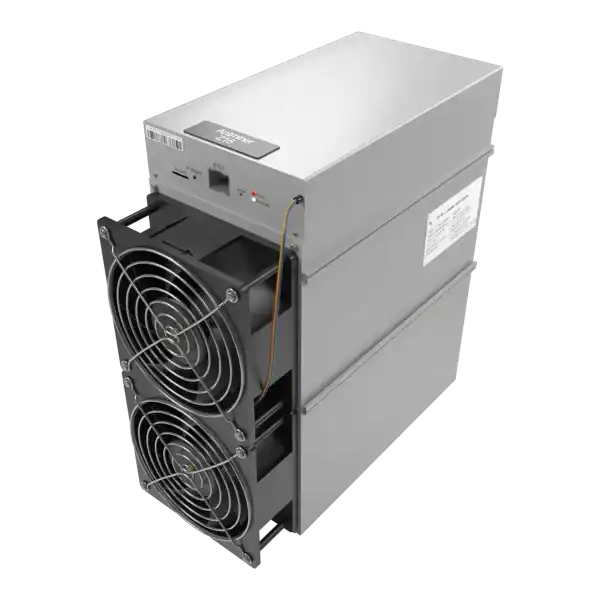
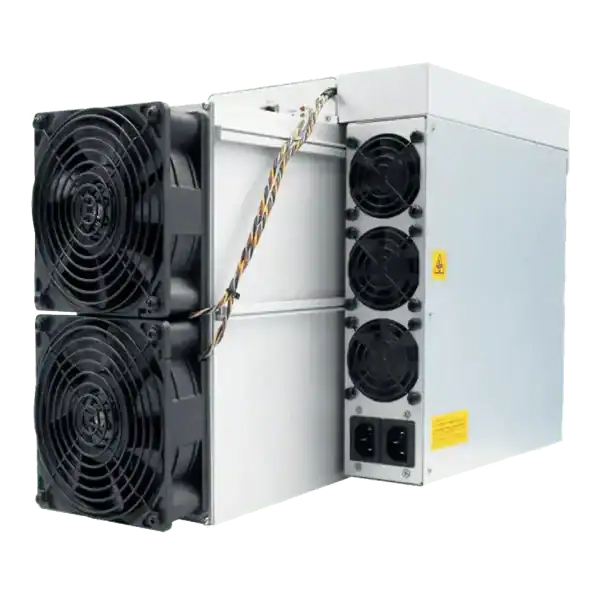
List the exact ASIC models, quantity, voltage, maximum and typical power, cooling type, network, expected operating profile and future expansion. Air-cooled, hydro and immersion machines require materially different container designs.
Decide whether miners will operate continuously, follow an energy price, curtail for the grid or use on-site generation. The switchgear, controls, contract and revenue model must support the same duty.
Identify the site operator, equipment owner, electricity buyer and maintenance provider. Clear responsibility is essential when a trip, fire alarm, leak or noise complaint requires immediate action.
Quick reference for Bitcoin mining container.
Calculate the Electrical Load and Connection
Add the miner input at the intended profile, ventilation fans, pumps, controls, network, lighting, heaters required for cold start and other auxiliaries. Use maximum credible simultaneous load for protection and cable design, not the marketing efficiency alone.
One hundred 3.5 kW miners represent 350 kW before container auxiliaries and distribution losses. At 400 V three-phase and power factor near one, the line current for 350 kW is roughly 505 A using power divided by square root of three times voltage. A competent designer must use the actual voltage, power factor, harmonics, derating, fault level and installation method.
Confirm the distribution-network or private-wire capacity, transformer, metering, earthing, protection coordination, isolation, PDU rating and connection agreement. The container should have an accessible emergency isolation plan that does not expose staff to arc or electrical risk.
Container design inputs
System
Design input
Commissioning evidence
Electrical
Maximum load, fault level and protection
Tests, labels and load record
Air or liquid cooling
Heat load and ambient design
Temperature and flow under load
Noise
Source data and receptor locations
Boundary and worker measurements
Fire
Detection, materials and response
Alarm, isolation and drill
Network
Pool routes and management boundary
Failover and access test
Design Heat Rejection for the Worst Credible Condition
Electrical input becomes almost the same quantity of heat. A 350 kW miner load creates roughly 350 kW of continuous thermal load before fan and distribution losses. The cooling design must work at the site’s high ambient condition and account for dirty filters, wind, recirculation and equipment tolerance.
For air cooling, calculate airflow from heat, air density, heat capacity and permitted temperature rise. Arrange intake and exhaust so hot air cannot return to the inlet. Louvres, filters, attenuators and bends add pressure. So select fans from the complete system curve.
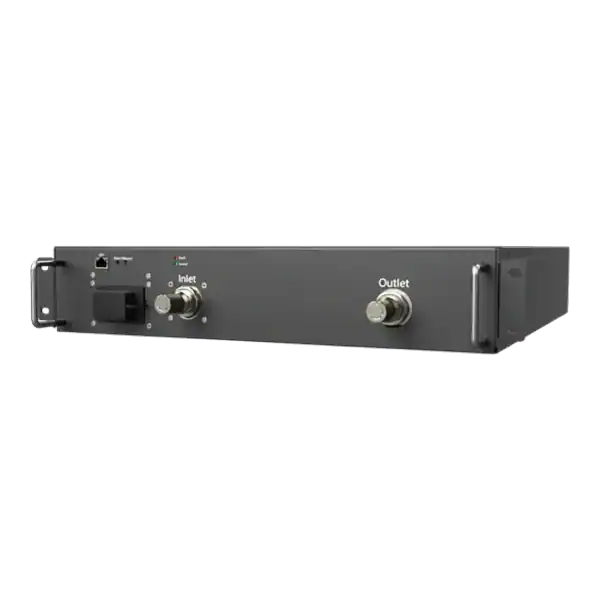
Hydro and immersion containers move heat into liquid but still need pumps, heat exchangers or dry coolers, expansion, leak detection, water or fluid quality, pressure relief and freeze protection. Define safe shutdown if flow or final heat rejection fails.
Control Noise at Source and at the Boundary
Hundreds of high-speed fans combine into a significant continuous source. Container walls can reduce some paths while large intake and exhaust openings remain acoustically open. Measure or model the complete installed system, including external cooling plant and transformers.
Use lower-noise equipment, fan selection, silencers, barriers, distance, orientation and vibration isolation before relying on hearing protection. HSE requires employers to assess and reduce workplace noise. Local authorities can investigate business noise that may be a statutory nuisance.
get an acoustic assessment at the nearest sensitive receptors before placement. A planning condition or abatement requirement can restrict hours or noise and undermine a continuous mining model.
Resolve Planning and Environmental Questions
Ask the local planning authority whether container placement, change of use, external plant, louvres, flues, transformers, fencing, lighting or access works require permission. GOV.UK guidance states that a material change of land or building use can require planning permission and depends on significance and impacts.
Check building regulations, landlord, lease, grid and fire-authority requirements with advisers. Do not assume a movable container is outside planning control or that an industrial estate permits every industrial process.
Standby or on-site combustion generation can create medium-combustion-plant or specified-generator permitting questions. Environment Agency guidance explains that generators on the same site and purpose may need aggregation. Check the current rules for the UK nation and the exact plant before installation.
Create a Fire, Emergency and Access Strategy
Assess ignition sources, cable and connection faults, combustible dust and packaging, batteries, oil or coolant and external wildfire or flood. Select detection and suppression with competent fire advice and compatibility with live electrical and liquid systems.
Provide safe access, lighting, escape, door release and exclusion zones. Staff should not enter a hot, smoky, electrically unsafe or oxygen-depleted container to save hardware. Emergency information must identify isolation points and hazards for responders.
Monitor smoke or heat, inlet and outlet conditions, fan or pump state, electrical protection and door access. Alarms need a staffed response and an automatic safe state where delay would be dangerous.
Secure the Network and Physical Site
Use wired switching sized for the fleet, redundant upstream routes where justified, protected DNS and time services, and deliberate pool failovers. Mining bandwidth is modest. But loss or manipulation of work can waste the full electrical load.
Segment miner administration from office, CCTV, access control and customer systems. Use a VPN or access gateway, individual accounts and logs. Never expose every miner interface through public port forwarding.
Provide fencing, locks, CCTV and serial-number inventory appropriate to the value, without blocking emergency access or ventilation. Confirm insurance valuation, excess, flood, fire, theft, business interruption and location conditions.
Commission in Stages
Test electrical protection, phase balance, earthing, isolation, controls and network before installing the full fleet. Add miner groups gradually and record voltage, current, harmonics, PDU temperature, airflow, inlet temperature, rejects and noise.
Prove alarms by creating safe test conditions: loss of fan or pump signal, high inlet temperature, network failure, sensor failure and emergency stop. Confirm the shutdown order avoids thermal soak and unsafe automatic restart.
Verify every circuit label against its miner group.
Thermally inspect connections under representative load through the maintenance plan.
Confirm no exhaust recirculation at adverse wind direction.
Measure worker and boundary noise after full-load stabilisation.
Test pool and internet failover without changing payout control.
Record the baseline facility watts per accepted terahash.
Issue as-built drawings, operating limits and emergency instructions.
When a Mining Container Makes Sense
A Suitable Modular Deployment
A container can make sense when a verified site has enough power, planning acceptance, space for heat and noise control, competent maintenance and a need for modular deployment. Standardised racks and controls can speed repeatable expansion.
The business case should include connection, transformer, container, cooling, planning, rent, security, downtime and removal, not just ASIC price and electricity.
Reasons Not to Proceed
Do not proceed when grid capacity is informal, neighbours are close and unassessed, emergency isolation is unclear or the design depends on open doors and temporary cables.
A cheap used container is not a shortcut around electrical, fire, cooling or planning duties.
Common Container Mistakes
Ordering racks before confirming voltage, transformer and connection capacity.
Sizing ventilation from typical weather with no recirculation allowance.
Adding acoustic restriction without checking fan pressure and temperature.
Assuming a movable container needs no planning discussion.
Treating standby generation as exempt from environmental checks.
Running public miner interfaces for remote convenience.
Commissioning the full fleet in one step with no baseline data.
Frequently Asked Questions
How Should You Define the Operating Requirement Before the Container?
List the exact ASIC models, quantity, voltage, maximum and typical power, cooling type, network, expected operating profile and future expansion. Air-cooled, hydro and immersion machines require materially different container designs.
How Do You Calculate the Electrical Load and Connection?
Add the miner input at the intended profile, ventilation fans, pumps, controls, network, lighting, heaters required for cold start and other auxiliaries. Use maximum credible simultaneous load for protection and cable design, not the marketing efficiency alone.
How Do You Create a Fire, Emergency and Access Strategy?
Assess ignition sources, cable and connection faults, combustible dust and packaging, batteries, oil or coolant and external wildfire or flood. Select detection and suppression with competent fire advice and compatibility with live electrical and liquid systems.
How Do You Commission in Stages?
Test electrical protection, phase balance, earthing, isolation, controls and network before installing the full fleet. Add miner groups gradually and record voltage, current, harmonics, PDU temperature, airflow, inlet temperature, rejects and noise.
When Does a Mining Container Make Sense?
A container can make sense when a verified site has enough power, planning acceptance, space for heat and noise control, competent maintenance and a need for modular deployment. Standardised racks and controls can speed repeatable expansion.
Key Points to Remember
A Bitcoin mining container succeeds when its electrical, thermal, acoustic, fire, network and planning systems are designed as one facility. Prove the site and connection before the steelwork, calculate heat from actual load and commission in controlled stages. A container makes mining modular. But it does not make engineering or UK compliance optional.
Next Steps
Review The Mining Shop UK’s hosting and consultancy services, then bring the proposed site, connection capacity, miner list and cooling route to a design review before ordering a container.
Calculate the electrical and thermal design from the exact miner count and measured facility efficiency, then add diversity only when it is controlled and evidenced. Get competent electrical, structural, fire, acoustic, planning and environmental advice before ordering the container or connection equipment.
Darren Waggott is the visionary Founder and CEO of The Mining Shop UK, with over a decade of leadership in the cryptocurrency mining sector. Renowned for driving innovation, Darren has built a company dedicated to providing high-quality ASIC miners and comprehensive hosting services. His forward-thinking approach places The Mining Shop UK at the forefront of the industry.
Membership helps us protect the discussion from spam and keep answers useful.
ASIC MINING SUPPORT
Need Help Choosing an ASIC Miner?
Tell us what you want to mine, your electricity cost and where the machine will run. We can help you compare hardware, power requirements, hosting and repairs.
We use necessary cookies to run the shop and optional analytics cookies to understand how visitors use the site and improve shopping and checkout. You can accept analytics, use only necessary cookies, or choose settings. You can change your choice at any time.
Functional
Always active
The technical storage or access is strictly necessary for the legitimate purpose of enabling the use of a specific service explicitly requested by the subscriber or user, or for the sole purpose of carrying out the transmission of a communication over an electronic communications network.
Preferences
The technical storage or access is necessary for the legitimate purpose of storing preferences that are not requested by the subscriber or user.
Statistics
The technical storage or access that is used exclusively for statistical purposes.The technical storage or access that is used exclusively for anonymous statistical purposes. Without a subpoena, voluntary compliance on the part of your Internet Service Provider, or additional records from a third party, information stored or retrieved for this purpose alone cannot usually be used to identify you.
Marketing
The technical storage or access is required to create user profiles to send advertising, or to track the user on a website or across several websites for similar marketing purposes.





Join the ASIC Mining Discussion
Members can read and join the discussion
Log in to read comments from other miners. Create a free account if you would like to ask a question or share your experience.
Membership helps us protect the discussion from spam and keep answers useful.