Review Ethereum Merge mining history: the 15 September 2022 switch ended mainnet Ethash rewards and changed GPU, pool, firmware and resale decisions.
TL;DR
Ethereum’s Paris transition occurred on 15 September 2022 after total terminal difficulty reached the configured threshold. Paris activation depended on cumulative proof-of-work difficulty rather than a fixed block number. GPUs and Ethash ASICs did not physically stop hashing at the Merge. When a dominant proof-of-work market disappears, movable hashrate can flood smaller networks.
Ethereum Merge mining in simple English
Ethereum Merge mining: GPUs and Ethash ASICs did not physically stop hashing at the Merge. Their Ethereum mainnet work simply no longer had a valid reward destination.
Simple example
A miner wants to understand Ethereum Merge mining. Ethereum's Paris transition occurred on 15 September 2022 after total terminal difficulty reached the configured threshold. That distinction matters: the chain did not reset, and an Ethash miner could not keep earning mainnet ETH by ignoring the upgrade.
Key terms in plain English
BIP:
Bitcoin Improvement Proposal: a document that suggests or explains a change to Bitcoin. A BIP number does not mean the idea is active.
Consensus:
The shared rules that Bitcoin or another network uses to decide whether blocks and transactions are valid.
Node:
A computer running network software that checks data and talks to other computers on the network.
ASIC:
A computer built to do one specialised job. A mining ASIC is designed for a particular proof-of-work algorithm.
Hashrate:
The amount of mining work a machine attempts each second. More hashrate does not guarantee more profit.
The final proof-of-work block
Ethereum’s Paris transition occurred on 15 September 2022 after total terminal difficulty reached the configured threshold. The next block was produced through the Beacon Chain’s proof-of-stake consensus. Ethereum kept its transaction and account history. But mainnet mining rewards stopped. That distinction matters: the chain did not reset, and an Ethash miner could not keep earning mainnet ETH by ignoring the upgrade.
Start with the validating node, because the ASIC only hashes the candidate header it receives. Record the node release and the pool component that assembled the block. If those facts are unknown, the operator cannot show which rules were actually applied before electricity was committed to the work.
Why terminal total difficulty was used
Paris activation depended on cumulative proof-of-work difficulty rather than a fixed block number. Bellatrix first prepared the Beacon Chain, then execution clients switched when the proof-of-work chain reached the terminal value. Miners and infrastructure operators had to track both phases. A calendar estimate helped planning. But node consensus evaluated the threshold. This is why official release and client status mattered.
Treat status dashboards as observations, not as the source of truth. Compare them with an independently operated node and retain the raw deployment or template response. Period boundaries, chain reorganisations and cached pool pages can otherwise make a correct-looking percentage describe the wrong state.
What changed for Ethash equipment
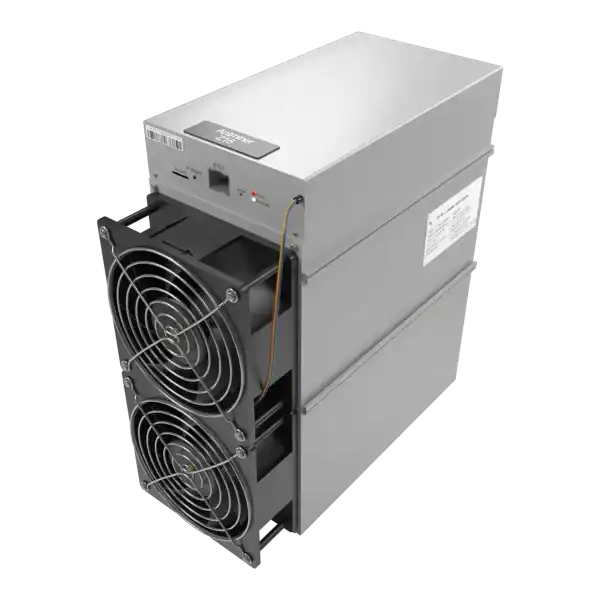
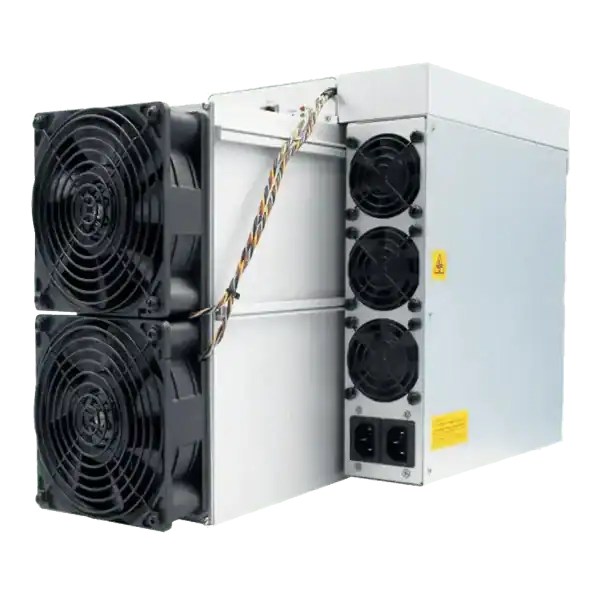
GPUs and Ethash ASICs did not physically stop hashing at the Merge. Their Ethereum mainnet work simply no longer had a valid reward destination. GPUs could be reconfigured for compatible software and other algorithms if economics allowed. Dedicated Ethash ASICs had a narrower set of alternatives. Neither option preserved Ethereum revenue automatically, because other networks had separate difficulty, liquidity, pools and payout assets.
What changed for Ethash equipment: a practical view of the validation, signalling and mining boundary.
Build the failure response before the boundary arrives. Define which rejection messages trigger an alert, who can pause a template source and how failover is prevented from returning miners to the same faulty validation stack. A second hostname is not independent when both endpoints share one node.
The hashrate migration shock
When a dominant proof-of-work market disappears, movable hashrate can flood smaller networks. Their difficulty rises, reducing reward per hash until equipment shuts down or economics find a new balance. Operators who modelled only pre-Merge revenue missed this feedback. A sound look-back varies destination-network difficulty and asset price independently, includes pool rejects and conversion costs, and applies no guaranteed resale floor.
Separate readiness, signalling and enforcement in the operating log. Readiness is a claim about software and process, signalling is data carried by blocks, and enforcement is a validation result. Combining them into a single supported or unsupported label hides the point at which revenue is actually at risk.
Pools, firmware and scam risk
Ethereum pools announced shutdown or alternative-network arrangements. But miners needed to verify each endpoint and payout balance. The Merge created fertile ground for fake firmware, fictitious Ethereum PoW claims and wallet instructions. Mainnet ETH holders did not need a new token or transfer. Mining operators should have preserved final pool statements, removed obsolete credentials and treated any replacement chain as a separate risk decision.
Map responsibility across the full path: validating node, template server, pool protocol, proxy, firmware and ASIC. For each layer, state what it can alter and what it merely relays. This prevents a version-bit setting in firmware from being mistaken for complete consensus-rule support. Relate that responsibility map to the pool and job-control boundary in our Stratum V2 guide.
Electrical assets after the Merge
A powered-off mining installation still contains cables, distribution, fans, racks and possibly hazardous stored configuration or credentials. Decommission safely, isolate circuits and inventory reusable components. If moving GPUs to another workload, repeat the thermal and electrical acceptance test rather than assuming the previous profile applies. Different algorithms can change memory load, power transients, fan behaviour and accepted-work characteristics.
Test the primary and failover paths with the same checks. Compare chain tip, chainwork, deployment state, required rules and template age, then save the result with a timestamp. The process should be repeatable by another operator without relying on an undocumented pool conversation.
Lessons for future algorithm exits
Write an exit plan before a network transition is certain. Identify which hardware is algorithm-locked. This pools and settlement routes can disappear, who authorises shutdown and how final balances are reconciled. Use official protocol milestones, not social-media countdowns. Ethereum’s Merge show that technically functioning hardware can lose its intended market at a precise consensus event, making flexibility and disciplined residual-value assumptions essential.
Turn the conclusion into a business decision. State which chain and settlement venues the operation intends to serve, the maximum acceptable stale-block exposure and the point at which mining pauses. This connects protocol evidence to electricity cost, pool revenue and payout finality.
Operator decision record
A concise decision record for Ethereum Merge mining should name the source documents, their dates, the node release tested, the responsible pool or template provider and the exact trigger for action. Include screenshots or machine-readable output for the deployment state. But keep the raw node response as the stronger evidence.
State whether a change affects policy, block construction or consensus validity, because those layers have different failure costs.
Run the check on every production and failover path. Confirm that monitoring alerts on stale templates, unexpected chain tips, rejected proposals and a rise in stale shares. Keep rollback instructions for node and pool configuration. But do not roll back across an active consensus boundary without understanding the rules the older release enforces.
If the evidence conflicts, pause the affected path and investigate before committing more electricity to uncertain work.
For related background, read our plain-English BIP-110 guide and technical BIP-110 review. Those articles use a modern proposal to show why signalling, activation, template construction and accepted chain history must be examined separately.
Conclusion
Ethereum merge mining is best understood as a defined interaction between validating software, mining infrastructure and economic acceptance. The safest operator does not infer consensus from a dashboard percentage or a pool slogan. They verify the rule source, the activation boundary, the template fields and the chain their payouts ultimately settle on. That discipline reduces the chance of hashing an invalid or commercially unwanted block.
Frequently asked questions
What is the main point of Ethereum Merge mining?
Ethereum Merge mining: GPUs and Ethash ASICs did not physically stop hashing at the Merge.
For Ethereum Merge mining, what should a beginner know about the final proof-of-work block?
Ethereum's Paris transition occurred on 15 September 2022 after total terminal difficulty reached the configured threshold.
For Ethereum Merge mining, why terminal total difficulty was used?
Paris activation depended on cumulative proof-of-work difficulty rather than a fixed block number.
For Ethereum Merge mining, what should a beginner know about what changed for Ethash equipment?
GPUs and Ethash ASICs did not physically stop hashing at the Merge.
Primary specifications are living technical records. Check their current status and changelog before using this article for a production activation decision.
About the Author:
Darren Waggott is the visionary Founder and CEO of The Mining Shop UK, with over a decade of leadership in the cryptocurrency mining sector. Renowned for driving innovation, Darren has built a company dedicated to providing high-quality ASIC miners and comprehensive hosting services. His forward-thinking approach places The Mining Shop UK at the forefront of the industry.
Membership helps us protect the discussion from spam and keep answers useful.
ASIC MINING SUPPORT
Need Help Choosing an ASIC Miner?
Tell us what you want to mine, your electricity cost and where the machine will run. We can help you compare hardware, power requirements, hosting and repairs.
We use necessary cookies to run the shop and optional analytics cookies to understand how visitors use the site and improve shopping and checkout. You can accept analytics, use only necessary cookies, or choose settings. You can change your choice at any time.
Functional
Always active
The technical storage or access is strictly necessary for the legitimate purpose of enabling the use of a specific service explicitly requested by the subscriber or user, or for the sole purpose of carrying out the transmission of a communication over an electronic communications network.
Preferences
The technical storage or access is necessary for the legitimate purpose of storing preferences that are not requested by the subscriber or user.
Statistics
The technical storage or access that is used exclusively for statistical purposes.The technical storage or access that is used exclusively for anonymous statistical purposes. Without a subpoena, voluntary compliance on the part of your Internet Service Provider, or additional records from a third party, information stored or retrieved for this purpose alone cannot usually be used to identify you.
Marketing
The technical storage or access is required to create user profiles to send advertising, or to track the user on a website or across several websites for similar marketing purposes.






Join the ASIC Mining Discussion
Members can read and join the discussion
Log in to read comments from other miners. Create a free account if you would like to ask a question or share your experience.
Membership helps us protect the discussion from spam and keep answers useful.