From CPU to ASIC: the History of Cryptocurrency Mining
History of Cryptocurrency Mining made simple. Compare performance, power, cooling, noise and practical risks before choosing or operating mining hardware.
The history of cryptocurrency mining is a story of specialisation. Bitcoin began with software that could search for proof of work on ordinary processors. Miners then adopted graphics cards, field-programmable gate arrays and application-specific integrated circuits as competition and network difficulty increased.
That sequence explains why a modern buyer must match an ASIC to an algorithm and judge efficiency, support and operating cost rather than treating every computing device as interchangeable.
History of Cryptocurrency Mining in Simple English
History of cryptocurrency mining: A field-programmable gate array can be configured after manufacture to implement a digital circuit. For repetitive hashing it can remove much of the overhead of a general processor while retaining more flexibility than a custom chip.
Simple Example
A node operator wants to understand history of cryptocurrency mining. Once the market was large enough to fund a custom design and fabrication run, an ASIC could remove the reconfigurability that was no longer needed and optimise the target operation further.
Key Terms in Plain English
ASIC:
A computer built to do one specialised job. A mining ASIC is designed for a particular proof-of-work algorithm.
Hashrate:
The amount of mining work a machine attempts each second. More hashrate does not guarantee more profit.
Efficiency:
How much electricity a miner uses for a set amount of work. Lower joules per terahash usually means better efficiency.
Wall power:
The electricity measured at the socket or supply. It includes losses that a headline chip figure may leave out.
Mining pool:
A service that combines work from many miners and shares rewards using stated rules.
Proof of Work Before Specialist Hardware
Bitcoin’s 2008 white paper described a proof-of-work chain in which participants search for a value that gives a block header the required hash. Early Bitcoin software performed that search on a computer’s central processor. The network was small, competition was limited and difficulty was far below modern levels.
A CPU is a general-purpose processor. It is valuable because it can run many kinds of instructions. But that flexibility carries overhead. Once a proof-of-work market rewards the same repeated operation, a more parallel or specialised design can outperform it.
The early period should not be read as evidence that a current laptop can mine Bitcoin competitively. Bitcoin difficulty responds to total network work, and modern SHA-256 hashrate is delivered overwhelmingly by specialised equipment.
It also should not be treated as a universal sequence for every coin. Networks select different algorithms and can change rules. Hardware viability always depends on the exact current network.
Quick reference for history of cryptocurrency mining.
Why Miners Moved from CPUs to GPUs
Graphics processors contain many execution units designed for parallel workloads. Developers learned to express hashing work in a form that could run across those units. For suitable algorithms, a GPU could produce much more work than a contemporary CPU.
GPUs also created a flexible mining market. A card could move between compatible algorithms or return to graphics and compute tasks. That resale and repurposing option distinguished it from later single-purpose hardware.
The improvement was not free. Rigs needed suitable power supplies, risers, airflow, drivers and stable software. Nameplate hashrate without wall-power measurement could hide an uneconomic or unsafe setup.
Some networks later selected memory-intensive or ASIC-resistant designs, although resistance is a design objective rather than a permanent guarantee. Engineering and market incentives can change what becomes practical.
FPGAs: the Bridge to Fixed-function Mining
A field-programmable gate array can be configured after manufacture to implement a digital circuit. For repetitive hashing it can remove much of the overhead of a general processor while retaining more flexibility than a custom chip.
FPGAs demanded specialist development, board knowledge and careful power design. They were not simply faster graphics cards. Their importance in the history of cryptocurrency mining is that they show the value of implementing the workload directly in hardware.
Commercial deployment depended on more than silicon. Toolchains, bitstreams, controllers, cooling and reliable pool communication all affected delivered work. Those same system concerns remain relevant to ASIC fleets.
Once the market was large enough to fund a custom design and fabrication run, an ASIC could remove the reconfigurability that was no longer needed and optimise the target operation further.
The Rise of the SHA-256 ASIC
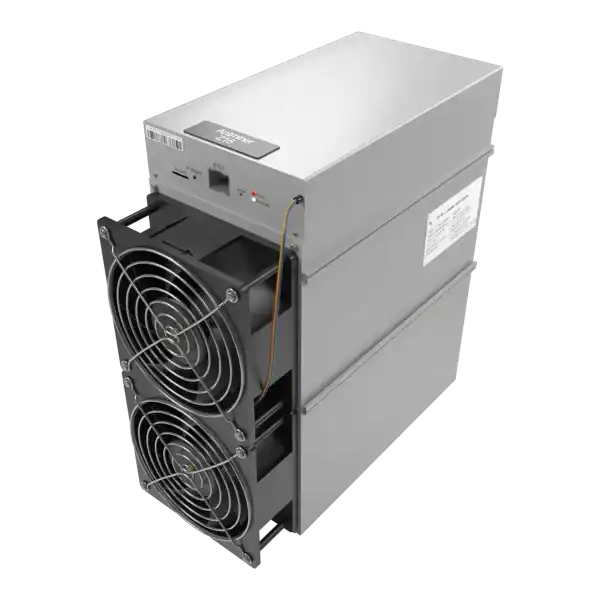
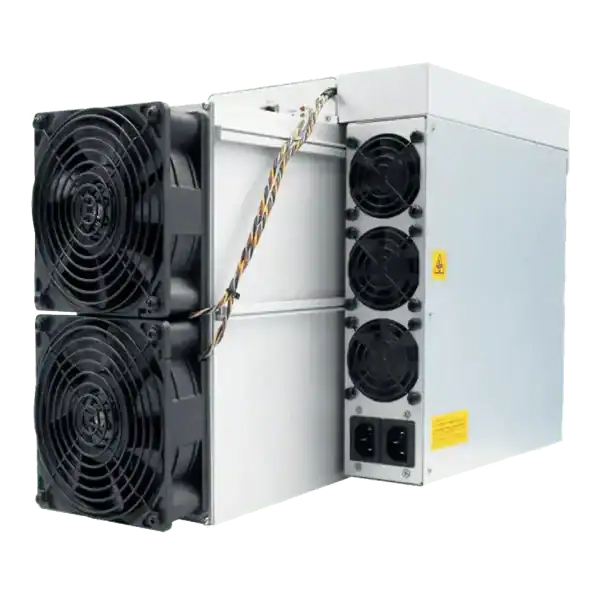
An application-specific integrated circuit is designed for a defined task. A Bitcoin ASIC repeats double SHA-256 hashing at high speed and exposes controls for clocks, voltage, temperature, pools and networking. It is not a general computer and cannot mine a coin merely because that coin is valuable.
ASIC adoption increased network hashrate and changed the competitive baseline. Older devices continued to hash. But their electricity cost per unit of accepted work became difficult to justify where newer designs were substantially more efficient.
Specialisation also created supply-chain and operational risks: manufacturer support, firmware provenance, spare parts, repair capability, import terms and resale depth matter. A low purchase price does not repair a poor joules-per-terahash figure.
Mining hardware generations compared
Hardware
Strength
Constraint
Modern buying lesson
CPU
General and accessible
Low output for mature ASIC networks
Use only where the network and software support it
GPU
Parallel and repurposable
Power, drivers and algorithm fit
Model complete rig cost and resale
FPGA
Efficient configurable logic
Specialist development and support
Verify bitstream and platform provenance
ASIC
High efficiency for its target
Narrow algorithm and limited reuse
Match algorithm, power and site before purchase
Algorithms Split the Hardware Market
SHA-256 ASICs serve networks that accept SHA-256 proof of work. Scrypt, kHeavyHash, Blake-family and other ASICs implement different calculations. A pool address cannot convert one physical design into another.
Even within an algorithm, firmware and protocol compatibility need checking. A network fork, pool implementation or address format can affect configuration. Mineable coin lists are therefore dated operating references, not permanent promises.
Merged mining can let compatible work contribute to more than one chain under defined rules. But the pool must support it. It does not make the ASIC algorithm-neutral.
This fragmentation explains why historical comparisons based only on hashrate are misleading. One terahash on one algorithm is not equivalent to one terahash on another.
What Hardware History Teaches a Buyer
Confirm the algorithm and current network before comparing machines.
Measure efficiency at the wall and use pool accepted work, not a brief local peak.
Check voltage, current, connectors, airflow, heat and noise against the proposed site.
Assess firmware provenance, updates, parts, repair routes and warranty position.
Model difficulty, price, fees, downtime and a lower resale value.
Do not assume that an old machine becomes attractive solely because it is cheap.
Treat new algorithm claims cautiously until pools, software and network rules are verified.
Specialisation Makes Sense Only with the Right Site
Where an ASIC Is a Rational Tool
A matched ASIC can make sense when its measured efficiency, accepted output and complete operating cost meet the operator’s downside case. The electrical and cooling installation must support continuous duty.
A specialist machine also suits a business that understands its limited alternative use and has a repair, hosting or resale route.
Where Flexibility Matters More
A general compute workload may be more suitable when the future task is uncertain or the asset needs broader resale demand. An ASIC cannot be justified by comparing its headline hashrate with a GPU on another algorithm.
Historical progress does not guarantee future profitability. Each generation competes in a changing market with new difficulty, price and energy conditions.
Frequently Asked Questions
Why Does Proof of Work Before Specialist Hardware Matter?
Bitcoin's 2008 white paper described a proof-of-work chain in which participants search for a value that gives a block header the required hash. Early Bitcoin software performed that search on a computer's central processor.
Why Did Miners Move from CPUs to GPUs?
Graphics processors contain many execution units designed for parallel workloads. Developers learned to express hashing work in a form that could run across those units.
Why Did SHA-256 ASICs Change Bitcoin Mining?
An application-specific integrated circuit is designed for a defined task. A Bitcoin ASIC repeats double SHA-256 hashing at high speed and exposes controls for clocks, voltage, temperature, pools and networking.
Why Do Algorithms Split the Hardware Market?
SHA-256 ASICs serve networks that accept SHA-256 proof of work. Scrypt, kHeavyHash, Blake-family and other ASICs implement different calculations.
Why Does Specialised Hardware Need the Right Site?
A matched ASIC can make sense when its measured efficiency, accepted output and complete operating cost meet the operator's downside case. The electrical and cooling installation must support continuous duty.
Key Points to Remember
The history of cryptocurrency mining explains why modern fleets are specialised. CPU flexibility gave way to parallel GPUs, configurable FPGAs and custom ASICs where the economic reward justified engineering investment. For a buyer, the practical inheritance is clear: match the exact algorithm, measure accepted work and wall power, and value the complete operating system rather than a headline hashrate.
Next Steps
Compare current ASIC specifications and operating requirements on The Mining Shop UK before choosing hardware for a particular algorithm.
Bitcoin's earliest miners used CPUs. GPUs and FPGAs improved parallel work and energy use before SHA-256 ASICs became dominant. An ASIC is built for a narrow calculation. It cannot normally be repurposed for an unrelated algorithm, even when both devices are called cryptocurrency miners.
Bitcoin FAQ: Bitcoin project history and mining context.
About the Author:
Darren Waggott is the visionary Founder and CEO of The Mining Shop UK, with over a decade of leadership in the cryptocurrency mining sector. Renowned for driving innovation, Darren has built a company dedicated to providing high-quality ASIC miners and comprehensive hosting services. His forward-thinking approach places The Mining Shop UK at the forefront of the industry.
Membership helps us protect the discussion from spam and keep answers useful.
ASIC MINING SUPPORT
Need Help Choosing an ASIC Miner?
Tell us what you want to mine, your electricity cost and where the machine will run. We can help you compare hardware, power requirements, hosting and repairs.
We use necessary cookies to run the shop and optional analytics cookies to understand how visitors use the site and improve shopping and checkout. You can accept analytics, use only necessary cookies, or choose settings. You can change your choice at any time.
Functional
Always active
The technical storage or access is strictly necessary for the legitimate purpose of enabling the use of a specific service explicitly requested by the subscriber or user, or for the sole purpose of carrying out the transmission of a communication over an electronic communications network.
Preferences
The technical storage or access is necessary for the legitimate purpose of storing preferences that are not requested by the subscriber or user.
Statistics
The technical storage or access that is used exclusively for statistical purposes.The technical storage or access that is used exclusively for anonymous statistical purposes. Without a subpoena, voluntary compliance on the part of your Internet Service Provider, or additional records from a third party, information stored or retrieved for this purpose alone cannot usually be used to identify you.
Marketing
The technical storage or access is required to create user profiles to send advertising, or to track the user on a website or across several websites for similar marketing purposes.






Join the ASIC Mining Discussion
Members can read and join the discussion
Log in to read comments from other miners. Create a free account if you would like to ask a question or share your experience.
Membership helps us protect the discussion from spam and keep answers useful.