
Pre-order
Overall ranking

Equihash
·
ZEC
Overall rank#1of 100AvailableAll: #3 / 831
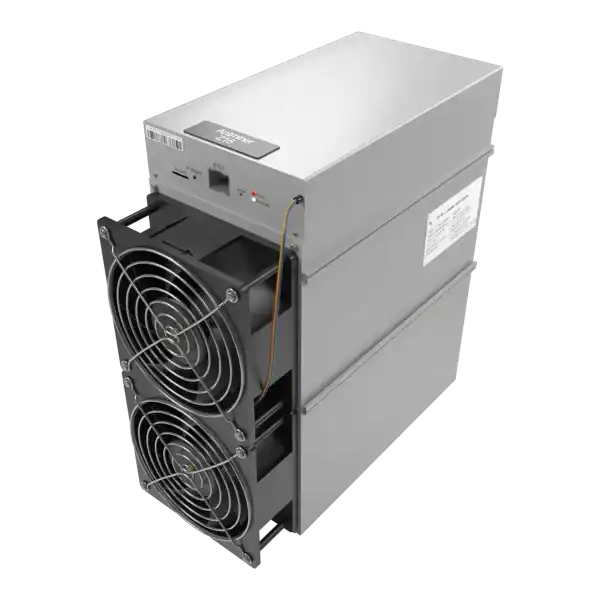

Pre-OrderFree Shipping
Hashrate
525KSOL
Efficiency
4.73W/KSOL
Power
2483W
Earns/kWh
41.8p
EthereumPoW mining explained for GPU miners. Understand the 2022 chain split, Ethash-style work, DAG memory, pool risk and a safe ETHW test plan.
EthereumPoW mining continued proof of work on a separate chain after Ethereum moved to proof of stake in September 2022. ETHW is not Ethereum mainnet and it does not inherit mainnet's market, applications or security simply because it began from shared history.
For a GPU miner, the practical job is familiar: build a correct wallet and pool configuration, load an Ethash-family data set into graphics memory, submit valid work and compare the actual payout with electricity. The chain split adds replay, asset and software risks that an ordinary profitability page may omit.
Estimated reading time: 7 minutes
EthereumPoW kept a version of Ethereum's old mining road open after the main network chose staking. Miners can still use proof of work there, but they are securing a different chain with different activity and value.
A railway splits at a junction. The two lines share the same stations behind them, but every new stop is different. A ticket or service on one branch is not automatically valid on the other branch.
| ETHW: | The native asset used on the EthereumPoW network. |
|---|---|
| Ethash: | The memory-heavy proof-of-work family inherited from pre-Merge Ethereum. |
| DAG: | A large data set held in GPU memory for mining work. |
| Chain ID: | A network identifier used to distinguish transaction signatures. |
| Replay: | An unintended reuse of a transaction on another compatible chain. |
Ethereum mainnet completed the Merge and stopped proof-of-work mining. EthereumPoW supporters launched a separate proof-of-work network and maintained their own geth-based software and chain configuration.
From that point, ETH and ETHW were different assets on different networks. An address may look similar on both, but balances, contracts, exchanges and security decisions can diverge.
The official project describes ETHW as the proof-of-work continuation and maintains a fork of go-ethereum. Mining uses the Ethash style of memory-heavy work associated with pre-Merge Ethereum.
A pool gives the miner block work, the GPU searches for valid results and the pool records shares. A share proves contributed work but is not itself a block. Pool rules convert shares into a payout.
Ethash creates a large directed acyclic graph, usually called the DAG. The miner needs enough usable graphics memory for the current data set plus software overhead. A card that worked years ago may later fail as the DAG grows.
Memory errors can create invalid shares or crashes. Watch accepted hashrate, rejected shares, temperature and memory stability. A higher reported core speed is worthless if the pool rejects the work.

Use software from the official EthereumPoW organisation or a well-established miner project, and verify the network configuration. A pre-Merge Ethereum guide may point at the wrong chain, bootnodes or pool.
Check pool activity, recent blocks, payout method, minimum and regional server. Confirm the payout address supports ETHW on the correct network. Sending to an exchange that has suspended deposits can strand funds.
Shared history can create confusing copies of old tokens and contracts. A balance visible on ETHW does not prove there is a working market or safe bridge for that asset. Fake airdrops and approval requests often exploit this confusion.
Use a separate wallet for experiments, avoid importing a valuable seed into unknown software and verify the chain ID. Move small test amounts first. Never sign a message you do not understand because a site promises to unlock copied assets.
Measure the whole rig at the wall, including motherboard, fans and power-supply losses. Use pool-side accepted hashrate, not only miner-console speed. Subtract pool fees, withdrawal charges, downtime and cooling.
Model a fall in ETHW price and a rise in network hashrate. GPUs can be repurposed, which is useful, but resale value and alternative workloads are separate decisions from today's mining margin.
Create a clean wallet, confirm official network details, choose a current pool and run one stable configuration. Record power, temperature, accepted shares and actual payout over a representative period.
Stop if software origin is uncertain, the pool cannot explain payouts or the card produces memory errors. Scale only after the first withdrawal is safely received and the accounting matches the pool report.
The supplied database records EthereumPoW as mineable, which is technically useful, but the name can mislead a novice into thinking it is Ethereum mainnet. Any table or calculator should display ETHW, the network and the proof-of-work chain clearly together.
Market history beginning around the split can describe ETHW's own trading record. Earlier Ethereum prices do not become ETHW history merely because the chains share old blocks. Revenue modelling must use ETHW rewards and ETHW liquidity only.
An all-time high is especially poor as a mining budget input. It records one past market point and says nothing about whether a miner could sell a full payout at that price. Use a current executable price, allow for spread and record the time of the quote.
| Check | Pass condition |
|---|---|
| Network | Official ETHW chain details and current client |
| GPU memory | Current DAG fits with stable overhead |
| Pool | Recent blocks, clear fees and tested withdrawal |
| Wallet | Correct ETHW network with a small receipt confirmed |
| Economics | Measured wall power and accepted hashrate remain positive |
A table is a starting point, not a promise. Verify every live input before spending money on EthereumPoW mining hardware, software or hosting.
No. ETHW is a separate proof-of-work chain. Ethereum mainnet uses proof of stake.
It may if the miner supports ETHW and the current DAG fits in usable memory. Efficiency still decides whether it is sensible.
The Ethash work data must fit in graphics memory. A card with too little usable memory cannot mine normally.
Not automatically. Contracts, liquidity and bridges may not work or may be unsafe on the separate chain.
A separate test wallet reduces exposure. Never place a valuable recovery phrase into unknown mining or claiming software.
Ethereumpow mining deserves a measured trial, not a promise of easy money. Confirm the live network rules, use compatible hardware and official software, protect the wallet, and calculate profit from accepted work and wall power. Keep dated records because rewards, difficulty, prices and pool terms change.
For wider planning, see our mining profitability guides and GPU and alternative algorithm mining articles.
Xaya Core mining ended after the legacy chain was deprecated. Learn what happened to CHI, how the WCHI snapshot works and why old mining guides are obsolete.
QRL mining explained for beginners. Learn how RandomX favours CPUs, how solo and pool mining differ, and why XMSS wallet use needs careful planning.
Nockchain mining explained in simple English. Learn what zero-knowledge proof of work means, how the fair launch works and why miners should test carefully.

Join the ASIC Mining Discussion
Members can read and join the discussion
Log in to read comments from other miners. Create a free account if you would like to ask a question or share your experience.
Membership helps us protect the discussion from spam and keep answers useful.