
Pre-order
Overall ranking

Equihash
·
ZEC
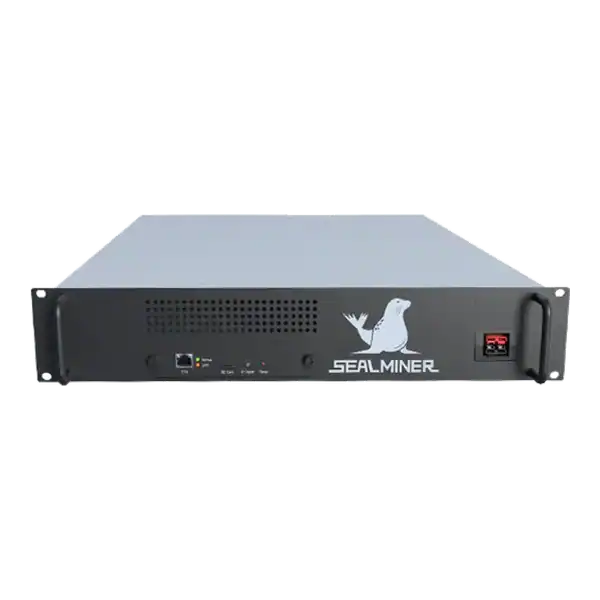
Overall rank#1of 100AvailableAll: #2 / 831


Pre-OrderFree Shipping
Hashrate
525KSOL
Efficiency
4.73W/KSOL
Power
2483W
Earns/kWh
39.8p
Bitcoin Core generatetoaddress RPC made simple. See what the feature does, where its limits sit and which checks node or wallet operators should make.

This guide explains Bitcoin Core generatetoaddress RPC in plain English. It shows what the command does, what its result means and what it cannot prove.
Bitcoin Core generatetoaddress RPC: Coinbase outputs require maturity before spending. Track each reward by block hash and destination, then query spendability after the exact required depth.
A miner is checking Bitcoin Core generatetoaddress RPC. Decode it, verify network and script and prove control or deliberate burn intent before the call. A reorganisation can remove or remature rewards, so test accounting must follow chain state and not treat generated value as ordinary immediately available balance.
The required address receives each generated coinbase output. Decode it, verify network and script and prove control or deliberate burn intent before the call. A syntactically valid address can still belong to the wrong fixture, another party or a wallet whose recovery context is missing.
nblocks is the target count and maxtries limits hashing attempts, defaulting historically to one million. The result array can contain fewer hashes than requested. Automation must branch on actual count, current height and returned hashes rather than assume successful RPC completion advanced exactly nblocks.
The destination can belong to another wallet, a multisignature script or a test harness. This is useful for separating miner and recipient roles. It also means the generating node may not show spendable rewards. Reconcile coinbase scripts against the destination wallet and avoid diagnosing an expected ownership boundary as missing funds.

Operators test the command on a non-production node first. They check a normal reply, an invalid request, a timeout and a restart. This shows what the response means and prevents one local result from being mistaken for a network-wide outcome.
Coinbase outputs require maturity before spending. Track each reward by block hash and destination, then query spendability after the exact required depth. A reorganisation can remove or remature rewards, so test accounting must follow chain state and not treat generated value as ordinary immediately available balance.
The RPC performs local proof-of-work attempts and does not offer pool protocols, ASIC job negotiation or economical public-network mining. Enforce chain guards that allow the method only on disposable regtest or an explicitly approved private chain. Test and signet use have distinct difficulty and purpose and should not be conflated.
Operators test the command on a non-production node first. They check a normal reply, an invalid request, a timeout and a restart. This shows what the response means and prevents one local result from being mistaken for a network-wide outcome.
Bitcoin Core generatetoaddress RPC: Coinbase outputs require maturity before spending. Track each reward by block hash and destination, then query spendability after the exact required depth.
The required address receives each generated coinbase output. Decode it, verify network and script and prove control or deliberate burn intent before the call.
nblocks is the target count and maxtries limits hashing attempts, defaulting historically to one million.
The destination can belong to another wallet, a multisignature script or a test harness.
generatetoaddress makes regtest rewards explicit and flexible, but the caller assumes responsibility for destination and maturity. Safe harnesses enforce network isolation, verify returned blocks and reconcile rewards with the correct external wallet.
Check the current specification status and the documentation for the exact implementation you operate before moving production funds or changing a mining node.


Bitcoin Core 29 getdescriptoractivity guide covering block lists, descriptor ranges, mempool inclusion, receive and spend events, privacy and safe reconciliation.

Bitcoin Core 28 gethdkeys guide covering active filtering, xpubs, optional xprvs, descriptor mapping, RPC permissions, privacy and safe wallet audits.
Bitcoin Core 28 createwalletdescriptor guide covering address types, internal and external descriptors, HD-key selection, encryption, backups and verification.

Join the ASIC Mining Discussion
Members can read and join the discussion
Log in to read comments from other miners. Create a free account if you would like to ask a question or share your experience.
Membership helps us protect the discussion from spam and keep answers useful.