
Pre-order
Overall ranking

Equihash
·
ZEC
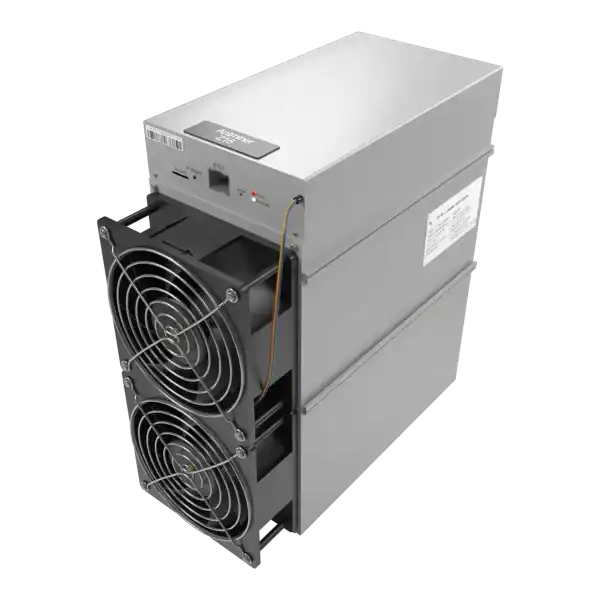
Overall rank#1of 100AvailableAll: #2 / 831

Pre-OrderFree Shipping
Hashrate
525KSOL
Efficiency
4.73W/KSOL
Power
2483W
Earns/kWh
39.8p
Bitcoin Core 0.16 getaccount guide covering deprecated address labels, wallet scope, empty accounts, ownership limits, migrations and verification.
This guide explains Bitcoin Core getaccount RPC in plain English. It shows what the command does, what its result means and what it cannot prove.
Bitcoin Core getaccount RPC: Core deprecated accounts because their balance semantics and transaction grouping caused confusing outcomes. Later releases transitioned towards labels.
A miner is checking Bitcoin Core getaccount RPC. Validate network and checksum, then route the call to the exact wallet in a multiwallet environment. A valid address may not belong to that wallet, may be watch-only or may represent a script whose ownership is more complex than one private key.
The historical method accepts one Bitcoin address. Validate network and checksum, then route the call to the exact wallet in a multiwallet environment. A valid address may not belong to that wallet, may be watch-only or may represent a script whose ownership is more complex than one private key.
The result is an account name string associated with the address in wallet metadata. It does not prove the wallet can spend, that every payment to the address belongs to one customer or that the same label has meaning in another wallet. Confirm ownership and solvability through the appropriate wallet and script fields.
The default account historically used an empty string, which applications can confuse with null, missing or error. Preserve the distinction at the API boundary and test unknown addresses under the exact version. Do not silently create an external customer identifier from an empty or unexpected response.

Core deprecated accounts because their balance semantics and transaction grouping caused confusing outcomes. Later releases transitioned towards labels. A migration should inventory every address-to-account association, map it to an explicit application ledger and avoid recreating account balance arithmetic under a new field name.
Account names can contain customer, operational or purpose information. Treat the response as sensitive wallet metadata, minimise logging and do not expose it through public address-lookup endpoints. Use opaque application identifiers and keep customer attribution outside general node telemetry.
Compare getaccount with the historical reverse list from getaddressesbyaccount, knowing that neither proves transaction attribution. Detect duplicate or unexpected labels, address reuse and entries missing from the business ledger. Reconcile on a snapshot so concurrent address generation does not create false mismatches.
Operators test the command on a non-production node first. They check a normal reply, an invalid request, a timeout and a restart. This shows what the response means and prevents one local result from being mistaken for a network-wide outcome.
Bitcoin Core getaccount RPC: Core deprecated accounts because their balance semantics and transaction grouping caused confusing outcomes.
The historical method accepts one Bitcoin address. Validate network and checksum, then route the call to the exact wallet in a multiwallet environment.
The result is an account name string associated with the address in wallet metadata.
The default account historically used an empty string, which applications can confuse with null, missing or error.
getaccount reports a deprecated wallet label, not ownership or money. Safe legacy support scopes the correct wallet, protects metadata and migrates customer accounting to an explicit ledger independent of Core’s account model.
Check the current specification status and the documentation for the exact implementation you operate before moving production funds or changing a mining node.

Bitcoin Core 23 restorewallet guide covering backup paths, wallet naming, startup persistence, warnings, rescans, duplicate restores and recovery verification.
Bitcoin Core 0.21 upgradewallet guide covering explicit versions, generated keys, backup rotation, result fields, compatibility testing and rollback planning.
Bitcoin Core 0.19 setwalletflag guide covering avoid_reuse, rescanning, used-address classification, coin selection, warnings, rollback and wallet safety.

Join the ASIC Mining Discussion
Members can read and join the discussion
Log in to read comments from other miners. Create a free account if you would like to ask a question or share your experience.
Membership helps us protect the discussion from spam and keep answers useful.