

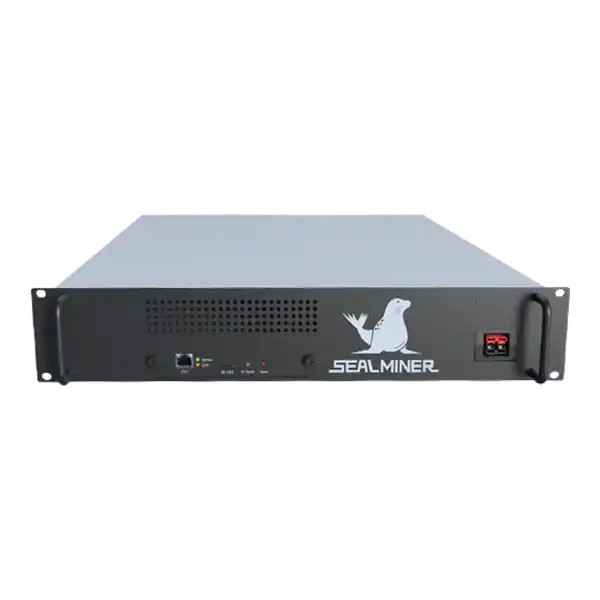
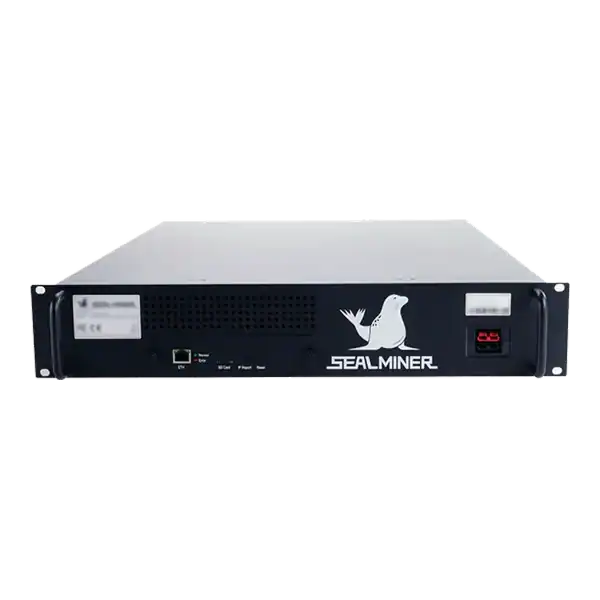
Sealminer A4 Ultra Hydro
Bitcoin & Bitcoin Cash ASIC Miner
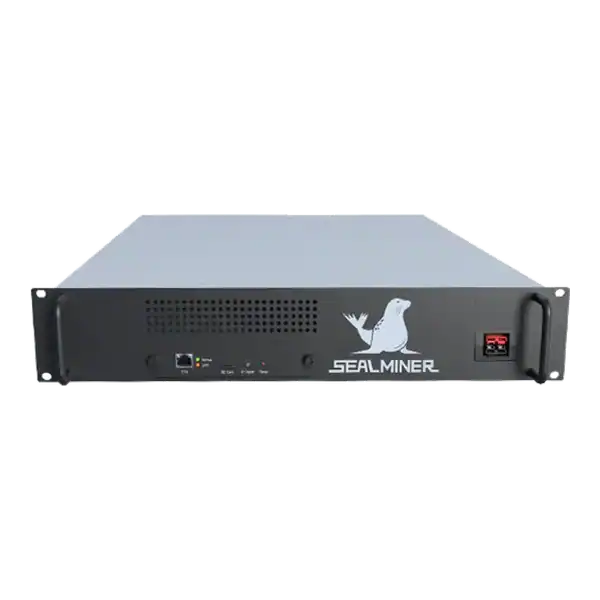

886TH
HASHRATE
9.45W/TH
EFFICIENCY
8373W
POWER
£853.81
EST. MONTHLY
NO PAYBACK
EST. ROI
BIP 389 guide covering Draft path tuples, receive/change expansion, lockstep key derivation, duplicate rejection, checksums, exports and compatibility.
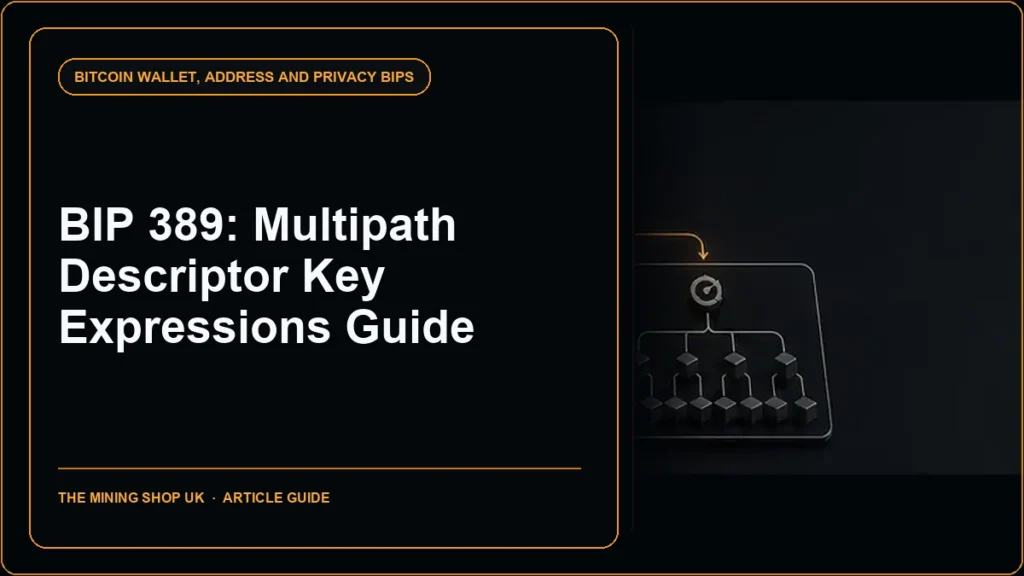
This guide explains BIP 389 multipath descriptors in plain English. It covers the problem behind the BIP, why it matters and whether the proposal is part of Bitcoin today.
BIP 389 multipath descriptors: If several key expressions contain tuples, all tuples must have the same length. Position one from every tuple forms one descriptor, position two forms the next and so on.
A node operator is checking BIP 389 multipath descriptors. Export expanded ordinary descriptors for software without multipath support, then compare derived scripts and addresses for each branch and several indexes before moving funds.
BIP 389 remains Draft and requires BIP 380. Parser support must be checked explicitly; older software may reject the tuple syntax even when it understands the expanded descriptors.
An extended-key path may contain zero or one angle-bracket tuple with two or more semicolon-separated derivation values. Values may use supported hardened suffix forms.
/<0;1> produces two descriptors: the first uses branch zero and the second branch one. Wallets commonly interpret these as receive and change, but the syntax itself represents ordered alternatives.

If several key expressions contain tuples, all tuples must have the same length. Position one from every tuple forms one descriptor, position two forms the next and so on.
Reject duplicate values within a tuple, more than one tuple per key expression, mismatched tuple lengths, malformed brackets, overflow indexes and a wildcard outside its permitted final position.
Back up the canonical checksummed multipath descriptor, key origins, range and next indexes, and document ordered branch meaning. Public xpub material remains privacy-sensitive.
Export expanded ordinary descriptors for software without multipath support, then compare derived scripts and addresses for each branch and several indexes before moving funds. Build a revision-pinned evidence pack on an isolated node, wallet or protocol harness. Record source commit, binary hash, network, chain identity, configuration and dependencies.
BIP 389 multipath descriptors: If several key expressions contain tuples, all tuples must have the same length.
BIP 389 remains Draft and requires BIP 380. Parser support must be checked explicitly.
An extended-key path may contain zero or one angle-bracket tuple with two or more semicolon-separated derivation values.
/ produces two descriptors: the first uses branch zero and the second branch one.
BIP 389 can compact receive and change policy into one descriptor without losing deterministic expansion. Safe adoption requires strict tuple validation, explicit branch meaning and ordinary-descriptor exports for older wallets.
Check the current specification status and the documentation for the exact implementation you operate before moving production funds or changing a mining node.


BIP 450 guide to Draft Formosa themed mnemonic stories, entropy and checksum mapping, theme JSON, BIP39 conversion, passphrases and recovery safety.
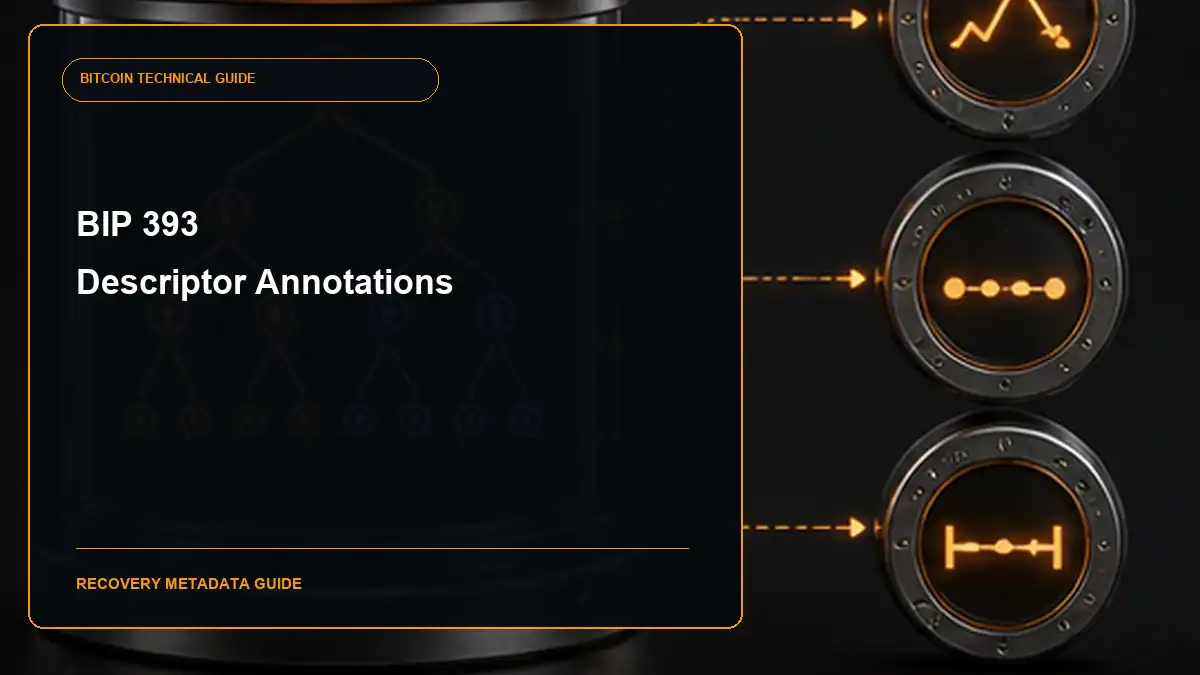
BIP 393 guide to Draft descriptor annotations for birth height, gap limit and Silent Payment max label, checksum rules, parsing and recovery safety.
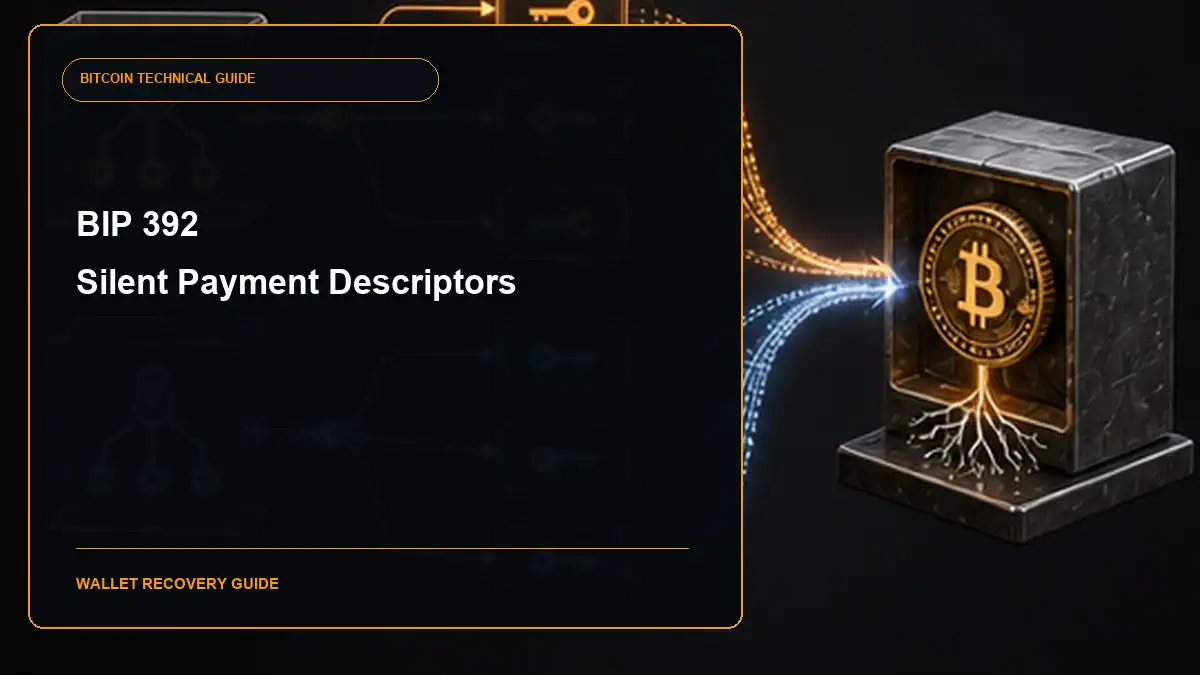
BIP 392 guide to Draft sp() descriptors, spscan and spspend encodings, watch-only and full-wallet forms, key origins, recovery and validation.
Join the ASIC Mining Discussion
Members can read and join the discussion
Log in to read comments from other miners. Create a free account if you would like to ask a question or share your experience.
Membership helps us protect the discussion from spam and keep answers useful.