

Sealminer A4 Ultra Hydro
Bitcoin & Bitcoin Cash ASIC Miner
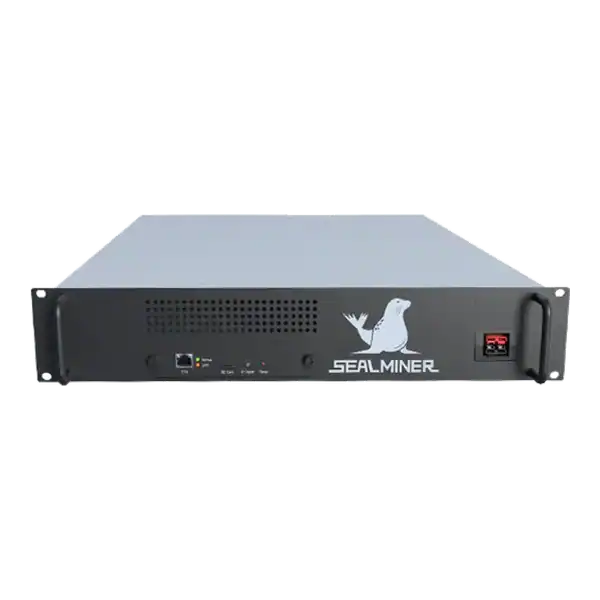

886TH
HASHRATE
9.45W/TH
EFFICIENCY
8373W
POWER
£851.51
EST. MONTHLY
NO PAYBACK
EST. ROI
What Bitcoin mining does? Bitcoin miners do not work through a list of increasingly difficult equations. Read the practical UK guide before deciding.
Understanding what Bitcoin mining does starts by discarding the idea that ASICs solve useful maths questions. A Bitcoin ASIC repeatedly hashes changing 80-byte block headers and tests whether the resulting number is below a target. Each attempt is independent and easy for a node to verify.
The work lets miners compete to add candidate blocks, provides objective cost behind transaction history and supplies measurable shares to pools. But it does not allow miners to rewrite Bitcoin's consensus rules.
What Bitcoin mining does: Bitcoin mining is a competitive method for proposing the next block and demonstrating that real computational work was spent on it.
A miner wants to understand what Bitcoin mining does. Full nodes check every consensus rule before accepting it. When a miner finds a header hash below the current network target, it sends the completed block to the peer-to-peer network.
Bitcoin mining is a competitive method for proposing the next block and demonstrating that real computational work was spent on it. Miners collect or receive valid transactions, form a candidate block and search for a valid proof of work.
The search is deliberately unpredictable. The same header always produces the same hash. But a tiny change produces a very different result. There is no shortcut that tells an ASIC which nonce will win.
When a miner finds a header hash below the current network target, it sends the completed block to the peer-to-peer network. Full nodes check every consensus rule before accepting it. Mining provides a proposal and proof of work, not authority to make an invalid block valid.

Hashing is mathematical computation. But an ASIC is not solving an algebra question whose answer has independent value. It is sampling outputs from a cryptographic hash function until one satisfies a threshold condition.
A better analogy is a transparent lottery in which every hash is a ticket. More hashrate buys more attempts per second. At the same time, the network target determines how rare a winning result is.
The result is valuable to Bitcoin because it is costly to produce, cheap to verify and linked to a particular block header. Replacing old transaction history would require new proof of work for that block and the work built after it.
| Claim | Accurate explanation | Operator implication |
|---|---|---|
| Miners solve equations | ASICs test double-SHA-256 header hashes against a target | Hashrate measures attempts per second |
| Miners approve any transaction | Candidate transactions must still pass node rules | Invalid blocks are rejected |
| A share is a block | A share usually meets an easier pool target | Shares measure contributed work |
| More power guarantees a block | More hashrate improves probability, not certainty | Short-term results vary |
| Mining controls Bitcoin | Nodes enforce the rules they run | Hashrate cannot create arbitrary coins |
A solo miner normally asks a Bitcoin node for a block template. The template identifies transactions and consensus information needed to build a candidate block. A pool performs this job for its connected miners.
The first transaction is the coinbase transaction. It creates the permitted block subsidy and collects the included transaction fees, paying the specified destination. It also carries extra data that can be changed to produce another Merkle root when the ordinary nonce range is exhausted.
Transactions are summarised through a Merkle root in the block header. The header also includes the previous block hash, version, time, difficulty representation and nonce. This binds the proof of work to the candidate contents and the existing history.
Transaction selection is not unlimited. Nodes reject blocks that breach consensus rules, and pool or mining software applies its own policy for fees and templates within those rules.
Bitcoin mining hardware applies SHA-256 twice to the block header. The resulting 256-bit value is interpreted as a number. A valid proof of work is a result lower than or equal to the target encoded for the block.
The ASIC cycles through nonce values extremely quickly. When that space is insufficient, mining software changes extra nonce data in the coinbase transaction. This changes the Merkle root and creates a new set of headers to test.
Difficulty is a human-friendly representation of how restrictive the target is relative to a reference. A higher difficulty means a lower target and fewer possible winning hashes.
Each attempt remains probabilistic. A miner with 1 per cent of network hashrate has roughly 1 per cent of the long-run opportunity. But it can experience much more or less than that over a short period.
A pool gives connected miners a target that is easier than the Bitcoin network target. When an ASIC produces a result below that pool target, the miner submits it as a share.
The share proves that a statistically measurable amount of work was attempted. Most shares are not low enough to be Bitcoin blocks. Occasionally a submitted share also satisfies the network target and the pool can publish the completed block.
Pools use shares to calculate rewards under PPS, FPPS, PPLNS or another stated method. Check whether payment covers subsidy, transaction fees, pool luck, stale shares and other deductions.
Compare accepted shares rather than only local hashrate. Rejected, stale or duplicate work consumes electricity but may not earn pool credit. Network delay, unstable tuning and bad pool configuration can widen the gap.
Each block points to its predecessor. Changing a transaction changes the Merkle root. This changes the header hash and invalidates that block’s proof of work. Later blocks also point into the altered history.
An attacker attempting to replace that history must produce an alternative set of valid blocks and accumulate enough work for nodes to prefer it under Bitcoin’s chain-selection rules. The required work grows as new blocks are built.
This does not mean one confirmation is final in an absolute sense. Confirmation risk declines as work accumulates and depends on transaction value, attacker resources, network conditions and the recipient’s acceptance policy.
Full validation remains essential. Nodes check transactions, subsidy, signatures, block limits and every other rule. Proof of work orders valid candidates. It does not excuse invalid content.
A Bitcoin ASIC is built for SHA-256 hashing. It cannot be repurposed into a useful general computer or switched to an unrelated algorithm through software.
Hashrate describes attempts per second. Efficiency describes electrical energy per unit of hashrate, normally joules per terahash. For operators, efficiency, accepted work and uptime are more informative together than hashrate alone.
A miner also needs a PSU, network, cooling, pool or node configuration and a payout route. Nearly all electrical input becomes heat, and high-power air-cooled models are industrially loud.
The electrical circuit, connectors, ventilation and noise controls must fit continuous duty. Mining software does not remove physical safety limits or manufacturer operating ranges.
A simple long-run share of network opportunity is miner hashrate divided by total network hashrate. Expected blocks over a period are that fraction multiplied by the network’s expected block count.
For example, if a miner represented one millionth of network hashrate, its long-run expected share would be one millionth of the available block rewards before pool terms. It could still find no solo block for a very long time.
A pool converts this volatile block-finding process into smaller accounting units. But the operator still faces changes in difficulty, fees, subsidy, price, pool method and accepted uptime.
Never present the calculation as a guaranteed daily return. Use current network data, a complete energy tariff, pool fees, downtime, repairs and several downside cases.
What Bitcoin mining does: Bitcoin mining is a competitive method for proposing the next block and demonstrating that real computational work was spent on it.
Bitcoin mining is a competitive method for proposing the next block and demonstrating that real computational work was spent on it.
Hashing is mathematical computation. But an ASIC is not solving an algebra question whose answer has independent value.
A solo miner normally asks a Bitcoin node for a block template.
What Bitcoin mining does is precise: it constructs or receives candidate work, hashes block headers against a target and presents easily verifiable proof of work. Nodes still decide whether every transaction and block rule is valid.
The two operational variables most likely to change a miner’s result are its accepted share of network work and its complete energy cost. Learn the distinction between local hashrate, pool shares and network blocks before buying hardware or relying on an earnings estimate.
Use The Mining Shop UK’s ASIC comparison and profitability tools to connect a miner’s measured hashrate and power to a realistic operating decision.
Bitcoin miners do not work through a list of increasingly difficult equations. They perform vast numbers of SHA-256 header-hash attempts against a target. Mining software builds or receives a candidate block, changes nonce and coinbase-related data, and sends header work to ASICs. Full nodes independently validate any proposed block.
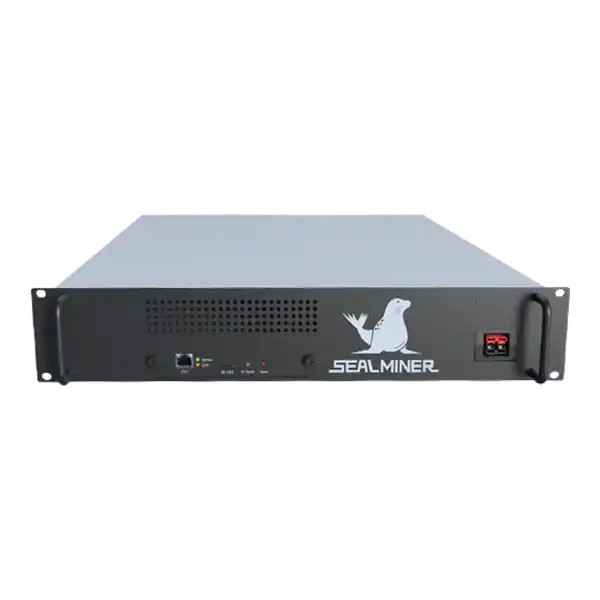

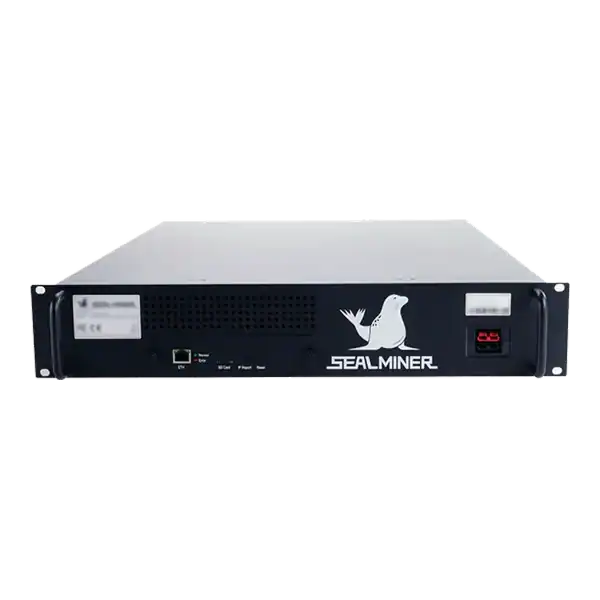
Understand why Bitcoin proof of work uses energy to create costly block proposals, easy verification, accumulated chain work and resistance to history changes.
Bitcoin Target Arithmetic made simple. See the main facts, costs, risks and practical checks before you make a decision.
Mining expansion and Bitcoin difficulty: ASIC guidance on compatibility, measurement, fees, reliability, security and checks before routing hashrate.
Join the ASIC Mining Discussion
Members can read and join the discussion
Log in to read comments from other miners. Create a free account if you would like to ask a question or share your experience.
Membership helps us protect the discussion from spam and keep answers useful.