

Sealminer A4 Ultra Hydro
Bitcoin & Bitcoin Cash ASIC Miner
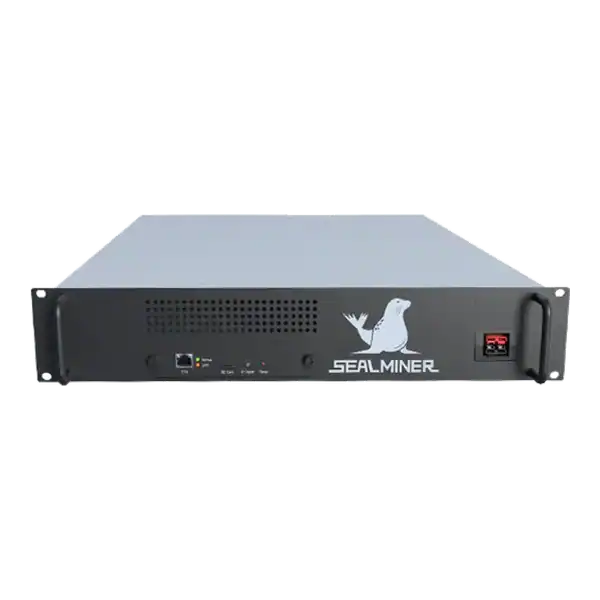

886TH
HASHRATE
9.45W/TH
EFFICIENCY
8373W
POWER
£884.60
EST. MONTHLY
NO PAYBACK
EST. ROI
ASIC Monitoring Alarm Thresholds made simple. Compare performance, power, cooling, noise and practical risks before choosing or operating mining hardware.
ASIC monitoring alarm thresholds is a focused operating decision rather than another general introduction to mining. This guide concentrates on which monitored conditions require information, investigation, automatic safe action or human escalation.
It uses stock baselines, manufacturer limits, pool history, site incidents and maintenance response times as the evidence boundary, applies a severity matrix with delay, hysteresis, owner and documented response for every alarm as the control, and measures the result through true incidents detected, false alerts, response time and prevented lost accepted work.
That separation prevents the article from competing with the broader guide already established on The Mining Shop UK.
The purpose of ASIC monitoring alarm thresholds is to decide which monitored conditions require information, investigation, automatic safe action or human escalation.
A mining technician is checking ASIC monitoring alarm thresholds. Write the question, owner, equipment, location, start time and intended outcome before opening a dashboard or changing a configuration.
The purpose of ASIC monitoring alarm thresholds is to decide which monitored conditions require information, investigation, automatic safe action or human escalation. It does not need to repeat every feature of ASIC mining, hardware selection or profitability. Write the question, owner, equipment, location, start time and intended outcome before opening a dashboard or changing a configuration.
State what remains outside the decision. Hardware purchase price, electricity, pool method, tax, warranty and site safety may influence the answer. But they should not be silently mixed into one favourable number. Separate boundaries make the record understandable months later.
The working boundary uses stock baselines, manufacturer limits, pool history, site incidents and maintenance response times. Record whether each item is measured, contractual, manufacturer supplied, observed from a pool, or assumed. An assumption should never be presented with the authority of a meter, signed term or accepted-share export.
Name the exact model, serial, firmware, operating mode and time zone where hardware is involved. Similar family names can hide different control boards, power supplies, cooling systems or software requirements. A precise identity prevents advice for one variant being applied to another.

Start with stock baselines, manufacturer limits, pool history, site incidents and maintenance response times. Save the source, date, version, units and any exclusions. A screenshot can support the record but should not replace the underlying export, manual, contract, invoice or meter interval when that evidence is available.
Prefer primary technical, regulatory and contractual sources. Community reports can reveal a possible issue. But they do not override the current manufacturer instructions, protocol rules, utility terms or applicable law. Record uncertainty where primary evidence does not answer the question.
Match time periods before comparing results. Pool work, wall energy, temperatures, incidents, reward and cost must cover the same interval. Unmatched windows can create a convincing but false explanation for a change in performance.
Ask a second person to reproduce the conclusion from the saved evidence. If they cannot confirm true incidents detected, false alerts, response time and prevented lost accepted work without a verbal explanation from the original operator, the evidence pack is incomplete.
The principal control is a severity matrix with delay, hysteresis, owner and documented response for every alarm. Assign one person to authorise the change and another to review high-impact settings such as firmware, pool endpoints, payout destinations, electrical modes or customer allocations.
Establish a stable baseline before changing anything. Export the configuration, photograph labels and connections, preserve official recovery material and record pool accepted work. Change one variable at a time so the result has a defensible cause.
Keep miners on a separated trusted network with no unnecessary public management access. Use unique credentials and multi-factor authentication for pool, cloud and administrator accounts. A technical improvement is not acceptable if it weakens account or network security.
Set a rollback and safe-stop rule in advance. Excess temperature, unsafe electrical behaviour, unexplained destination changes, repeated restarts, increased rejects or lost recovery should stop the test rather than becoming an invitation to keep experimenting.
The primary measure is true incidents detected, false alerts, response time and prevented lost accepted work. Record numerator, denominator, units, period and source. Avoid percentages without a base and averages that hide downtime, warm periods, failed starts or excluded fees.
Use complete wall energy rather than catalogue power for an operating conclusion. Use pool accepted work rather than local hashrate when measuring useful mining output. Keep gross reward, variable contribution, total operating profit and capital return as separate layers.
Run long enough to expose heat soak, ordinary share variance, reconnects and intermittent faults. A short successful screenshot proves that the interface opened. It does not establish stable performance or a reliable commercial process.
Compare the measured result with the written acceptance limit and the baseline. If true incidents detected, false alerts, response time and prevented lost accepted work worsens, investigate before accepting the change. Record an inconclusive result honestly rather than selecting only the favourable part of the interval.
| Risk | Evidence | Control |
|---|---|---|
| noisy alerts are ignored while a genuine temperature, pump or payout event develops | Matched primary evidence and event log | Stop, investigate and document |
| Wrong model, account or time window | Serial, worker and timestamp register | Reconcile identity before change |
| Dashboard result is not useful work | Pool accepted-share export | Use matched accepted evidence |
| Safety or security margin is reduced | Electrical, thermal and access review | Rollback to approved baseline |
| Commercial terms are assumed | Current contract, invoice or policy | get written confirmation |
The topic-specific failure to control is noisy alerts are ignored while a genuine temperature, pump or payout event develops. Define its earliest observable signal and the person authorised to act. Waiting for a complete outage, rejected warranty or lost payout is not a monitoring strategy.
Rank consequences separately from likelihood. A rare event involving unsafe power, wallet authority or irrecoverable firmware deserves a strong preventive control even when it has not occurred on the current unit.
Retain failed tests. They show the limits of a model, site or process and prevent another technician from repeating the same change without knowing the result.
The acceptance exercise is to inject representative sensor, network and hashrate faults and verify alert routing and safe action. Begin with one unit, one customer allocation or the smallest practical batch. Record the baseline, exact change, start and finish time, environmental condition and person responsible.
Observe board detection, controller logs, fan or pump behaviour, temperatures, wall power, network connection, pool accepted work and payout ownership. The exact list changes by topic. But the evidence should connect physical operation with the intended commercial result.
Test one controlled failure such as endpoint loss, restart, sensor alarm, rejected approval or rollback. Confirm that the system enters the documented safe state and that the audit trail remains available afterwards.
Close the test only when another reviewer can reproduce true incidents detected, false alerts, response time and prevented lost accepted work, all exceptions are resolved or accepted in writing, and the rollback path remains usable. Expansion before acceptance multiplies uncertainty rather than proving scale.
The checklist is designed to create an auditable decision, not a perfect-looking score. When the evidence conflicts, keep the conflict visible and get the missing measurement or advice. A postponed decision is safer than an irreversible change based on an attractive dashboard.
The purpose of ASIC monitoring alarm thresholds is to decide which monitored conditions require information, investigation, automatic safe action or human escalation.
The purpose of ASIC monitoring alarm thresholds is to decide which monitored conditions require information, investigation, automatic safe action or human escalation.
Start with stock baselines, manufacturer limits, pool history, site incidents and maintenance response times.
The principal control is a severity matrix with delay, hysteresis, owner and documented response for every alarm.
ASIC monitoring alarm thresholds is useful when it owns one clear decision: which monitored conditions require information, investigation, automatic safe action or human escalation.
Build the record from stock baselines, manufacturer limits, pool history, site incidents and maintenance response times, apply a severity matrix with delay, hysteresis, owner and documented response for every alarm, and judge the outcome through true incidents detected, false alerts, response time and prevented lost accepted work. Preserve failure evidence and rollback.
That discipline creates a distinct, defensible guide without competing with the site’s broader established article.
Use The Mining Shop UK tools, policies and support pages to check the exact hardware, site and commercial boundary before making the change or approving wider deployment.
Define the decision narrowly around which monitored conditions require information, investigation, automatic safe action or human escalation before collecting evidence or changing equipment. Use stock baselines, manufacturer limits, pool history, site incidents and maintenance response times, then preserve a dated record that another reviewer can reproduce.

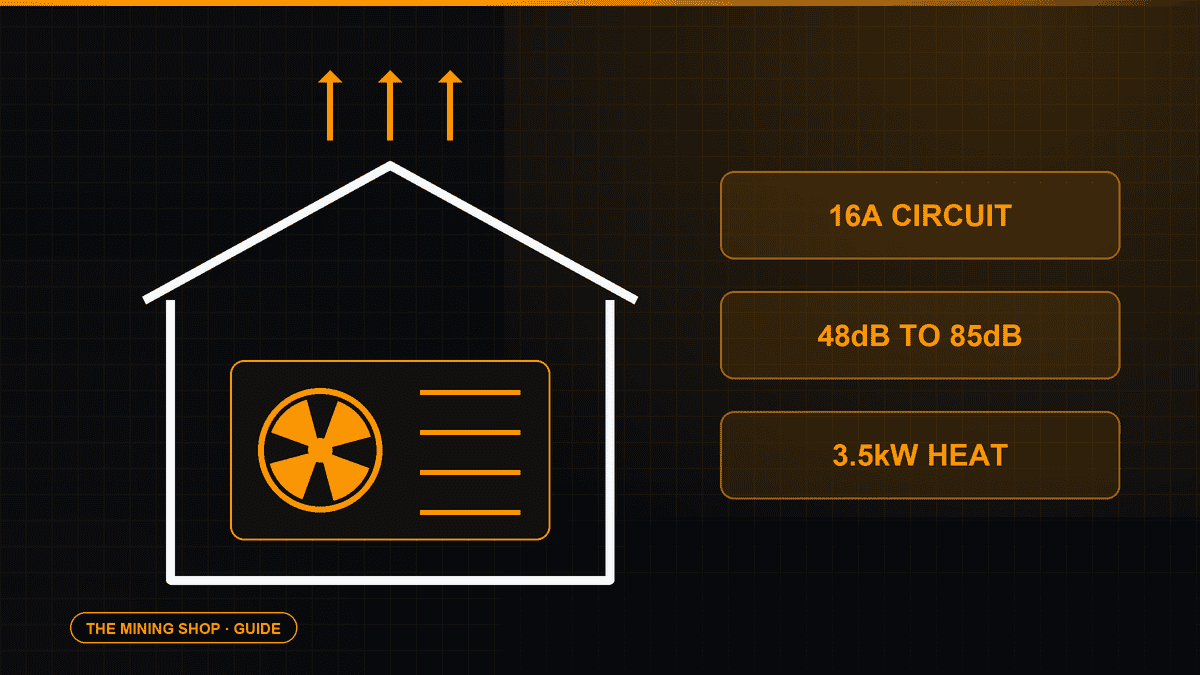
Home Bitcoin mining: A home ASIC needs a suitable dedicated circuit, competent electrical assessment and a safe route for continuous heat and noise.
ASIC fleet management software: Create an exact model-by-function matrix because reading telemetry, changing pools, tuning and updating firmware can have.
Complete an IceRiver AE0 setup with the correct 19 to 20 V supply, Ethernet, private interface, Aleo pool, accepted-proof checks and official firmware controls.
Join the ASIC Mining Discussion
Members can read and join the discussion
Log in to read comments from other miners. Create a free account if you would like to ask a question or share your experience.
Membership helps us protect the discussion from spam and keep answers useful.