

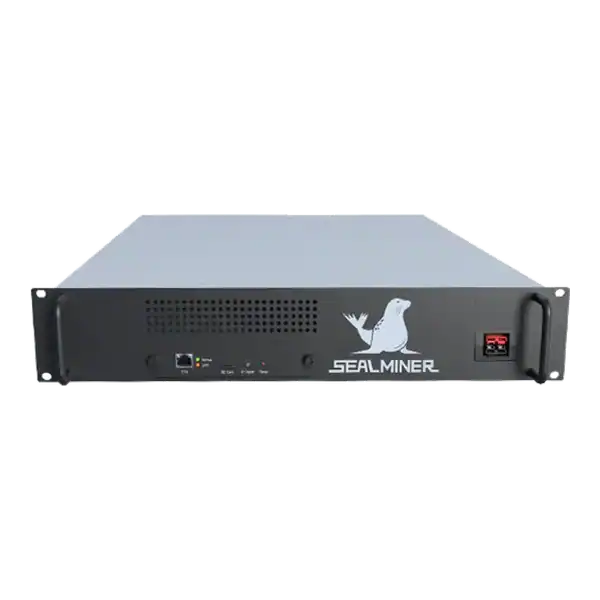
Sealminer A4 Ultra Hydro
Bitcoin & Bitcoin Cash ASIC Miner

886TH
HASHRATE
9.45W/TH
EFFICIENCY
8373W
POWER
£857.66
EST. MONTHLY
NO PAYBACK
EST. ROI
Reuse ASIC miner heat safely by calculating output, matching room demand, controlling airflow, noise and electrical load, and planning summer operation.
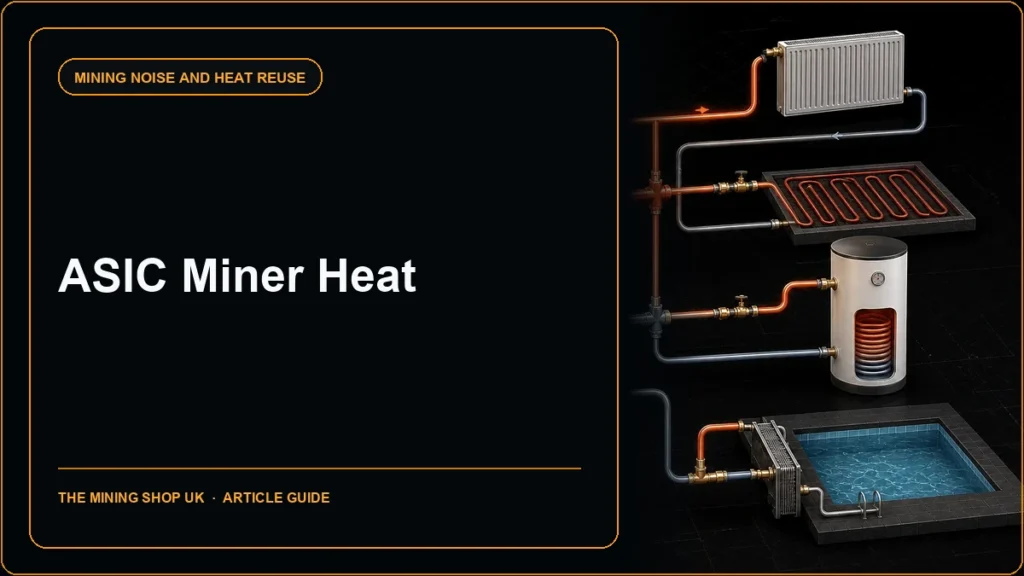
ASIC miner heat can warm a home or workplace. But the installation must match the building's demand, electrical supply, airflow and noise limits. This UK guide explains how to calculate heat output, route it safely, plan summer rejection and decide when heat recovery genuinely improves the mining case.
ASIC miner heat: Almost all electrical energy consumed by an air-cooled ASIC miner ends up as heat in or around the building.
A miner is checking ASIC miner heat. At £0.20 per kWh, electricity costs £16.80 per day before pool fees or ancillary equipment. If the miner is outside the occupied area and only part of its warm air reaches the room, calculate delivered heat separately from electrical input.
Almost all electrical energy consumed by an air-cooled ASIC miner ends up as heat in or around the building. A miner drawing 3.5 kW therefore behaves about like a 3.5 kW continuous electric heater while it is operating. It also produces bitcoin mining revenue, noise and a concentrated hot-air stream.
The heat is not free: the electricity bill is paid in full, and mining revenue is variable.
For a daily calculation, multiply kilowatts by running hours. A 3.5 kW machine running continuously uses 84 kWh and releases roughly the same amount of heat. At £0.20 per kWh, electricity costs £16.80 per day before pool fees or ancillary equipment.
Compare that with the useful heat actually needed and the mining revenue, not with the tariff of a heater that would have remained switched off.
Heat output varies with power profile, voltage, condition and throttling. Use a suitable wall-level measurement rather than relying only on nameplate watts. Pumps and fans add heat too. If the miner is outside the occupied area and only part of its warm air reaches the room, calculate delivered heat separately from electrical input.

A house does not need the same heat every hour. Demand changes with outdoor temperature, insulation, air leakage, room size, solar gain and occupancy. A continuous 3.5 kW source may be useful in a workshop or open-plan area during cold weather but excessive in a small bedroom. Get a proper heat-loss assessment for any installation intended to replace normal heating.
| Measured ASIC load | Energy over 24 hours | Approximate heat released while running |
|---|---|---|
| 1.5 kW | 36 kWh | 1.5 kW |
| 3.0 kW | 72 kWh | 3.0 kW |
| 3.5 kW | 84 kWh | 3.5 kW |
| 5.0 kW | 120 kWh | 5.0 kW |
Do not add the miner’s full input to a heat calculation if hot air is exhausted outdoors or lost in unheated ducting. Measure room temperature and the airflow route. HSE thermal-comfort guidance recommends controlling air movement and avoiding draughts directed at people. Use diffusers or baffles where necessary and retain independent temperature control.
The simplest arrangement places an air-cooled miner in a separated, ventilated enclosure and ducts its clean hot exhaust to a room when heat is required. The duct must suit the temperature and airflow, avoid sharp restrictions and remain clear of combustible materials.
Do not attach a narrow domestic hose that causes back-pressure and raises chip temperature. Check the manufacturer’s permitted pressure and operating-temperature information where available.
Provide a deliberate intake-air path. Taking warm air from the room and returning hotter air to the same room can cause rapid recirculation. Taking very cold or damp external air directly into a miner can create condensation risk during transitions. Filters add resistance and require inspection. Design the route so dust, cooking vapour and moisture are not pulled through the hardware.
Use a temperature controller only within a safe control architecture. A controller may command the miner, a diverter damper or an extraction fan. But it must not defeat thermal protection or isolate required cooling while the miner remains energised. Test what happens when the controller, fan, network or sensor fails. Provide a clear manual shutdown and keep exits unobstructed.
A Bitcoin ASIC is a continuous high-power load, not an ordinary portable heater. HSE guidance says equipment must be suitable for its supply and the supply must be able to deliver the required current. A competent electrician should assess the circuit, cable, protective device, connection, earthing and isolation.
Do not rely on extension leads, adapters or a general socket circuit simply because the plug fits.
Typical air-cooled miners can be loud enough to disturb occupants and neighbours. Enclosures can reduce airborne noise but must preserve airflow and service access. Avoid lining a hot enclosure with unsuitable foam. Measure sound where people spend time, consider low-frequency fan character and comply with local nuisance requirements. Hearing protection is not a substitute for separating the source from living areas.
Keep lint, dust, paper and stored materials away from intake and exhaust routes. Inspect connectors for heat damage and keep firmware protections active. Install suitable detection and follow a competent fire-risk assessment for the setting. Never direct very hot air at soft furnishings, sleeping areas or a location where a blocked outlet could go unnoticed.
The central problem is summer. Mining may continue when the house needs no heat. So the design needs a reliable route that rejects heat outdoors without recirculation. A diverter can send exhaust indoors during cold periods and outside when the room reaches its limit. The outdoor route must not create nuisance, pull rain into the system or discharge where the intake immediately captures it.
Hydro and immersion systems can move heat into water through a correctly designed heat exchanger. That can support a buffer tank, underfloor circuit, pool or domestic-hot-water preheat. But it is a proper engineering project. Separate mining coolant from potable and heating water, control temperatures and pressures, and retain the normal heat source.
Low-grade heat may require a larger exchanger or heat pump to reach the required delivery temperature.
A useful operating strategy follows heat demand rather than forcing the building to absorb continuous output. Underclocking can reduce power and noise, subject to supported firmware and warranty terms. Powering down can be economically correct when electricity cost exceeds the combined value of mining revenue and useful heat.
Heat reuse can make sense where the building already needs a steady electrical heat input, the supply is professionally designed and noise can be separated from occupants. Workshops, garages and other controlled spaces may be easier than bedrooms or small living rooms.
It is strongest when the owner values both mining output and displaced heating, measures the result and has a summer rejection route. The calculation should use net mining revenue and only the heat that would otherwise have been purchased.
It is a poor fit where a property cannot support the continuous electrical load, neighbours will be affected, hot air cannot be safely distributed or the miner would run only to justify itself. A high electricity tariff can make the combined result unattractive even in winter.
Do not proceed where condensation, combustible dust, damp, blocked ducting or unsupervised sleeping-area operation cannot be controlled. Hosting may be more appropriate than forcing industrial hardware into an unsuitable home.
Commission the system in stages. Record wall power, inlet and outlet temperatures, room temperature, noise, chip temperatures and rejects. Test every damper and shutdown state. Stop if connectors heat, airflow becomes unstable or condensation appears. Preserve original firmware and configuration records for warranty and diagnosis.
ASIC miner heat: Almost all electrical energy consumed by an air-cooled ASIC miner ends up as heat in or around the building.
Almost all electrical energy consumed by an air-cooled ASIC miner ends up as heat in or around the building.
A house does not need the same heat every hour. Demand changes with outdoor temperature, insulation, air leakage, room size, solar gain and occupancy.
The simplest arrangement places an air-cooled miner in a separated, ventilated enclosure and ducts its clean hot exhaust to a room when heat is required.
A Bitcoin miner can be a useful heat source because its electrical input becomes heat. But the installation only works when the building needs that heat and can safely support the load, airflow and noise. Measure power, calculate delivered heat, provide a summer route and retain independent safety controls.
Treat ducting or liquid heat recovery as an engineered system, not an accessory added after the miner arrives.
Compare air, hydro and immersion ASIC options on The Mining Shop UK, then ask a competent electrician and heating engineer to assess the proposed supply and heat route before ordering.
Almost all electricity used by an ASIC miner becomes heat. But that heat is not free. Measure wall power, delivered room heat, airflow, noise and electrical capacity before installation.


Bathhouse says it began a pool-heating mining pilot in 2022. Its technical explanation describes immersion-cooled ASICs, a dielectric-fluid circuit and heat exchangers that transfer heat into pool plumbing. The comparison is with its previous electric resistance heaters.
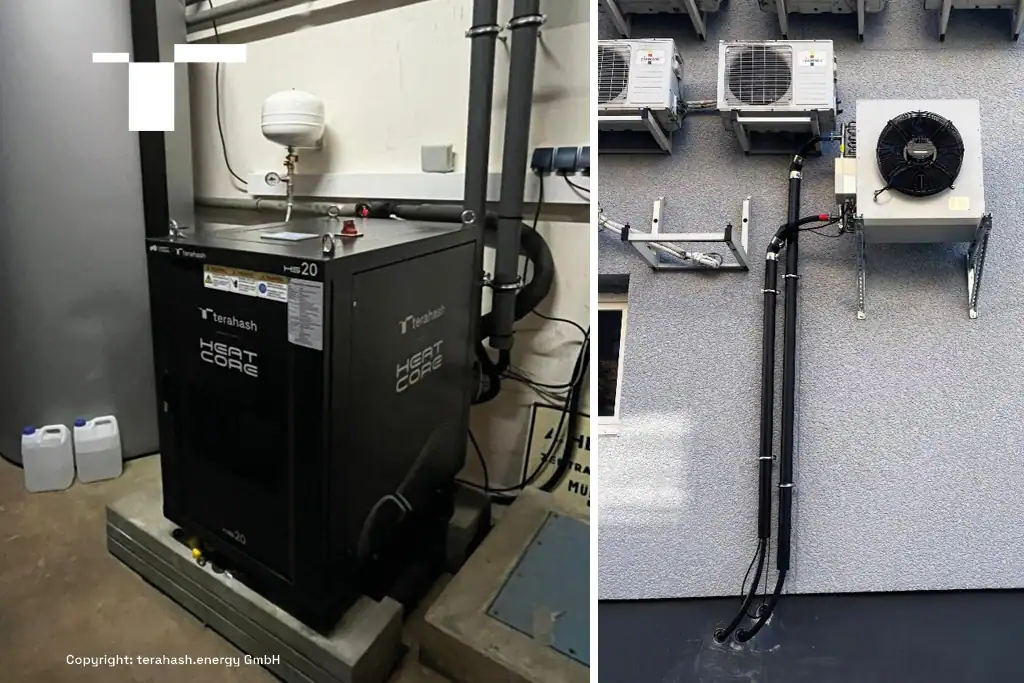
Terahash describes a commissioned system at Nebona’s spice factory: a Heatcore HS20 with two Whatsminer M63 units uses surplus rooftop solar power and supplies hot water to a buffer tank. The existing heating system remains available.

SunBit reports fitting a Bitcoin Boiler alongside the oil boiler in a 200 m² Kotka home. An outdoor unit rejects unwanted summer heat and allows additional use of solar surplus.
Join the ASIC Mining Discussion
Members can read and join the discussion
Log in to read comments from other miners. Create a free account if you would like to ask a question or share your experience.
Membership helps us protect the discussion from spam and keep answers useful.