

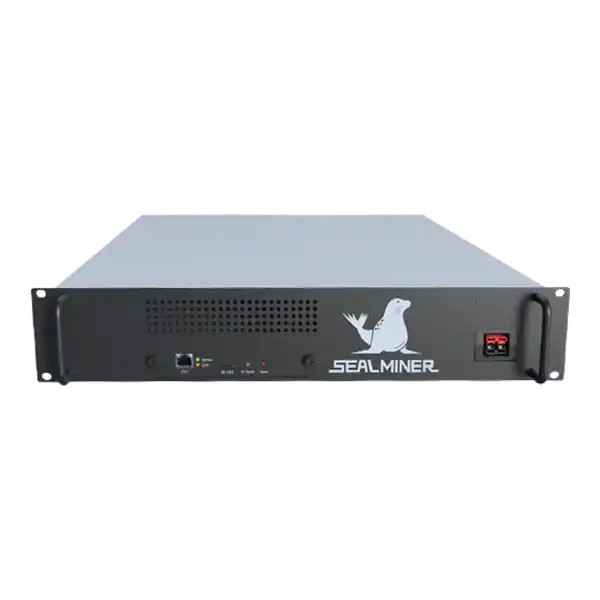
Sealminer DL1 Hydro
Litecoin & Dogecoin ASIC Miner

52.5GH
HASHRATE
149W/GH
EFFICIENCY
7823W
POWER
£774.73
EST. MONTHLY
NO PAYBACK
EST. ROI
ASIC heat greenhouse: Use a crop and structure heat-loss assessment to define hourly demand, temperature and humidity limits.
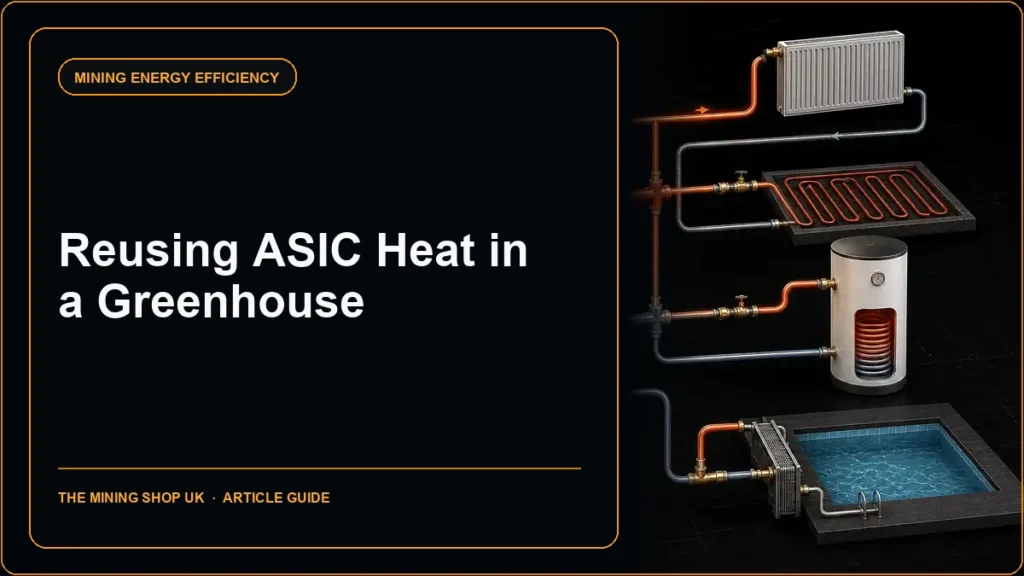
ASIC heat greenhouse depends on a clear operating boundary and evidence that can be checked before money or equipment is committed. ASIC heat in a greenhouse can displace part of a genuine heating load. But plants need controlled temperature, humidity and air movement rather than uncontrolled hot exhaust.
The design must match hourly crop demand with miner availability, prevent dust and electrical exposure, maintain backup heat, reject surplus in warm weather and measure both useful thermal delivery and mining energy. A greenhouse is not a safe substitute for an ASIC cooling system.
ASIC heat greenhouse: ASIC heat in a greenhouse is useful when the crop's hourly demand, air or water distribution and miner availability are engineered together.
A site operator is checking ASIC heat greenhouse. Solar gain can change demand quickly during the day even when outside air remains cold. Recovered heat has value only when it replaces fuel or electricity without harming yield or quality.
Record crop, growth stage, target day and night temperatures, humidity, ventilation, carbon-dioxide strategy and tolerance for interruptions. Get horticultural and mechanical advice.
Calculate fabric, infiltration and ventilation heat loss for local design weather. Solar gain can change demand quickly during the day even when outside air remains cold.
Map zones and air movement. A warm average can hide leaf-level hot spots, cold corners and condensation on the structure.
Define the heating alternative and cost. Recovered heat has value only when it replaces fuel or electricity without harming yield or quality.

| Route | Advantage | Design concern |
|---|---|---|
| Direct warm air | Simple for air-cooled miners | Dust, noise, hot spots and humidity |
| Ducted mixed air | Better distribution | Resistance and fan margin |
| Air-to-water exchanger | Hydraulic distribution | Approach temperature and extra fans |
| Hydro ASIC loop | Captures heat in liquid | Fluid separation and heat rejection |
| Buffer tank | Smooths short variation | Losses and limited duration |
| Heat pump boost | Raises useful temperature | Power, capital and maintenance |
Direct air needs filtration, mixing and a return or exhaust plan. Do not expose miner electronics to humid greenhouse air without an engineered separation.
Liquid systems should use an exchanger between miner coolant and the greenhouse loop, with water treatment, expansion, leak and freeze controls.
Use distributed sensors at crop and equipment level, not one sensor beside the heater. Control heat delivery with fans, valves, pumps or supported miner power profiles.
Heating air without moisture control can change relative humidity and disease risk. Greenhouse ventilation may be required even while heat is needed.
Set independent high-temperature and high-humidity alarms and a safe miner shutdown path. Do not block ASIC airflow because the greenhouse reached its set point.
Protect sensor and control failure with manual override and fail-safe states. A mining dashboard is not a horticultural controller.
Create matched hourly profiles for greenhouse demand and planned miner operation. Include pool or economic curtailment, repairs, cleaning and power outages.
Keep conventional backup capable of protecting crops during the design outage. Mining hardware is not a guaranteed heat utility unless the contract and redundancy genuinely provide that standard.
A buffer vessel can bridge short changes but calculate its usable temperature range and loss. It cannot cover a long cold night without enough stored energy.
In warm weather, reject heat outdoors or curtail miners safely. Do not overheat the crop to preserve mining revenue.
A 3.5kW miner running 24 hours produces about 84kWh of heat before recovery losses. If the greenhouse needs 20kW for a cold 10-hour night, one miner supplies only part of the duty.
Ten such miners provide about 35kW while all run. But useful delivery may be lower after exchanger and distribution losses. The system must modulate or reject excess when demand falls below that value.
Compare useful metered heat with the boiler or electric input actually displaced. Do not multiply miner power by all annual hours if the greenhouse cannot use the heat.
Add miner and auxiliary energy, pool receipts, maintenance and horticultural benefit or risk. A heat saving cannot compensate for crop damage.
Keep electrical equipment, distribution and connectors out of wet areas and use suitable enclosures, isolation and competent installation. Condensation and irrigation create hazards not present in a dry data room.
Control dust, pests and treatment chemicals. Agricultural aerosols can foul heatsinks and corrode electronics. At the same time, miner dust should not be blown over crops without assessment.
Plan safe filter, fan, pump and exchanger maintenance without exposing workers to heat, noise, live electricity or moving parts.
Review fire, insurer, planning and workplace responsibilities. Do not use combustible improvised ducting around hot equipment.
ASIC heat greenhouse: ASIC heat in a greenhouse is useful when the crop's hourly demand, air or water distribution and miner availability are engineered together.
Record crop, growth stage, target day and night temperatures, humidity, ventilation, carbon-dioxide strategy and tolerance for interruptions.
Direct air needs filtration, mixing and a return or exhaust plan. Do not expose miner electronics to humid greenhouse air without an engineered separation.
Use distributed sensors at crop and equipment level, not one sensor beside the heater.
ASIC heat in a greenhouse is useful when the crop’s hourly demand, air or water distribution and miner availability are engineered together. Protect the wet growing environment from electrical equipment, keep backup and summer rejection and meter only useful displaced heat. Crop health and site safety always take precedence over maintaining hashrate.
Begin with one monitored zone and compare temperature, humidity, disease, yield and energy with a control zone where practical.
Expansion should follow independent horticultural evidence across representative seasonal weather conditions, not one successful cold night or one short crop cycle. Agree who owns horticultural decisions and who owns miner controls.
The mining operator should not alter greenhouse temperature targets to preserve revenue, and the grower should not block airflow or stop pumps without following the equipment procedure. Clear authority prevents a small operational change from becoming a crop or hardware loss.
Use The Mining Shop UK consultancy and efficiency resources to screen the ASIC heat supply before horticultural and mechanical design.
Use a crop and structure heat-loss assessment to define hourly demand, temperature and humidity limits. Do not size from floor area alone. Choose indirect liquid heat or carefully filtered and mixed air with safe separation. Protect plants, workers and miners from hot spots, moisture and contaminants.

Compare the most efficient Bitcoin ASICs by J/TH, wall power, operating mode and cooling before choosing hardware for purchase or hosting.
Run an accepted J per terahash comparison using matched wall power, pool work, ambient conditions, firmware fees, rejects and stable operating modes.
Plan Bitcoin mining intermittent energy controls around minimum load, start and stop cycles, pool recovery, uptime, fixed costs and safe curtailment.
Join the ASIC Mining Discussion
Members can read and join the discussion
Log in to read comments from other miners. Create a free account if you would like to ask a question or share your experience.
Membership helps us protect the discussion from spam and keep answers useful.