

Sealminer A4 Ultra Hydro
Bitcoin & Bitcoin Cash ASIC Miner
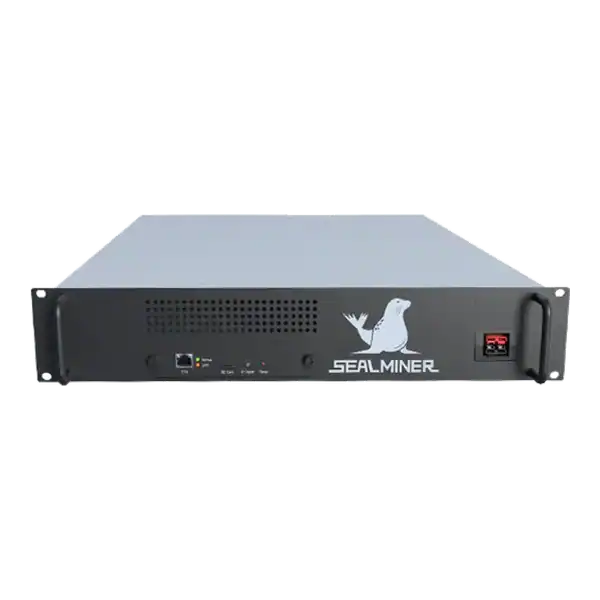

886TH
HASHRATE
9.45W/TH
EFFICIENCY
8373W
POWER
£854.90
EST. MONTHLY
NO PAYBACK
EST. ROI
Compare the most efficient Bitcoin ASICs by J/TH, wall power, operating mode and cooling before choosing hardware for purchase or hosting.
The most efficient Bitcoin ASICs combine a low J/TH figure with an operating mode and cooling arrangement that can be sustained in the real installation. Joules per terahash, written J/TH, shows how much energy a Bitcoin ASIC uses to produce a unit of hashrate. A lower figure is more efficient.
But it is not a complete profitability score. This guide explains the calculation, realistic comparisons and the operating factors that specifications leave out in practice.
Most efficient Bitcoin ASICs: J/TH describes energy performance. Profitability also depends on network difficulty, block subsidy and fees, Bitcoin price, pool method and fees, uptime, electricity, purchase price, maintenance and the eventual resale value.
A site operator is checking most efficient Bitcoin ASICs. If it produces 200 terahashes each second, dividing 3,500 by 200 gives 17.5 joules per terahash.
Joules per terahash joins hashrate and power. It tells you how much energy an ASIC needs to perform one terahash of SHA-256 work. A watt is one joule per second. A miner rated at 3,500 watts is therefore consuming 3,500 joules each second.
If it produces 200 terahashes each second, dividing 3,500 by 200 gives 17.5 joules per terahash. You may also see the same relationship described as watts per terahash.
For this calculation, the numerical result is the same. Lower is better. A 20 J/TH machine uses less energy for a given amount of work than a 30 J/TH machine. That gives the more efficient unit a wider margin when electricity is expensive or mining revenue falls.
It does not mean the lower-J/TH miner is automatically the better purchase, because capital cost and the rest of the deployment still matter.

Use this formula: J/TH = power draw in watts ÷ hashrate in TH/s. Keep both inputs in the stated units. If a dashboard reports petahashes, gigahashes or kilowatts, convert them first or the result will be wrong. For a purchase shortlist, the manufacturer specification is a sensible starting point.
For a machine already running, use a stable average. Take power from a suitable meter at the wall or distribution point and hashrate from the pool over a meaningful period.
A five-minute spike is not evidence of sustained performance. Do not divide the PSU’s maximum rating by the miner’s headline hashrate. The rating tells you what the PSU is designed to supply, not necessarily what the complete miner is drawing. At site level, decide whether your comparison covers the miner only or the whole facility.
Pumps, dry coolers, extraction and networking consume power too. Leaving them out can flatter a deployment.
Imagine two SHA-256 miners. Miner A produces 200 TH/s at 3,500 W. Miner B produces 160 TH/s at 3,200 W. These are illustrative figures, not quoted models.
| Measure | Miner A | Miner B |
|---|---|---|
| Hashrate | 200 TH/s | 160 TH/s |
| Power | 3,500 W | 3,200 W |
| Efficiency | 17.5 J/TH | 20 J/TH |
| Energy per day | 84 kWh | 76.8 kWh |
Miner A draws more power in total, yet it is more efficient because it produces proportionally more hashrate. This is why comparing watts alone can send a buyer in the wrong direction.
Daily energy is power in kilowatts multiplied by 24 hours. Your electricity cost is then daily kWh multiplied by your all-in price per kWh. Use the price that actually reaches the bill, including any relevant delivery charges or hosting components, rather than an attractive headline that excludes fees.
Factory figures are measured under stated test conditions. Your result can move because of input voltage, ambient temperature, dust, altitude, silicon variation, firmware, performance profile and cooling quality. An air-cooled miner fighting hot recirculated air may throttle or drive its fans harder. A hydro unit with poor flow or unsuitable coolant conditions may not hold the intended profile. Firmware tuning moves the balance.
An efficiency profile may trade hashrate for fewer watts. An overclock may add hashrate, heat and J/TH. The useful setting stays stable within electrical, thermal and warranty limits at your tariff. Compare accepted pool-side hashrate as well as the miner’s local display.
Rejected or stale shares do not contribute in the same way as accepted work. So a machine can look healthy locally while delivering less useful hashrate to the pool.
J/TH describes energy performance. Profitability also depends on network difficulty, block subsidy and fees, Bitcoin price, pool method and fees, uptime, electricity, purchase price, maintenance and the eventual resale value. Those inputs change. J/TH does not forecast them. A very efficient new miner can still be a poor buy if its price is too high for the extra margin it creates.
An older, less efficient machine can make sense where power is genuinely cheap and the purchase cost is low. At an expensive UK domestic tariff, the same older miner may have no workable margin at all. This is why we use efficiency to filter the shortlist, then model the complete numbers.
Check current estimated earnings, enter your own electricity price and stress-test weaker conditions. A quote should survive more than today’s best-case revenue.
Before choosing between two miners, put both through the same comparison:
The best specification is the one you can deploy properly. A machine that does not suit the available power or cooling is not a bargain, however good its J/TH looks on paper.
Joules per terahash gives ASIC buyers a clean way to compare energy efficiency: divide watts by TH/s, and prefer the lower stable figure. Use it as a decision tool, not a promise of profit. Measure at the wall, judge hashrate at the pool and include the entire operating environment.
Then place efficiency beside purchase cost, electricity, uptime, warranty and repairability. That full view is how a promising specification becomes a sensible mining decision.
Most efficient Bitcoin ASICs: J/TH describes energy performance. Profitability also depends on network difficulty, block subsidy and fees, Bitcoin price, pool method and fees, uptime, electricity, purchase price, maintenance and the eventual resale value.
Joules per terahash joins hashrate and power. It tells you how much energy an ASIC needs to perform one terahash of SHA-256 work.
Use this formula: J/TH = power draw in watts ÷ hashrate in TH/s.
Imagine two SHA-256 miners. Miner A produces 200 TH/s at 3,500 W.
Want the numbers checked against your own electricity price? Compare live ASIC profitability and SHA-256 hardware on The Mining Shop UK, or speak to our team before choosing a machine, power profile or hosting location.
Calculate J/TH by dividing measured power in watts by hashrate in TH/s. Lower J/TH means less energy is used for the same amount of SHA-256 work.

Run an accepted J per terahash comparison using matched wall power, pool work, ambient conditions, firmware fees, rejects and stable operating modes.
Plan Bitcoin mining intermittent energy controls around minimum load, start and stop cycles, pool recovery, uptime, fixed costs and safe curtailment.

Understand ASIC heat-recovery system through heat capture, airflow and controls. Check usable demand, complete costs and safety before building the system.
Join the ASIC Mining Discussion
Members can read and join the discussion
Log in to read comments from other miners. Create a free account if you would like to ask a question or share your experience.
Membership helps us protect the discussion from spam and keep answers useful.