

Sealminer A4 Ultra Hydro
Bitcoin & Bitcoin Cash ASIC Miner
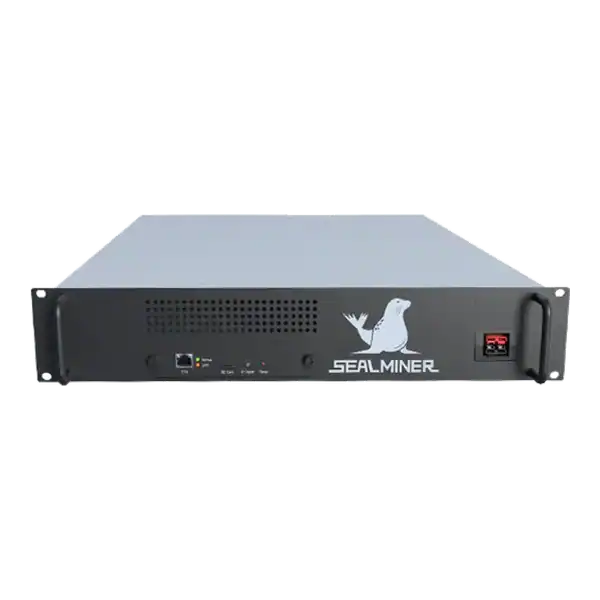

886TH
HASHRATE
9.45W/TH
EFFICIENCY
8373W
POWER
£884.60
EST. MONTHLY
NO PAYBACK
EST. ROI
Antminer S19j Pro 120TH review of the S19j Pro+ model, covering power, efficiency, condition, firmware, noise, heat and value for UK buyers.
Antminer S19j Pro 120TH review of the S19j Pro+ model, covering power, efficiency, condition, firmware, noise, heat and value for UK buyers.
Antminer S19j Pro 120TH review: The Antminer S19j Pro+ 120TH remains useful when its price and operating environment match its 27.5 J/TH generation.
A site operator is checking Antminer S19j Pro 120TH review. Its nominal 3.3 kW load demands a proper 200 to 240 V electrical design, planned airflow and realistic noise control.
Bitmain lists several S19j Pro+ hashrate variants under model number j1-12. The 120T version is a SHA-256 miner for networks such as Bitcoin and Bitcoin Cash. Do not apply the 120T figures to a 117T, 113T or 109T nameplate.
The manufacturer’s official specification gives 120 TH/s with a positive 3 per cent tolerance, 3,300 W at 25°C with a 5 per cent power tolerance and 27.5 J/TH with a 5 per cent efficiency tolerance. It uses 10/100M RJ45 Ethernet and weighs 13.70 kg including the power supply.
| Item | Bitmain specification | Buying implication |
|---|---|---|
| Hashrate | 120 TH/s, +3% | Judge sustained pool performance, not a brief dashboard peak |
| Wall power at 25°C | 3,300 W, ±5% | Allow for tolerance and complete site consumption |
| Efficiency at 25°C | 27.5 J/TH, ±5% | Compare with current alternatives at the same net revenue |
| Input | 200 to 240 V, 47 to 63 Hz | Use a designed circuit and compatible connectors |
| Maximum current | 20 A, two inputs at 10 A each | Not an ordinary UK 13 A plug load |
| Operating environment | 0 to 40°C, 10 to 90% RH non-condensing | Cooling and moisture control affect stability |

A 3,300 W continuous load is 3.3 kW. Multiply by 24 hours to get 79.2 kWh per day, or about 2,409 kWh in a 30.42-day average month. This is the nominal miner load, not a promise of site-meter consumption.
At 5p/kWh the nominal daily electricity cost is £3.96. At 10p it is £7.92. At 20p it is £15.84. And at 30p it is £23.76. Add cooling, ventilation, transformer or distribution losses, networking and fixed hosting charges where applicable.
| Electricity price | Daily cost | Average monthly cost | Annual cost |
|---|---|---|---|
| £0.05/kWh | £3.96 | £120.45 | £1,445.40 |
| £0.10/kWh | £7.92 | £240.90 | £2,890.80 |
| £0.20/kWh | £15.84 | £481.80 | £5,781.60 |
| £0.30/kWh | £23.76 | £722.70 | £8,672.40 |
To calculate the energy breakeven price, divide expected daily mining revenue by 79.2 kWh. If expected gross revenue were £6.00 per day, the energy-only breakeven would be about 7.58p/kWh. The real breakeven is lower after pool fees, downtime, repairs and site overhead.
The local dashboard estimates work over a short period. A pool estimates effective hashrate from accepted shares. So it naturally moves above and below the nameplate figure. Review at least a full day and preferably several days after the miner has stabilised.
Record average pool hashrate, accepted and rejected shares, hashboard and chip detection, frequency, temperatures, fan speed and restarts. A steady 120 TH/s display is not evidence of equivalent paid work when rejects or outages are high.
Use the manufacturer’s positive hashrate tolerance correctly. It does not guarantee that every used machine will exceed 120 TH/s or compensate for poor network, dust, heat, failing chips or an unsuitable power supply.
The rated 3.3 kW draw is already close to the practical limit of a 13 A domestic plug at 230 V, and Bitmain states a maximum 20 A input condition with two 10 A supply wires. A fused plug adaptor does not turn the installation into a suitable continuous industrial circuit.
A competent electrician should design the circuit, protective device, cable, isolation, connectors, distribution and earthing for the actual installation, ambient temperature and other loads. Both miner inlets must be supplied as the manufacturer intends. Never improvise split leads or bypass protective devices.
Measure current and voltage under stable load. Low voltage, loose connectors and undersized cable create heat and instability. Keep combustible material clear and arrange an emergency shutdown that does not require reaching past hot exhaust.
Nearly all electrical input becomes heat. A nominal 3.3 kW miner therefore releases roughly 3.3 kW of heat while operating, similar to a powerful electric heater running continuously. The room needs a defined intake and exhaust path rather than general ventilation alone.
Avoid recirculating exhaust into the inlet. Check intake temperature at the miner, not just the room thermostat. Dust filtration can protect heatsinks but must be sized so it does not starve the fans.
High-speed server fans are loud and tonal. Assess workplace and neighbour exposure before installation. Ducting, attenuation or an enclosure must preserve airflow, fire safety and service access. Hearing protection is a last line of defence, not a substitute for reducing exposure.
Ask for the serial number, nameplate, seller identity, ownership evidence, firmware version, repair history and a dated test. The evidence should show all hashboards and chips, stable temperatures, pool-accepted work and the length of the test.
Inspect fans, grills, heatsinks, control board, data cables, power connectors and signs of corrosion, oil, overheating or previous immersion use. A cleaned exterior does not prove clean heatsinks or sound solder joints.
Confirm whether the sale is used or refurbished. This parts were replaced, who performed the work, the acceptance test, warranty duration and return location. Price the risk of freight and downtime as well as the machine.
The S19j Pro+ can be inexpensive per terahash. But purchase price per TH is only one metric. A newer miner with lower joules per terahash can keep a higher share of gross revenue when electricity is expensive or hashprice falls.
Compare both machines using the same Bitcoin price, network difficulty, pool fee, uptime and electricity price. Then add purchase cost, installation, repair allowance and expected resale. Do not compare one seller’s gross revenue card with another seller’s net figure.
The older machine can make sense when capital is constrained, power is genuinely low cost, heat has useful value, repair support is available and the purchase price leaves room for volatility. It makes less sense on ordinary commercial electricity with no heat plan and no tolerance for downtime.
Antminer S19j Pro 120TH review: The Antminer S19j Pro+ 120TH remains useful when its price and operating environment match its 27.5 J/TH generation.
Bitmain lists several S19j Pro+ hashrate variants under model number j1-12.
A 3,300 W continuous load is 3.3 kW. Multiply by 24 hours to get 79.2 kWh per day, or about 2,409 kWh in a 30.42-day average month.
The local dashboard estimates work over a short period. A pool estimates effective hashrate from accepted shares.
The Antminer S19j Pro+ 120TH remains useful when its price and operating environment match its 27.5 J/TH generation. Its nominal 3.3 kW load demands a proper 200 to 240 V electrical design, planned airflow and realistic noise control.
Verify the exact variant and condition, compare pool-accepted work, calculate every operating cost and stress the result against lower hashprice. A cheap machine with unsuitable power is not good value. A verified unit on low-cost energy can still have a clear job.
Compare the S19j Pro+ against current SHA-256 miners using The Mining Shop UK’s live profitability tools, then speak to the team about verified stock, hosting, electrical requirements or repair support before committing to a site.
The official 120 TH/s model is rated at 3,300 W and 27.5 J/TH at 25°C. It requires 200 to 240 V input through two supply leads and can draw up to 20 A under Bitmain's stated maximum condition.
At 3.3 kW it uses about 79.2 kWh each day before tolerance or site losses. Every 1p/kWh changes daily electricity cost by about 79p.
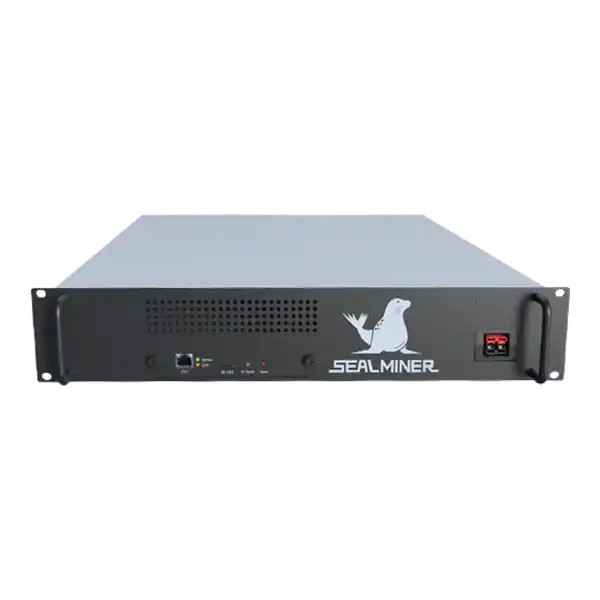

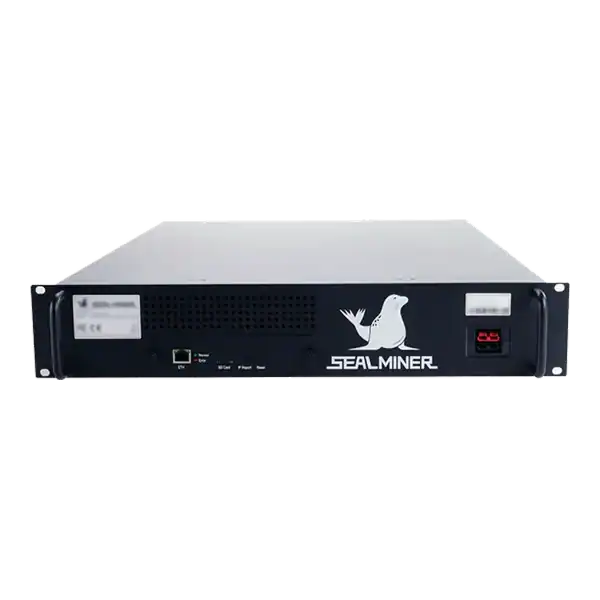
Bitcoin ASIC Compatibility made simple. Compare performance, power, cooling, noise and practical risks before choosing or operating mining hardware.
Practical guide to SEALMINER A4 review, covering efficiency and wall power. Compare costs, measured performance and site fit before buying hardware.

Unproven home ASIC launch review: assess an unproven home ASIC launch through manufacturer identity, samples, specifications, certification, firmware, delivery.
Join the ASIC Mining Discussion
Members can read and join the discussion
Log in to read comments from other miners. Create a free account if you would like to ask a question or share your experience.
Membership helps us protect the discussion from spam and keep answers useful.