
Pre-order
Overall ranking

Equihash
·
ZEC
Overall rank#1of 100AvailableAll: #2 / 831

Pre-OrderFree Shipping
Hashrate
525KSOL
Efficiency
4.73W/KSOL
Power
2483W
Earns/kWh
42.0p
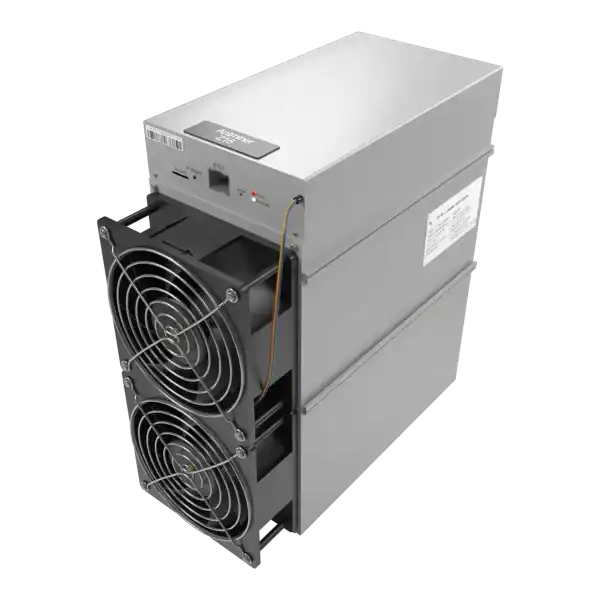
Use this Antminer L7 guide to compare exact variants, Scrypt pool revenue, 200 to 240V power, cooling, noise, setup, efficiency, price and remaining life.
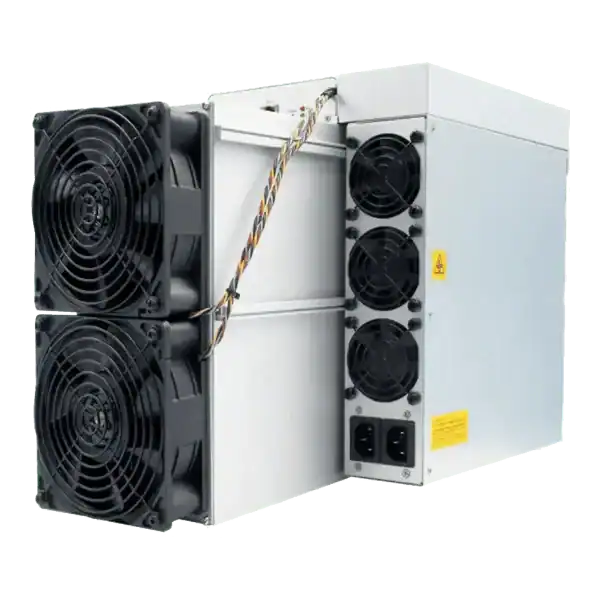
This Antminer L7 guide explains how to assess Bitmain's high-power Scrypt ASIC across its nominal hashrate variants from 7,800 to 9,500MH/s. Bitmain lists about 0.36J/MH at 25°C, 200 to 240V AC input and two 10A power inputs.
A useful buying decision starts with the exact suffix and measured condition, then checks pool payout method, merged-mining treatment, electricity, noise, cooling, firmware, purchase price and remaining service life. A headline Litecoin or Dogecoin revenue figure is not enough.
Antminer L7 guide: An Antminer L7 can be a strong Scrypt machine when the exact variant, accepted pool output and complete power cost are verified.
A miner is checking Antminer L7 guide. Confirm the 200 to 240V electrical design, heat and noise plan before buying, then model purchase price and repair risk against conservative revenue rather than a single live estimate.
Antminer L7 is a product family rather than one fixed output. Bitmain’s support page lists nominal variants at 7,800, 8,050, 8,300, 8,550, 8,800, 9,050, 9,300 and 9,500MH/s.
Ask for a photograph of the nameplate, system overview, serial number, firmware version and a recent kernel log. Confirm the number of hashboards, accepted pool hashrate and wall power. Do not value a lower variant as though it were a 9,500M unit.
Used units need a condition record covering fans, PSU, connectors, control board, chain status, chip errors, temperatures and repair history. A short seller video is not a representative load test.
| Variant | Hashrate | Wall power | Calculated nominal efficiency |
|---|---|---|---|
| L7 9500M | 9,500MH/s ±3% | 3,420W ±10% | 0.36J/MH |
| L7 9300M | 9,300MH/s ±3% | 3,350W ±10% | 0.36J/MH |
| L7 9050M | 9,050MH/s ±3% | 3,260W ±10% | 0.36J/MH |
| L7 8550M | 8,550MH/s ±3% | 3,078W ±10% | 0.36J/MH |
| L7 7800M | 7,800MH/s ±3% | 2,810W ±10% | 0.36J/MH |

The L7 performs Scrypt proof-of-work. Bitmain’s algorithm reference identifies Litecoin as the principal supported Scrypt coin for this model. The hardware cannot be changed into a SHA-256 Bitcoin miner through firmware.
Many Scrypt pools use auxiliary proof-of-work so the same submitted work can contribute to a parent chain and one or more auxiliary chains. The pool decides which chains it supports, how it converts or pays rewards and which fee applies.
Ask for the pool’s current reward method, coin list, fee, minimum payout, payout currency, orphan treatment, rejected-share policy and regional endpoint. Confirm whether the displayed estimate includes every merged reward or only one coin.
Pool revenue is variable. Network difficulty, block subsidy, transaction fees, coin prices, pool luck, accepted shares and payout rules can all change. Keep the hardware decision separate from a prediction that any particular coin price will rise.
A 9,500M L7 at Bitmain’s nominal 3,420W uses 82.08kWh in 24 hours. At £0.10/kWh that is £8.21 per day, before cooling, distribution losses, pool fees, repairs or tax. At £0.20/kWh it is £16.42.
Bitmain allows a ±10 per cent wall-power tolerance. A 3,420W nameplate calculation can therefore differ materially from a measured unit at the stated condition. Use a suitable meter after the miner is thermally stable.
Break-even energy price equals expected daily mining contribution after pool charges and rejected shares, divided by complete daily kWh. If that contribution were £12 and site use were 86kWh including ventilation, the break-even energy component would be about £0.1395/kWh. It would not include hardware recovery, labour or downtime.
Use a conservative accepted hashrate and include a downtime allowance. A purchase can have positive daily energy contribution yet fail to recover the machine price before a major repair or efficiency change in the market.
Bitmain lists 200 to 240V AC, 47 to 63Hz and a maximum input-current condition of 20A, with two input leads at 10A each. Both inputs must be supplied as designed. The exact plug, PDU, cable, protective device and circuit need competent selection for continuous duty.
A 3.42kW L7 produces roughly 3.42kW of heat. Ventilation must remove that heat at the worst intended ambient condition without recirculating exhaust into the inlet. Record inlet temperature, not just room temperature at a distant wall.
Bitmain lists an operating range of 0 to 40°C and 10 to 90 per cent non-condensing humidity, with derating guidance above 1,000m. These are equipment limits, not recommended targets for a reliable room design.
Air-cooled L7 units are industrially loud. Keep them out of occupied domestic and office areas unless an engineered enclosure, airflow path and noise assessment preserve cooling and safe access.
Place the miner on a restricted network, connect both power inputs, connect wired Ethernet and use Bitmain’s current IP discovery and setup instructions. Change the default password immediately and do not expose the web interface directly to the internet.
Create a pool sub-account or worker name that identifies the individual miner without exposing personal information. Configure a primary and genuinely independent backup endpoint where supported.
Enter payout addresses through the pool’s protected account workflow. Enable two-step verification and withdrawal controls. Verify the first payout using a small operational period before committing more machines.
Update only from an official firmware source for the exact model. Keep the current configuration, firmware record and recovery procedure. Test remote monitoring without giving every user authority to alter pools or wallets.
Run the miner long enough to cover warm-up, pool variance and normal room-temperature changes. Compare local and pool-side hashrate over at least 24 hours, then investigate persistent gaps.
Record wall power, accepted and rejected shares, chain status, chip errors, temperatures, fan speed, network interruptions and restarts. A high local number with rising rejects or resets is not a healthy result.
Normalise results as accepted MH/s per watt and cost per accepted unit of work. Recheck after cleaning, firmware change, repair or relocation so historical performance does not hide deterioration.
Use alerts for offline state, falling accepted hashrate, high temperature, fan failure and changed pool configuration. Test the alert path and keep ownership of the monitoring account clear.
Compare the asking price with the exact variant, measurable performance, age, condition, included VAT status, seller warranty, repair route and shipping risk. A cheaper unit with a weak PSU or marginal board can be more expensive after downtime.
Model a base, adverse and favourable case. Change Scrypt revenue, energy price, uptime, repair allowance and resale value independently. Do not use one current daily calculator number for the full recovery period.
Check whether the expected operating site can accept the heat, noise and electrical load today. Buying first and seeking a host later exposes the customer to storage, shipping and inactive-capital costs.
Confirm warranty start date, exclusions and whether firmware changes or operation outside stated limits affect support. Retain invoices, serial photographs and commissioning data.
It does not make sense when the customer relies on a normal 13A socket, cannot remove the heat, cannot tolerate the noise, has no verified pool payout route or needs an optimistic coin-price forecast to make the numbers work.
Antminer L7 guide: An Antminer L7 can be a strong Scrypt machine when the exact variant, accepted pool output and complete power cost are verified.
Antminer L7 is a product family rather than one fixed output. Bitmain's support page lists nominal variants at 7,800, 8,050, 8,300, 8,550, 8,800, 9,050, 9,300 and 9,500MH/s.
The L7 performs Scrypt proof-of-work. Bitmain's algorithm reference identifies Litecoin as the principal supported Scrypt coin for this model.
A 9,500M L7 at Bitmain's nominal 3,420W uses 82.08kWh in 24 hours.
An Antminer L7 can be a strong Scrypt machine when the exact variant, accepted pool output and complete power cost are verified. The two variables most likely to change the decision are merged-pool revenue after fees and measured site kWh.
Confirm the 200 to 240V electrical design, heat and noise plan before buying, then model purchase price and repair risk against conservative revenue rather than a single live estimate. Reject any unit whose identity or load-test evidence is unclear.
Compare the exact L7 variant and a measured power figure with The Mining Shop UK’s current ASIC profitability and hosting options before committing capital or arranging delivery.
Identify the exact L7 hashrate variant. Bitmain lists 7,800 to 9,500MH/s versions with nominal wall power from 2,810 to 3,420W at 25°C and stated tolerances. The L7 needs 200 to 240V AC and two power inputs. It is not suitable for a normal UK 13A socket, and a competent person must design the continuous circuit and ventilation.
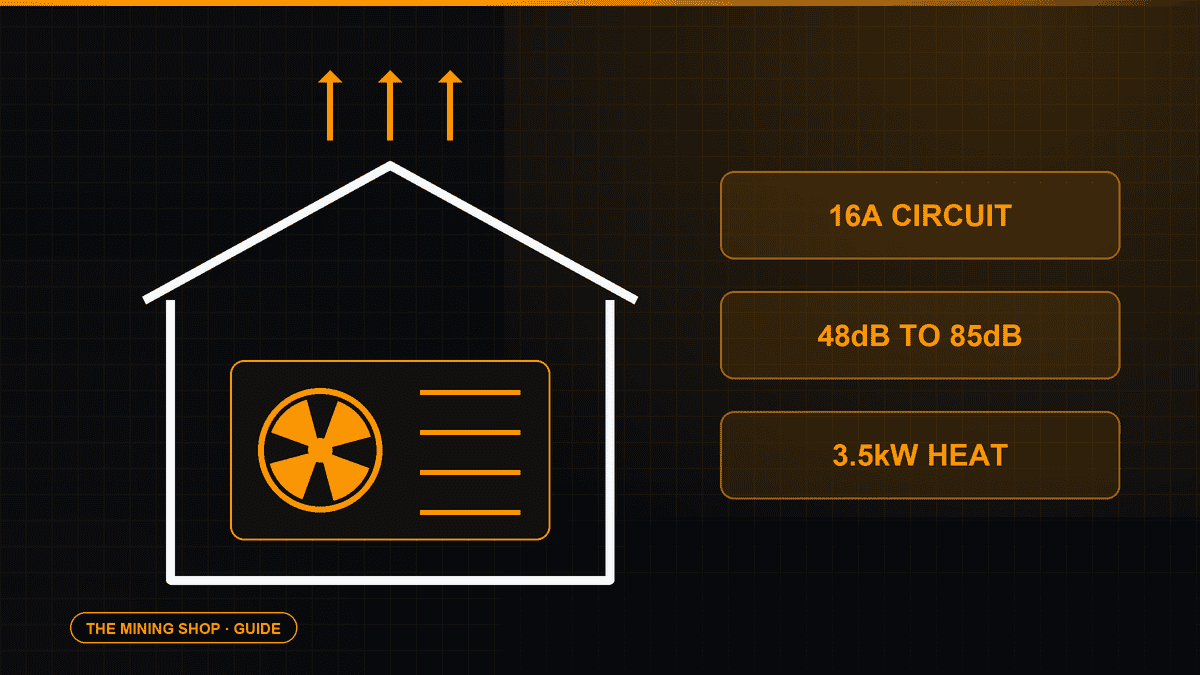
Home Bitcoin mining: A home ASIC needs a suitable dedicated circuit, competent electrical assessment and a safe route for continuous heat and noise.
ASIC fleet management software: Create an exact model-by-function matrix because reading telemetry, changing pools, tuning and updating firmware can have.
Complete an IceRiver AE0 setup with the correct 19 to 20 V supply, Ethernet, private interface, Aleo pool, accepted-proof checks and official firmware controls.

Join the ASIC Mining Discussion
Members can read and join the discussion
Log in to read comments from other miners. Create a free account if you would like to ask a question or share your experience.
Membership helps us protect the discussion from spam and keep answers useful.