
Pre-order
Overall ranking

Equihash
·
ZEC
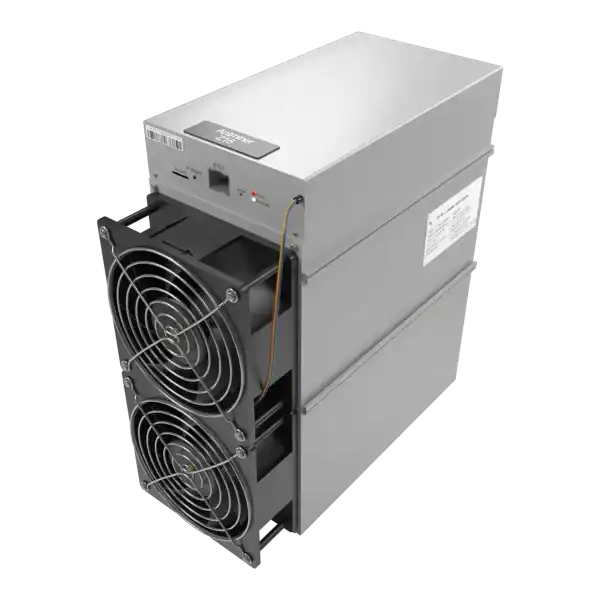
Overall rank#1of 100AvailableAll: #2 / 831

Pre-OrderFree Shipping
Hashrate
525KSOL
Efficiency
4.73W/KSOL
Power
2483W
Earns/kWh
42.1p
Understand solo Bitcoin mining earnings through hashrate share, block probability, variance, expected value, electricity cost and realistic time horizons.
Solo Bitcoin mining earnings are not a salary or a smooth daily yield. Each valid hash is an independent attempt to meet the network target. A solo miner can run for years without finding a block, or find one much sooner than the average implies. Expected value is useful for comparing cost. But it does not predict when any individual miner will be paid.
Solo Bitcoin mining earnings are a probability distribution, not wages. Estimate hashrate share with consistent units, show both success and no-block probabilities, and keep expected value separate from cash received.
A site operator wants to understand solo Bitcoin mining earnings. Fund the electricity without assuming a win and choose a conventional pool when lower variance is an operational requirement.
Bitcoin mining constructs block headers and hashes them until a result falls below the network target. Bitcoin’s developer guide explains that a solo miner builds and broadcasts its own candidate block. At the same time, pooled miners submit easier shares that prove contributed work.
If a solo miner finds a valid block and the network accepts it, the coinbase pays the configured destination according to the software and service used. The proceeds include the applicable block subsidy and transaction fees, subject to maturity, service fees and technical correctness.
Most individual ASICs have a very small share of network hashrate. That makes the payout large and infrequent rather than creating a small predictable daily amount.

Let the miner’s sustained hashrate be Hm and the estimated network hashrate be Hn using the same units and period. Its approximate chance of finding the next block is p = Hm ÷ Hn, assuming valid independent work and no material propagation disadvantage.
For n block opportunities, the chance of at least one success is 1 minus (1 minus p) to the power n. The chance of no success is (1 minus p) to the power n. Use an appropriate network estimate and remember that both network hashrate and difficulty change.
A simpler expected-time estimate is the average Bitcoin block interval divided by hashrate share. It is an expectation across many hypothetical repetitions, not a countdown for one machine.
| Term | Meaning | Common error |
|---|---|---|
| Hashrate share | Miner hashrate divided by network hashrate | Mixing TH/s and EH/s |
| Per-block probability | Approximate chance on one block | Treating it as guaranteed frequency |
| No-block probability | Chance every attempt in the period misses | Ignoring long dry periods |
| Expected time | Long-run average waiting time | Reading it as a deadline |
| Expected value | Probability-weighted proceeds | Calling it cash received |
Assume purely for illustration that a miner sustains 200 TH/s and the network is 1,000 EH/s. Convert the network figure: 1,000 EH/s is 1,000,000,000 TH/s. The miner’s share is 200 divided by 1,000,000,000, or 0.0000002.
At roughly 144 block opportunities per day, the expected blocks per day are about 0.0000288. The reciprocal is about 34,722 days, or roughly 95 years, if all inputs stayed constant. They will not: network hashrate, difficulty, fees, uptime and the miner itself change.
After one expected waiting time in a simple constant-rate model, the chance of no success is still about e to the power minus one, roughly 36.8 per cent. That is why expected time must never be presented as a promised pay date.
Expected gross value multiplies block probability by the net block proceeds under the chosen setup. It can be compared with pooled revenue before differences in fees and implementation. But an individual period normally realises either no block or a full success, not the average fraction.
Electricity is paid continuously. A 3.5 kW miner consumes 84 kWh per day whether it finds a block or not. At £0.10 per kWh that is £8.40 per day before cooling, pool service, repairs and fixed costs. The solo budget must be able to carry that expense without relying on a win.
Coin price does not change the probability of finding a block. But it changes the sterling value of any proceeds and can influence network participation over time. Difficulty determines the target and therefore the expected hashes required.
A solo pool can operate nodes, build work, receive miner connections and submit a valid block. It may simplify infrastructure. But its terms, fee, payout destination, block-template policy and trust assumptions must be reviewed.
Do not confuse displayed pool shares with partial earnings. Shares show that the ASIC is working at the pool’s easier target. Under a solo method they normally do not create a proportional payout unless a network-valid block is found.
Verify how the coinbase is constructed, when proceeds are paid, what happens during a chain reorganisation and whether the service has access to change the payout destination. Keep monitoring and wallet control secure.
Use pool-accepted or independently measured sustained hashrate, not a nameplate burst. Downtime, rejected work, stale jobs and an unstable overclock reduce the effective number of attempts. Compare local and service reporting.
Network hashrate is estimated from blocks and difficulty rather than directly observed. State the source, timestamp and averaging period. A calculator that silently freezes the current network value across many years gives false precision.
Low latency and correct block propagation matter most at the moment of success. Test failover, node health and alerts. A valid result that is not submitted correctly cannot earn the intended reward.
Solo mining can fit an operator who deliberately accepts very high variance, can fund all operating costs without receipts, understands the infrastructure and values the possibility of receiving an undivided block outcome.
Small devices can also be educational, provided the probability is described honestly and the electrical setup remains safe.
Use pooled mining when regular lower-variance receipts, simpler reconciliation and continuous evidence of credited work are more important. The pool method and counterparty still require due diligence.
Neither route guarantees profit. Electricity, hardware, difficulty, fees and coin price remain material.
Always show the probability of no block alongside the chance of success. That single number prevents an average from being mistaken for certainty.
Document the ASIC, sustained hashrate, node or solo service, payout address, network estimate, formula, operating cost and maximum affordable period. Set alerts for disconnects, low hashrate and payout changes.
Recalculate periodically rather than extending the original expected date. Past unsuccessful hashing does not make the next independent hash more likely to succeed. Stop, continue or move to a pool based on future cost and purpose, not the money already spent.
Solo Bitcoin mining earnings are a probability distribution, not wages. Estimate hashrate share with consistent units, show both success and no-block probabilities, and keep expected value separate from cash received.
Bitcoin mining constructs block headers and hashes them until a result falls below the network target.
Let the miner's sustained hashrate be Hm and the estimated network hashrate be Hn using the same units and period.
Assume purely for illustration that a miner sustains 200 TH/s and the network is 1,000 EH/s.
Solo Bitcoin mining earnings are a probability distribution, not wages. Estimate hashrate share with consistent units, show both success and no-block probabilities, and keep expected value separate from cash received. Fund the electricity without assuming a win and choose a conventional pool when lower variance is an operational requirement.
Use The Mining Shop UK’s ASIC specifications and profitability tools to establish hashrate and power, then compare a transparent solo probability with the net receipts of a conventional pool before choosing your route.
Approximate block probability from your sustained hashrate divided by total network hashrate, then apply the number of block opportunities in the period. Expected time is an average across repeated trials, not a deadline. Even at the expected time, a substantial chance of no block remains.

Build a five-year ASIC replacement calendar from efficiency gap, tariff, failure rate, parts, firmware, resale, network scenarios and capital gates.
Build ASIC profit forecast ranges using base, downside and severe cases for accepted hashrate, energy, uptime, difficulty, reward, fees, price and repairs.
Compare European ASIC mining energy costs using the correct tariff band, taxes, grid connection, curtailment, cooling, contracts and location risks.

Join the ASIC Mining Discussion
Members can read and join the discussion
Log in to read comments from other miners. Create a free account if you would like to ask a question or share your experience.
Membership helps us protect the discussion from spam and keep answers useful.