

Sealminer A4 Ultra Hydro
Bitcoin & Bitcoin Cash ASIC Miner
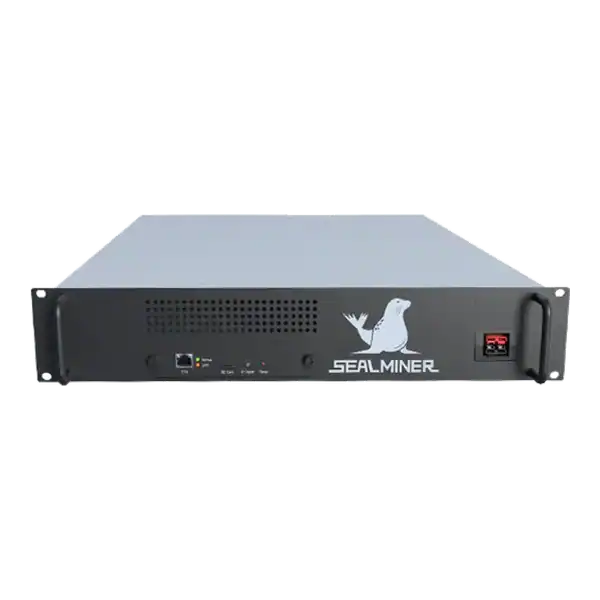

886TH
HASHRATE
9.45W/TH
EFFICIENCY
8373W
POWER
£925.82
EST. MONTHLY
NO PAYBACK
EST. ROI
Compare European ASIC mining energy costs using the correct tariff band, taxes, grid connection, curtailment, cooling, contracts and location risks.

European ASIC mining energy costs cannot be compared from one national average. A mining site pays under a consumption band, contract, connection and tax position, and it also needs enough capacity, cooling and uptime. Eurostat's published non-household figures provide useful context.
But a site decision requires a written delivered tariff, interval data, grid and permitting evidence, plus a model of curtailment, freight and legal risk.
European ASIC mining energy costs are site and contract questions, not country-ranking questions. Public data can reveal the market range.
A site operator wants to understand European ASIC mining energy costs. Compare complete landed operating cost and retain a funded exit route before moving hardware.
Eurostat reports electricity prices by consumer type and annual consumption band. For non-household consumers using 500MWh to 2,000MWh a year, it reported an EU average of €18.37 per 100kWh in the second half of 2025, down 3.5 per cent from the first half. That is €0.1837/kWh for the published band, not a universal mining tariff.
The same release showed wide country variation, with Ireland, Cyprus and Germany among the higher figures and Finland and Sweden among the lower. Country averages still hide region, connection level, contract timing, taxes, exemptions and consumption shape.
A 1MW continuous site uses about 8,760MWh a year before auxiliary load, placing it in a different Eurostat band from a 100kW site. Compare the row that reflects expected annual consumption and confirm what charges the series includes.
Do not publish a country as ‘cheapest for mining’ from one table. The available site, grid offer and commercial contract can reverse the national ranking.

Request the commodity rate, network and distribution charges, capacity charges, metering, balancing, levies, taxes, standing charges and indexation formula. State whether VAT or another recoverable tax is included.
Time-of-use or wholesale-linked energy needs interval modelling. An average price can conceal expensive hours during which operation loses cash. Record whether the contract permits automated curtailment and how imbalance or nomination errors are charged.
Include the energy used by ventilation, pumps, dry coolers, transformers, networking and site services. Divide the complete metered site energy cost by pool accepted work to compare facilities consistently.
| Input | Evidence | Risk if omitted |
|---|---|---|
| Commodity | Signed tariff or index formula | Wrong variable cost |
| Network and capacity | Connection and supplier schedule | Large fixed or peak charge |
| Taxes and levies | Local adviser and invoice | False country comparison |
| Auxiliary energy | Site submetering | Efficiency overstated |
| Curtailment | Contract right and event history | Revenue and restart loss |
| FX | Billing currency and policy | Unmodelled sterling volatility |
A low quoted rate has little value without an enforceable connection. Verify firm and non-firm capacity, import limit, energisation date, security deposit, upgrade work, curtailment rights and the party responsible for network reinforcement.
Connection queues and local network constraints vary. A generation site may have surplus energy that cannot be exported. But the mining load still needs a lawful private-wire or connection arrangement, metering, protection and a counterparty able to deliver it.
Ask for single-line diagrams, protection studies, transformer ratings and evidence of competent installation. High-current continuous equipment should not be deployed on the strength of a marketing deck.
Model the cost and delay of leaving. Bespoke electrical work, cooling infrastructure and deposits may not be recoverable if the tariff or regulation changes.
ASICs can provide a controllable load. But repeated power cycling is not costless. Revenue stops, pools need time to show stable accepted work, thermal cycles can stress components and poorly sequenced cooling can create faults.
For renewable or constrained-energy sites, use historical interval data rather than an annual generation total. Match available power with miner minimum loads, cooling energy and restart procedure. State whether the commercial offer guarantees any availability.
Calculate revenue lost during curtailment and any fixed energy, hosting or capacity charge that continues. A cheap rate available for only a few unpredictable hours can be worse than a higher firm rate.
Automated control should have safe limits, monitoring and manual override. Do not defeat manufacturer temperature or fan protections to follow an energy signal.
A UK owner using a European site must verify the contracting entity, title to equipment, insurance territory, tax and customs treatment, sanctions controls, data handling and the law governing disputes. Local professional advice is required.
Freight, import formalities and repair logistics affect downtime. Confirm who carries risk in transit, who can remove equipment and what happens after non-payment or site insolvency.
Remote visibility should include independent worker, energy and environmental records. A dashboard supplied by the same counterparty is useful. But meter and pool evidence provide stronger reconciliation.
Language and time-zone differences are manageable when contacts, escalation, maintenance windows and evidence requirements are written into the contract.
Site A offers €0.055/kWh commodity energy but adds €0.025/kWh network and levy costs, uses 8 per cent auxiliary energy and expects 10 per cent curtailment. Site B offers €0.075/kWh delivered, uses 5 per cent auxiliary energy and provides 98 per cent energy availability.
The headline comparison favours Site A. The complete calculation may not. Model miner and auxiliary kWh, accepted operating hours, continuing fixed charges, pool revenue lost during curtailment and restart performance. Convert both to the same currency under a stated exchange-rate case.
Then add hosting, repairs, insurance, freight and exit cost. The answer depends on the exact fleet efficiency and contract. The purpose of the example is to expose missing inputs, not declare a universal winner.
Run a downside case with higher network charges, lower mining revenue and delayed repair. A site that remains fundable has more value than one whose base case wins by a fraction of a cent.
European ASIC mining energy costs are site and contract questions, not country-ranking questions. Public data can reveal the market range.
Eurostat reports electricity prices by consumer type and annual consumption band. For non-household consumers using 500MWh to 2,000MWh a year, it reported an EU average of €18.37 per 100kWh in the second half of 2025, down 3.5 per cent from the first half.
Request the commodity rate, network and distribution charges, capacity charges, metering, balancing, levies, taxes, standing charges and indexation formula.
A low quoted rate has little value without an enforceable connection. Verify firm and non-firm capacity, import limit, energisation date, security deposit, upgrade work, curtailment rights and the party responsible for network reinforcement.
European ASIC mining energy costs are site and contract questions, not country-ranking questions. Public data can reveal the market range. But the decision belongs to the correct consumption band, delivered invoice, grid rights, auxiliary energy, accepted uptime and cross-border protections. Compare complete landed operating cost and retain a funded exit route before moving hardware.
Use The Mining Shop UK efficiency and profitability tools with the proposed site’s delivered rate, expected availability and auxiliary load.
Use Eurostat as market context, then get a site-specific delivered quote for the correct annual-consumption band and tax treatment. Model connection, capacity, standing charges, cooling, curtailment and restart losses. A low commodity price is not a complete mining energy cost.


Build a five-year ASIC replacement calendar from efficiency gap, tariff, failure rate, parts, firmware, resale, network scenarios and capital gates.

Build ASIC profit forecast ranges using base, downside and severe cases for accepted hashrate, energy, uptime, difficulty, reward, fees, price and repairs.

Run a UK mining tariff cashflow stress test across unit rate, standing and capacity charges, VAT cash flow, reward, difficulty, downtime and fixed commitments.
Join the ASIC Mining Discussion
Members can read and join the discussion
Log in to read comments from other miners. Create a free account if you would like to ask a question or share your experience.
Membership helps us protect the discussion from spam and keep answers useful.