

Sealminer A4 Ultra Hydro
Bitcoin & Bitcoin Cash ASIC Miner
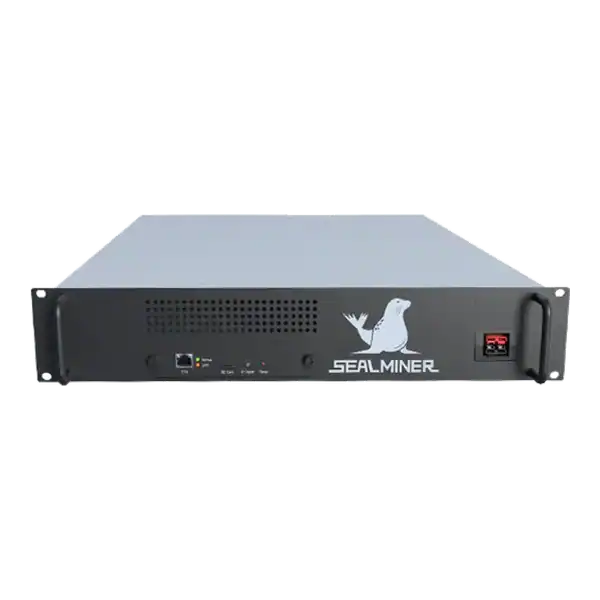

886TH
HASHRATE
9.45W/TH
EFFICIENCY
8373W
POWER
£884.60
EST. MONTHLY
NO PAYBACK
EST. ROI
Understand Bitcoin price drivers for miners and translate market demand, liquidity, leverage and macro shocks into cash, curtailment and hardware decisions.
Bitcoin price drivers for miners matter because revenue is commonly earned in bitcoin while energy, payroll, hosting and repairs are paid in pounds or another fiat currency. Price reflects buying and selling across fragmented markets, influenced by liquidity, leverage, access, regulation, macro conditions and expectations. None of these provides a dependable short-term forecast.
So an operator needs treasury and shutdown rules that remain workable when price moves against the plan.
Bitcoin price drivers for miners are useful for risk planning, not precise prediction. Separate bitcoin production from fiat value, recognise how liquidity and leverage can amplify shocks, and keep enough cash to meet obligations without a forced sale.
A miner is checking Bitcoin price drivers for miners. Record a lower-price case and the cash response before committing to hardware or fixed energy.
An ASIC contributes work to a pool and receives an entitlement under the pool’s method. The bitcoin quantity depends on network and pool conditions. Its sterling value depends on the exchange price at the moment chosen for measurement or sale.
Keep two ledgers in the operating model: bitcoin produced per unit of accepted work, and fiat proceeds or valuation. Combining them too early makes it difficult to see whether performance changed because of the fleet or the market.
Costs have different timing. Energy may be billed monthly in advance, parts may require immediate fiat payment and pool rewards may wait for a threshold. A profitable month on paper can still create a cash shortfall.
Price risk therefore affects treasury, not just a return chart. Decide how much bitcoin the business may retain. This invoices need cash cover and who can authorise sales.

On an exchange, the displayed price emerges where available bids and offers meet. New buyers, sellers or changes in market access can move that balance. Large trades have more impact where order-book liquidity is thin.
Bitcoin’s protocol issuance schedule constrains new subsidy supply. But traded supply also includes existing holders, miners, funds and other participants. A halving changes one flow. It does not mechanically set a future market price.
Access products, banking support, exchange availability and jurisdictional rules can alter who can buy or sell and at what friction. An announcement can affect expectations before its practical effect is known.
A miner should not treat a popular supply narrative as an invoice plan. Record a lower-price case and the cash response before committing to hardware or fixed energy.
Bitcoin markets trade continuously across venues. Liquidity and price can differ temporarily. At the same time, arbitrage links them imperfectly. An outage or withdrawal restriction can make a quoted price unusable for a particular business.
Derivatives allow leveraged positions. Rapid moves can trigger liquidations, causing forced buying or selling that amplifies volatility. Open interest and funding data may describe positioning. But they do not reliably predict direction.
For a mining operator, the control is not to forecast every liquidation. It is to avoid unnecessary leverage against hardware, energy invoices or retained bitcoin, and to keep more than one verified route for treasury operations where proportionate.
Counterparty limits matter. Do not leave more working balance at a pool or exchange than the business has deliberately accepted under its risk policy.
Interest rates, currency conditions, risk appetite and demand for liquidity can affect bitcoin alongside other assets. The relationship changes over time and should not be represented as a fixed formula.
Tax, enforcement, sanctions, energy and financial-market announcements can change expectations or the ability of particular participants to act. Verify the final rule and effective date. Headlines often precede implementation.
Operational exposure can be indirect. A stronger dollar or euro may change imported part costs. At the same time, a weak pound can increase the sterling cost of equipment and affect the sterling value of bitcoin differently.
Maintain a dated assumptions register. If a business case depends on a policy or financing condition, assign an owner to verify it rather than embedding an old headline indefinitely.
| Observation | Do not assume | Check instead |
|---|---|---|
| Bitcoin price rises | Every miner is profitable | Complete cost, difficulty and accepted uptime |
| Bitcoin price falls | Immediate hardware sale is best | Avoidable margin, fixed contracts and resale market |
| Sterling revenue is stable | Production is stable | Bitcoin per accepted petahash-day |
| Hashrate increases | Price must follow | Independent network and market variables |
| Halving approaches | Price must double | Downside liquidity and subsidy transition |
Suppose a fleet produces 0.01BTC in a month. At £80,000 per bitcoin that is £800 before costs. At £50,000 it is £500. The physical output did not change. But the cash contribution fell £300.
If difficulty rose during the same month and the fleet produced only 0.008BTC, the effects compound. Retain both figures so the team can address the controllable efficiency and uptime question without pretending to control market price.
Compare cash revenue with costs due in the same period. A retained-bitcoin policy may increase future upside. But it also transfers price and liquidity risk to the operating company.
Unsafe electrical work, poor cooling, unreliable firmware and insecure payout controls remain unacceptable when revenue rises. A market rally can hide waste but does not remove it.
Use favourable periods to build reserves, maintain equipment and review inefficient machines rather than assuming conditions are permanent.
Curtailment, lower-power operation, repair, relocation or sale can each be rational depending on complete avoidable cost, contracts and hardware value.
Do not sell into a weak market without comparing the remaining contribution and exit costs. Equally, do not run solely to justify a sunk purchase price.
Bitcoin price drivers for miners are useful for risk planning, not precise prediction. Separate bitcoin production from fiat value, recognise how liquidity and leverage can amplify shocks, and keep enough cash to meet obligations without a forced sale.
An ASIC contributes work to a pool and receives an entitlement under the pool's method.
On an exchange, the displayed price emerges where available bids and offers meet.
Bitcoin markets trade continuously across venues. Liquidity and price can differ temporarily.
Bitcoin price drivers for miners are useful for risk planning, not precise prediction. Separate bitcoin production from fiat value, recognise how liquidity and leverage can amplify shocks, and keep enough cash to meet obligations without a forced sale. The operating decision should still come from accepted work, complete cost and a written curtailment rule.
Use The Mining Shop UK profitability tools to test lower-price and higher-difficulty cases before committing cash to a miner or fixed energy contract.
Price is set at the margin across markets. Headlines, liquidity and leveraged positions can amplify movement. But no single variable explains every change. Separate bitcoin production from sterling revenue. Pool accepted work can be stable while the cash value of each day's output moves sharply.

Build a five-year ASIC replacement calendar from efficiency gap, tariff, failure rate, parts, firmware, resale, network scenarios and capital gates.
Build ASIC profit forecast ranges using base, downside and severe cases for accepted hashrate, energy, uptime, difficulty, reward, fees, price and repairs.
Compare European ASIC mining energy costs using the correct tariff band, taxes, grid connection, curtailment, cooling, contracts and location risks.
Join the ASIC Mining Discussion
Members can read and join the discussion
Log in to read comments from other miners. Create a free account if you would like to ask a question or share your experience.
Membership helps us protect the discussion from spam and keep answers useful.