

Sealminer A4 Ultra Hydro
Bitcoin & Bitcoin Cash ASIC Miner
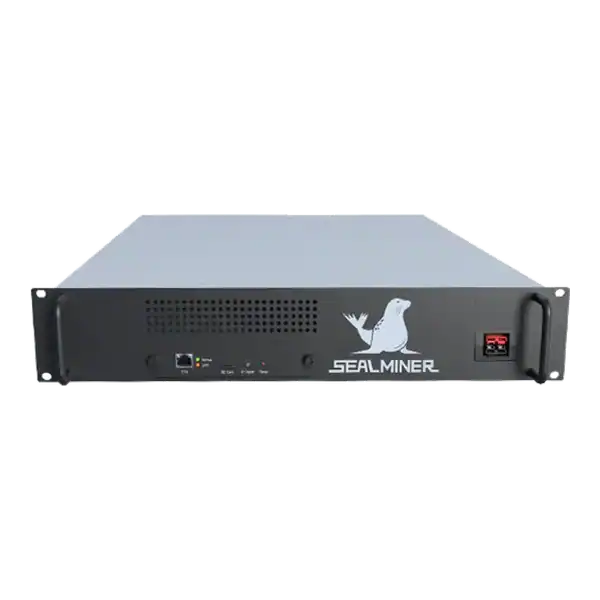

886TH
HASHRATE
9.45W/TH
EFFICIENCY
8373W
POWER
£933.57
EST. MONTHLY
NO PAYBACK
EST. ROI
Learn why a Bitcoin pool payrate can differ from hashprice, including fees, payout method, transaction fees, accepted shares and marketplace demand.

Bitcoin pool payrate is the amount a pool or hashpower marketplace credits under its own rules. It can differ from a Bitcoin hashprice benchmark because of payout method, transaction-fee estimates, accepted shares, service charges, timing and marketplace demand. This guide shows how to make a fair comparison.
Bitcoin pool payrate: Hashprice is a reference value for the expected revenue generated by a quantity of Bitcoin hashrate over a period.
A miner is checking Bitcoin pool payrate. Luxor's published methodology describes BTC hashprice as a function of block subsidy, transaction fees and network difficulty, with the bitcoin exchange rate added when the figure is converted into a fiat currency.
Hashprice is a reference value for the expected revenue generated by a quantity of Bitcoin hashrate over a period. It is commonly expressed as pounds, dollars or bitcoin per petahash per day.
Luxor’s published methodology describes BTC hashprice as a function of block subsidy, transaction fees and network difficulty, with the bitcoin exchange rate added when the figure is converted into a fiat currency. It is therefore a network and market benchmark, not a promise that a particular pool will credit the same amount.
A Bitcoin pool payrate is what a pool or hashpower marketplace actually credits under its own rules. It can use a different fee estimate, exchange-rate snapshot, payout window, reward method and service charge. The figure can also reflect accepted shares rather than the hashrate displayed by the miner.
Two services may both be operating correctly while showing different payrates because their calculations answer different questions.
The useful comparison is not the largest number on a dashboard. Record the unit, currency, measurement period and whether the number is gross or net. Then compare the bitcoin actually credited for the same accepted hashrate and time. A fiat display can rise while the BTC payrate falls if the bitcoin price rises enough. So keep both views when judging pool performance.

Bitcoin mining pools ask miners to submit shares that meet a target easier than the network target. Bitcoin’s developer documentation explains that these shares prove a proportion of work even though most are not valid Bitcoin blocks. The pool uses valid shares to estimate each miner’s contribution, then applies its reward system when distributing block subsidy and transaction-fee revenue.
Under pay per share methods, the pool pays a defined expected value for valid work and takes the short-term block-finding risk. Full pay per share methods normally add an estimate of transaction fees. Pay per last N shares and proportional methods depend more directly on blocks actually found during a window.
So short-term credits can be more variable. Labels alone are not enough: read how the pool defines the fee component, stale shares, invalid shares, payout threshold and adjustment timing.
A hashpower marketplace is a different commercial model. NiceHash describes itself as a broker connecting sellers of hashrate with buyers. The seller’s payrate can therefore respond to buyer demand and order prices rather than matching Bitcoin network hashprice exactly. Compare a marketplace payment with a pool payment only after accounting for the different source of demand, service fees and payout conditions.
| Item | Reference hashprice | Pool or marketplace credit |
|---|---|---|
| Displayed rate | 0.00045 BTC/PH/day | 0.00044 BTC/PH/day |
| Accepted hashrate | Assumes 1.000 PH/s | Measured 0.985 PH/s |
| Gross implied BTC | 0.000450 BTC | 0.000433 BTC |
| Service fee | Not included | Example 2%, if not already net |
| Comparable net credit | Benchmark only | Check the wallet ledger |
The table is illustrative, not a current rate. Multiplying 0.00044 BTC by 0.985 PH gives 0.0004334 BTC before any separate fee. If the quoted payrate is already net, subtracting the fee again would understate the result.
If the dashboard rate assumes delivered hashrate while the machine reports nominal hashrate, multiplying by the wrong figure would overstate it. This is why the wallet ledger and accepted-share record matter more than a headline widget.
Repeat the comparison for at least seven complete UTC days and preferably through a difficulty adjustment. Exclude planned outages only if both services are treated the same way. Convert to pounds using one exchange-rate source and timestamp, after comparing BTC. A short test can be distorted by pool luck, fee spikes, start-up gaps and payout cut-offs.
A good theoretical payrate can be lost through poor delivery. Configure the nearest suitable stratum endpoint, then record accepted, rejected, stale and duplicate shares. Check the pool-side hashrate over a stable window. A miner that shows 200 TH/s locally but delivers 194 TH/s after rejects should be compared using the accepted figure.
Failover servers should be tested before they are needed, not merely entered into the dashboard.
Latency is one input. But not the only one. Network interruptions, an overloaded router, unstable firmware, thermal throttling and pool-side maintenance can all reduce accepted work. Avoid declaring one pool better from a single ping result. Use the service’s status record, miner logs and pool account together. Investigate a persistent gap rather than switching repeatedly and losing clean comparison periods.
Payout thresholds affect cash timing, not necessarily economic payrate. One service may accrue small balances until a threshold is met while another credits more frequently and charges a withdrawal fee. Record unpaid balance, credited balance and withdrawal cost separately. Never judge a service by wallet arrivals alone when the balance is still validly accruing on the account.
Compare payrates when the same hardware can be directed to two reputable services under matched conditions. Use accepted hashrate, BTC credited, service fees and the same 24-hour boundaries. This can reveal whether a pool’s reward method, fee estimate or marketplace demand produces a repeatable net difference.
It is also useful when deciding between smoother FPPS cash flow and a more variable method. The best choice may be the one whose accounting, payout history and operational fit are easiest to verify, even if a short dashboard snapshot is slightly lower.
Do not compare a gross USD hashprice index with a net BTC pool credit and call the difference a loss. Do not compare different algorithms, different time zones or different delivered hashrates. A one-hour test during a transaction-fee spike is not representative of a week.
A high advertised payrate is not useful if withdrawals are unreliable, account security is weak or the service terms are unclear. Operational and counterparty risk belong in the decision alongside revenue.
Keep a small audit table containing start and end times, pool endpoint, firmware profile, accepted hashrate, credited BTC, fees and incidents. The calculation should be reproducible from the account ledger. Protect pool accounts with unique credentials and the strongest available multi-factor authentication, and verify payout-address changes carefully.
Hashprice is a reference value for the expected revenue generated by a quantity of Bitcoin hashrate over a period. It is commonly expressed as pounds, dollars or bitcoin per petahash per day.
Bitcoin mining pools ask miners to submit shares that meet a target easier than the network target. Bitcoin's developer documentation explains that these shares prove a proportion of work even though most are not valid Bitcoin blocks.
A good theoretical payrate can be lost through poor delivery. Configure the nearest suitable stratum endpoint, then record accepted, rejected, stale and duplicate shares.
Compare payrates when the same hardware can be directed to two reputable services under matched conditions. Use accepted hashrate, BTC credited, service fees and the same 24-hour boundaries.
Keep a small audit table containing start and end times, pool endpoint, firmware profile, accepted hashrate, credited BTC, fees and incidents. The calculation should be reproducible from the account ledger.
Bitcoin hashprice is a useful benchmark. At the same time, a pool payrate is a service-specific result. The gap can come from reward method, transaction-fee estimation, service charges, accepted shares, payout timing or marketplace demand. Compare credited bitcoin per unit of accepted hashrate across the same period, then reconcile every fee and unpaid balance.
A repeatable net result is more valuable than the highest isolated dashboard number.
Use The Mining Shop UK’s profitability table to model the miner at your own electricity price, then run a controlled pool comparison using accepted hashrate and wallet-ledger data.
Bitcoin pool payrate is service-specific. Hashprice is a reference value for a unit of hashrate. Compare credited BTC per unit of accepted hashrate over matched dates, then reconcile every fee.


Build a five-year ASIC replacement calendar from efficiency gap, tariff, failure rate, parts, firmware, resale, network scenarios and capital gates.

Build ASIC profit forecast ranges using base, downside and severe cases for accepted hashrate, energy, uptime, difficulty, reward, fees, price and repairs.

Compare European ASIC mining energy costs using the correct tariff band, taxes, grid connection, curtailment, cooling, contracts and location risks.
Join the ASIC Mining Discussion
Members can read and join the discussion
Log in to read comments from other miners. Create a free account if you would like to ask a question or share your experience.
Membership helps us protect the discussion from spam and keep answers useful.