

Sealminer A4 Ultra Hydro
Bitcoin & Bitcoin Cash ASIC Miner
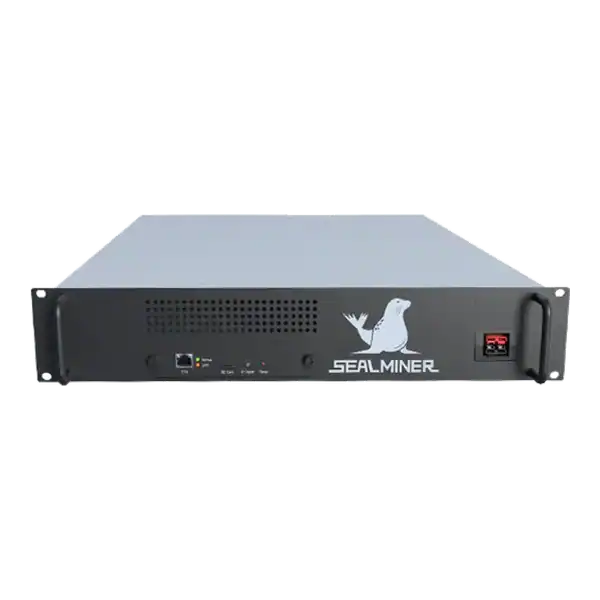

886TH
HASHRATE
9.45W/TH
EFFICIENCY
8373W
POWER
£838.39
EST. MONTHLY
NO PAYBACK
EST. ROI
Bitcoin halving ASIC checklist: Four weeks before: freeze the measured baseline, verify pool and payout controls, inspect the site and price critical spares.
This Bitcoin halving ASIC checklist is a timed operational runbook, not another forecast about bitcoin price. It turns the four weeks before and after a subsidy boundary into assigned checks for metering, pool access, electrical condition, spares, cash exposure, curtailment and evidence. The protocol event is predictable by height. But the business response should follow measured accepted work and complete avoidable cost.
A useful Bitcoin halving ASIC checklist is a controlled sequence with owners and evidence, not a generic prediction.
A miner is checking Bitcoin halving ASIC checklist. Establish the baseline, protect the site and accounts, avoid unnecessary changes at the boundary and make the 30-day fleet decision from accepted work and complete cost.
A checklist works only when every item has an owner, due date and evidence field. Assign responsibility for site safety, pool access, financial modelling, firmware approval, maintenance and incident escalation. One person may hold several roles in a small operation. But the decisions should still be explicit.
Create a versioned fleet register containing model, serial number, location, firmware, rated and measured power, local and pool worker identity, cooling route, warranty status and last maintenance date. Do not store pool passwords or wallet secrets in the register.
Define the operating threshold before the event. State which costs stop with the miner. This continue, who can authorise curtailment and what evidence is required for restart. This avoids making an expensive decision from one volatile dashboard figure.
Keep a change log. Around the boundary, a new firmware build, network move or power mode can distort the revenue comparison and make fault tracing needlessly difficult.

A manufacturer’s wattage is not a complete baseline. Use a competent meter and match the energy period to accepted pool work. Do not open live high-current equipment to get a reading. Site electrical work belongs with a competent person.
Test alert delivery and backup communications. A warning that reaches an abandoned mailbox offers no operational protection.
Freeze non-essential changes. Apply an urgent security or safety update only through the normal approval and rollback process. Stability is more valuable than a last-minute headline hashrate increase.
Confirm primary and backup pool endpoints from official documentation. Check that every worker has a unique name and that the backup does not point to an old account or wallet.
Update the expected-height window. But remind the team that block height is authoritative. Arrange cover for the likely period if the fleet or contract justifies it.
Review cash, energy invoices, hosting obligations, repair commitments and insurance excess. A revenue transition can expose weak liquidity even when the long-term model remains viable.
| Control | Evidence | Owner decision |
|---|---|---|
| Baseline | Meter and pool export | Accepted or remeasure |
| Pool | Endpoints and terms | Primary and tested backup |
| Payout | Independent address check | Locked or approved |
| Site | Inspection record | Safe or fault raised |
| Cash | Downside billing case | Reserve approved |
| Curtailment | Threshold and procedure | Authority assigned |
Log the accepted block height and time. Confirm that workers continue receiving jobs and submitting accepted shares. The ASIC does not need a planned reboot merely because the subsidy changed.
Watch for a genuine service incident: persistent connection failures, widespread invalid shares, a pool status alert or an unexpected payout change. Escalate through trusted channels and preserve logs.
Do not judge the commercial outcome from the first hour. Pool reward methods, fee income, luck and accounting windows can obscure the immediate comparison. Preserve the data and let the stated settlement period complete.
If the pre-agreed threshold requires curtailment, follow the electrical and pool procedure. Record the stopped loads, continuing costs and planned review point.
Reconcile accepted hashrate, bitcoin credited, rejects, uptime and metered energy across a matched window. Keep sterling conversion separate so a market-price movement does not hide the production change.
Investigate exceptions by worker. A fleet average can conceal one failed hashboard, a cooling-limited row or a machine still pointed at the backup pool.
Calculate avoidable cash margin using current revenue and the costs that actually stop if the miner is curtailed. Standing charges and fixed hosting commitments may remain. So the gross energy break-even is not a complete shutdown rule.
If a lower-power profile is being considered, test one compatible machine, preserve stock settings and measure accepted J/TH over a representative period. Check warranty and firmware provenance before deployment.
After a fuller accounting period, classify every device as keep, tune, repair, relocate, curtail or retire. Attach the evidence and next review date. Do not leave an uneconomic miner running merely because its purchase price is already spent.
Compare repair cost with the unit’s reasonable used value and expected contribution. Compare relocation with freight, downtime, import, insurance, setup and contract risk rather than the electricity rate alone.
An upgrade case should include net acquisition cost, infrastructure changes, delivery risk, existing-machine exit value and the measured reduction in operating cost. More hashrate is not automatically a better investment.
Report forecast error. If pool income, energy use or uptime differed materially from the plan, record why. A checklist should improve the next decision, not merely prove that boxes were ticked.
Isolate and escalate overheated connectors, damaged conductors, repeated protective-device operation, coolant leaks, unsafe noise exposure or unexplained firmware and payout changes. Profitability never overrides electrical or account safety.
Do not return a miner to service until the responsible person records the remedy and test.
A common checklist error is comparing gross pool revenue with the quoted unit rate while excluding cooling, pool fees, tax, maintenance, downtime and fixed contracts.
Another is relying on local hashrate rather than accepted work. The pool-side result is the commercially relevant output.
A useful Bitcoin halving ASIC checklist is a controlled sequence with owners and evidence, not a generic prediction.
A checklist works only when every item has an owner, due date and evidence field.
A manufacturer's wattage is not a complete baseline. Use a competent meter and match the energy period to accepted pool work.
Freeze non-essential changes. Apply an urgent security or safety update only through the normal approval and rollback process.
A useful Bitcoin halving ASIC checklist is a controlled sequence with owners and evidence, not a generic prediction. Establish the baseline, protect the site and accounts, avoid unnecessary changes at the boundary and make the 30-day fleet decision from accepted work and complete cost. Preserve the record so the next halving, tariff change or market shock can be handled with better evidence.
Use The Mining Shop UK profitability, hosting and repair resources to review any miner placed in the tune, repair or relocate category.
Four weeks before: freeze the measured baseline, verify pool and payout controls, inspect the site and price critical spares. At the boundary: monitor accepted shares and accounting without introducing unnecessary firmware or pool changes.

Build a five-year ASIC replacement calendar from efficiency gap, tariff, failure rate, parts, firmware, resale, network scenarios and capital gates.
Build ASIC profit forecast ranges using base, downside and severe cases for accepted hashrate, energy, uptime, difficulty, reward, fees, price and repairs.
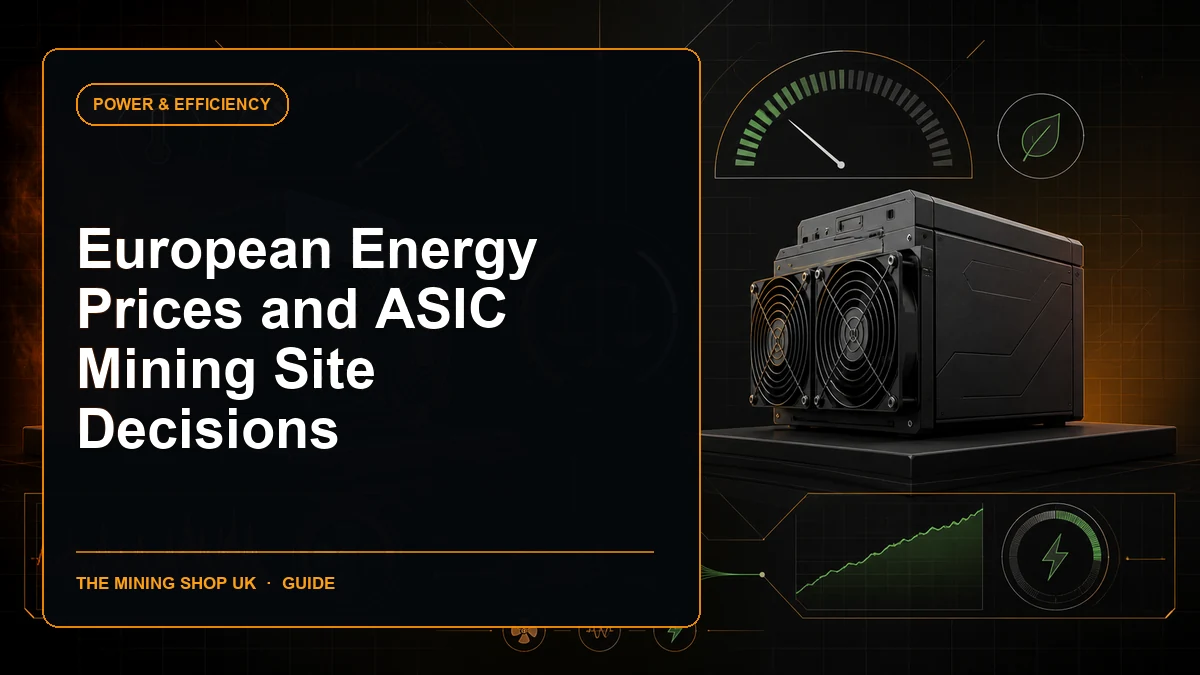
Compare European ASIC mining energy costs using the correct tariff band, taxes, grid connection, curtailment, cooling, contracts and location risks.
Join the ASIC Mining Discussion
Members can read and join the discussion
Log in to read comments from other miners. Create a free account if you would like to ask a question or share your experience.
Membership helps us protect the discussion from spam and keep answers useful.