

Sealminer A4 Ultra Hydro
Bitcoin & Bitcoin Cash ASIC Miner
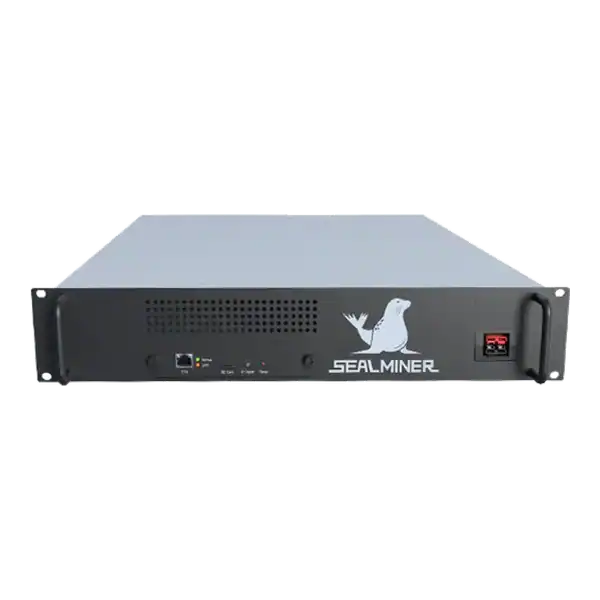

886TH
HASHRATE
9.45W/TH
EFFICIENCY
8373W
POWER
£856.08
EST. MONTHLY
NO PAYBACK
EST. ROI
See how Bitcoin halving affects ASIC miners through lower subsidy, fees, difficulty, efficiency and power cost, with a practical operator checklist.
Bitcoin Halving Affects ASIC Miners by cutting the block subsidy available for each valid block. At height 840,000 in April 2024, the subsidy moved from 6.25 BTC to 3.125 BTC. Transaction fees remained separate and continued to vary by block.
The network does not double an individual machine's work or electricity use at the halving. The same ASIC keeps hashing, but the subsidy part of expected revenue is lower until price, fees, difficulty or competition move. Operators therefore need a fresh cost model, not a promise based on earlier halvings.
Estimated reading time: 7 minutes
Bitcoin creates fewer new coins for each block after a halving. Miners still perform the same SHA-256 search, but the fixed new coin reward is smaller. If everything else stayed equal, subsidy revenue would fall. In practice, price, fees, difficulty and competing hashrate also move.
Before the 2024 halving, a valid block could claim 6.25 BTC plus its transaction fees. Afterwards, it could claim 3.125 BTC plus fees. A pool then divides its income under its own payout rules. An individual ASIC does not receive 3.125 BTC for every share it submits.
| Block Subsidy: | New bitcoin a valid block may create under the current schedule. |
|---|---|
| Transaction Fees: | Amounts transactions offer for inclusion in a block. |
| Halving: | The programmed reduction in subsidy every 210,000 blocks. |
| Difficulty: | The target adjustment keeping average block production near its intended pace. |
| Hashprice: | A market estimate of revenue available for a unit of hashrate over time. |
Bitcoin's subsidy began at 50 BTC and reduces after each 210,000 block interval. The rule is enforced by full nodes. A miner or pool claiming more than the allowed subsidy creates an invalid block that nodes reject.
A halving changes new issuance, not the validity of existing bitcoin. It also does not directly change the SHA-256 algorithm, machine hashrate or electrical draw. Those operational facts must be measured separately.
A valid coinbase transaction can claim the permitted subsidy and transaction fees from included transactions. The subsidy follows the schedule. Fees depend on block space demand and which valid transactions the miner includes.
Some blocks contain unusually high fees and others contain much less. A profitability model should keep subsidy and fees on separate lines. Replacing the subsidy cut with a permanently high fee assumption is not cautious planning.
For unchanged hashrate, difficulty, price and fees, cutting the subsidy reduces expected coin revenue from that component by half. Pool payout methods may smooth daily results, but they cannot create a larger network subsidy.
Sterling revenue may move differently because Bitcoin's price changes. That market movement is not caused or guaranteed by the protocol rule. Record coin output and exchange value separately so operating performance remains visible.

Bitcoin adjusts difficulty every 2,016 blocks according to block production time. If less hashrate remains after a halving, a later adjustment may reduce difficulty. If more efficient miners join, difficulty may stay high or rise.
The adjustment is not an instant refund for every operator. Blocks must pass before the next boundary, and competing miners make their own decisions. Use current difficulty rather than assuming weaker miners will definitely leave.
When revenue per unit of work falls, electricity takes a larger share of income. Lower joules per terahash can give newer equipment more room before its energy cost exceeds expected receipts.
Compare pool accepted hashrate with wall power under the intended mode. An old miner may still work technically but fail financially at the site's tariff. A new miner can also fail if its purchase and installation cost are too high.
Pools apply their stated methods to the new reward environment. PPS, FPPS, PPLNS and other methods allocate subsidy, fees and variance differently. Check the current formula instead of assuming every pool passes all fees in the same way.
Watch payout minimums and withdrawal charges. Lower coin revenue can lengthen the time to reach a threshold. Reconcile accepted work, pool credit and wallet receipt across the same post halving period.
Start with measured wall power, accepted hashrate, current difficulty, subsidy, a cautious fee estimate and the actual pool method. Subtract electricity, cooling, fees, hosting, repairs and downtime.
Then test lower price, higher difficulty, reduced uptime and one repair. Bitcoin Halving Affects ASIC Miners differently because machines and tariffs differ. A fleet average can hide individual models that should be stopped or moved.
A lower power mode may improve efficiency even while reducing hashrate. Test the exact machine and compare accepted work per wall watt. Do not assume a firmware label produces the same result on every hashboard.
Operators with variable electricity prices may stop during expensive periods. Include restart time, thermal cycling and lost shares. Curtailment works only when controls and contracts allow it safely.
Past halvings were followed by many market and network changes, but a small set of events does not guarantee a future price rise. Building a budget around a fixed post halving rally hides the main risk.
Use current executable prices and keep a lower price case. Separate mining cash flow from any decision to hold bitcoin. A profitable later sale cannot repair an operating record that omitted electricity.
At the boundary, verify the node height, pool notices, subsidy treatment and first post halving payouts. Keep a before and after record of accepted hashrate, coin revenue, fees, wall energy and rejects.
Review each model, not only the total fleet. Continue equipment that remains safe and meets the chosen margin. Stop or reconfigure machines whose complete cost exceeds a realistic expected return.
Bitcoin halving affects ASIC miners first through the subsidy line in expected revenue, while the physical machine continues its existing work.
Bitcoin halving affects ASIC miners differently at each site because tariffs, efficiency, cooling and pool contracts are not equal.
The clearest proof that Bitcoin halving affects ASIC miners is a before and after record using the same units and complete cost boundary.
Bitcoin halving affects ASIC miners with weak efficiency sooner when electricity already consumes most of their gross income.
Bitcoin halving affects ASIC miners using pools through the pool's stated treatment of subsidy, fees, variance and payout thresholds.
A cautious model shows how Bitcoin halving affects ASIC miners without assuming a price rise or an immediate fall in difficulty.
Review how Bitcoin halving affects ASIC miners again after the next difficulty adjustment and after enough pool data has accumulated.
The April 2024 halving reduced the subsidy to 3.125 BTC at block height 840,000.
The next halving date is determined by block height and cannot be known to an exact future clock time far in advance.
Fees, price, difficulty and pool methods continue to change after the subsidy boundary.
| Halving Input | Operator Check |
|---|---|
| Subsidy | Use the amount valid at the current block height |
| Fees | Model separately from subsidy |
| Difficulty | Use the current value and a higher case |
| Efficiency | Compare accepted hashrate with wall watts |
| Pool | Verify payout method, fee treatment and threshold |
A table is a starting point, not a promise. Verify current official sources and apply each detail to the decision you are actually making.
It reduced the permitted block subsidy from 6.25 BTC to 3.125 BTC at block height 840,000.
No. Fees remain separate and vary with transaction demand and block selection.
No. The protocol event does not change the machine's power setting. The operator must change or stop it if required.
Not necessarily. Difficulty follows actual block timing and competing hashrate at the next adjustment.
No. Past market movements do not guarantee a future price, so a mining plan needs lower price cases.
Bitcoin Halving Affects ASIC Miners by reducing the subsidy available to each valid block, not by changing the hashing job. Operators must separate subsidy from fees, measure accepted work and power, then retest every machine under current difficulty and price. Historical rallies are not a substitute for a post halving cost record.

Build a five-year ASIC replacement calendar from efficiency gap, tariff, failure rate, parts, firmware, resale, network scenarios and capital gates.
Build ASIC profit forecast ranges using base, downside and severe cases for accepted hashrate, energy, uptime, difficulty, reward, fees, price and repairs.
Compare European ASIC mining energy costs using the correct tariff band, taxes, grid connection, curtailment, cooling, contracts and location risks.
Join the ASIC Mining Discussion
Members can read and join the discussion
Log in to read comments from other miners. Create a free account if you would like to ask a question or share your experience.
Membership helps us protect the discussion from spam and keep answers useful.