
Pre-order
Overall ranking

Equihash
·
ZEC
Overall rank#1of 100AvailableAll: #4 / 831
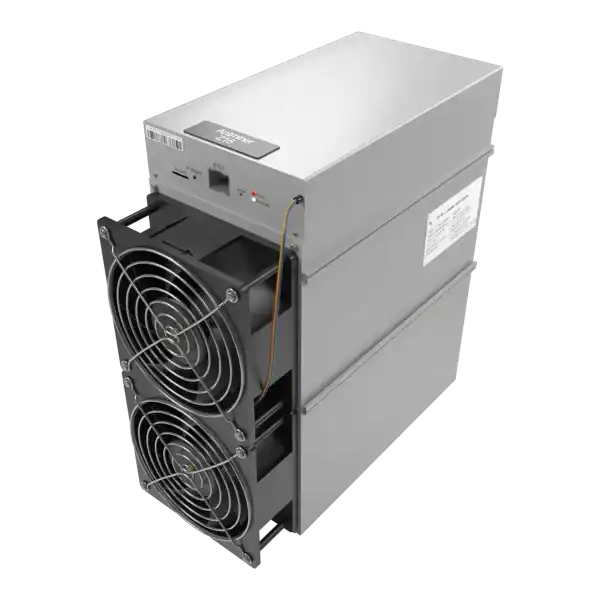

Pre-OrderFree Shipping
Hashrate
525KSOL
Efficiency
4.73W/KSOL
Power
2483W
Earns/kWh
39.8p
Bitcoin Core 0.16 importwallet guide covering wallet dump custody, target-wallet checks, historical rescans, partial recovery, post-import backups and validation.
This guide explains Bitcoin Core importwallet RPC in plain English. It shows what the command does, what its result means and what it cannot prove.
Bitcoin Core importwallet RPC: Practise on regtest with disposable source and target wallets, repeated imports, wrong-network data, interruption, restart and restored backups.
A miner is checking Bitcoin Core importwallet RPC. Inventory expected public identifiers before import, reconcile afterwards and retry only through a tested idempotent procedure. Create a new encrypted wallet backup after import and reconciliation, then restore-test it in isolation.
A wallet dump contains private spending material and metadata. Generate, transfer and import it only on controlled encrypted systems, with restrictive permissions and no cloud sync, shell-history exposure or support attachment. Securely retire temporary copies under a documented policy.
Resolve the exact server-side filename and verify provenance, integrity and expected format without printing contents. A path accepted by the daemon is not proof that it belongs to the intended source wallet or Bitcoin network.
Confirm loaded wallet name, version, encryption state and network before import. Freeze address generation and spending during the migration. Importing into the wrong wallet can mingle custody and make later separation error-prone.

Expect substantial processing while the wallet discovers past transactions. Apparent keys may precede complete balances. Monitor completion against a synchronised tip and compare known historical outpoints rather than declaring success from command return alone.
Some keys may already exist and failures can leave a partially changed target. Inventory expected public identifiers before import, reconcile afterwards and retry only through a tested idempotent procedure. Never replace the wallet database with the dump file.
Create a new encrypted wallet backup after import and reconciliation, then restore-test it in isolation. Preserve the pre-import backup and migration evidence. An old backup cannot be assumed to contain newly imported keys.
Practise on regtest with disposable source and target wallets, repeated imports, wrong-network data, interruption, restart and restored backups. Verify receiving, change and spending for imported keys without ever using a production dump in tests. Build a revision-pinned evidence pack on an isolated node, wallet or protocol harness.
Bitcoin Core importwallet RPC: Practise on regtest with disposable source and target wallets, repeated imports, wrong-network data, interruption, restart and restored backups.
A wallet dump contains private spending material and metadata. Generate, transfer and import it only on controlled encrypted systems, with restrictive permissions and no cloud sync, shell-history exposure or support attachment.
Resolve the exact server-side filename and verify provenance, integrity and expected format without printing contents.
Confirm loaded wallet name, version, encryption state and network before import. Freeze address generation and spending during the migration.
importwallet is a bulk private-key migration whose success requires more than parsing a dump. Secure custody, complete history, reconciliation and a newly tested backup define the actual recovery boundary.
Check the current specification status and the documentation for the exact implementation you operate before moving production funds or changing a mining node.

Bitcoin Core 29 getdescriptoractivity guide covering block lists, descriptor ranges, mempool inclusion, receive and spend events, privacy and safe reconciliation.
Bitcoin Core 28 gethdkeys guide covering active filtering, xpubs, optional xprvs, descriptor mapping, RPC permissions, privacy and safe wallet audits.
Bitcoin Core 28 createwalletdescriptor guide covering address types, internal and external descriptors, HD-key selection, encryption, backups and verification.

Join the ASIC Mining Discussion
Members can read and join the discussion
Log in to read comments from other miners. Create a free account if you would like to ask a question or share your experience.
Membership helps us protect the discussion from spam and keep answers useful.