
Pre-order
Overall ranking

Equihash
·
ZEC
Overall rank#1of 100AvailableAll: #3 / 831
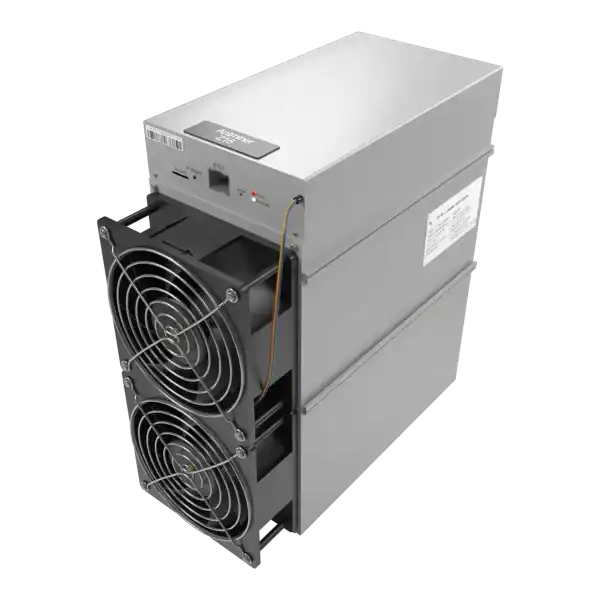

Pre-OrderFree Shipping
Hashrate
525KSOL
Efficiency
4.73W/KSOL
Power
2483W
Earns/kWh
38.1p
Bitcoin Core fundrawtransaction guide covering wallet input selection, change, fee subtraction, watch-only scripts, RBF, locking and final review.
This guide explains Bitcoin Core fundrawtransaction RPC in plain English. It shows what the command does, what its result means and what it cannot prove.
Bitcoin Core fundrawtransaction RPC: The method preserves supplied inputs and selects more from the wallet as needed. Every existing input’s previous transaction had to be known to the wallet, and selected scripts needed supported forms.
A miner is checking Bitcoin Core fundrawtransaction RPC. Verify ownership, confirmation, coin-control restrictions and solvable status before allowing automatic selection, especially across customer or mining-payout pools.
The method preserves supplied inputs and selects more from the wallet as needed. Every existing input’s previous transaction had to be known to the wallet, and selected scripts needed supported forms. Verify ownership, confirmation, coin-control restrictions and solvable status before allowing automatic selection, especially across customer or mining-payout pools.
changeAddress, changePosition or change_type influence the added change output, while a random position is the default. Supplying an address disables change_type. Decode the funded result to identify actual change by script ownership rather than trusting position alone, and verify legacy, wrapped or native type matches downstream backup and monitoring support.
feeRate in the historical options is BTC per kilobyte. SubtractFeeFromOutputs deducts the fee equally from listed pre-change output indexes, meaning those recipients receive less. Require explicit commercial approval for subtraction, validate indexes before funding and compare every original and final output in integer satoshis.
includeWatching can select watch-only inputs, but funding does not provide their signatures. P2SH scripts had to be present through importaddress or addmultisigaddress for fee calculation, and supported watch-only forms were limited. Prove the signer set can complete every selected input before reserving funds or presenting a transaction for approval.
lockUnspents can reserve selected outputs against competing wallet activity. Record and release locks through an idempotent failure path. Without locks, parallel funders can choose the same coins; with abandoned locks, available balance can appear lower indefinitely. Test crashes, timeouts and restart behaviour.
replaceable controls BIP 125 signalling, while iswitness overrides heuristic decoding of the supplied transaction. Choose both explicitly when the serialisation and payment policy are known. Added inputs or outputs mean pre-existing signatures may no longer be valid, so always sign the final funded hex afresh.
Decode the result, fetch every previous output and verify external recipients, exact amounts, change, fee, vsize, locktime, sequences and replaceability. Compare returned fee in BTC against independent satoshi arithmetic and enforce total and rate ceilings. Only then send the candidate to signers under a separate approval.
Bitcoin Core fundrawtransaction RPC: The method preserves supplied inputs and selects more from the wallet as needed.
The method preserves supplied inputs and selects more from the wallet as needed.
changeAddress, changePosition or change_type influence the added change output, while a random position is the default.
feeRate in the historical options is BTC per kilobyte. SubtractFeeFromOutputs deducts the fee equally from listed pre-change output indexes, meaning those recipients receive less.
fundrawtransaction automates coin selection and change, but it can alter signatures and recipient amounts under explicit options. Safe use verifies solvability, locks, fee units and every output before the final candidate reaches a signer.
Check the current specification status and the documentation for the exact implementation you operate before moving production funds or changing a mining node.

Bitcoin Core 26 getprioritisedtransactions guide covering fee deltas, mempool presence, persistence, mining policy, reconciliation and safe operator use.
Bitcoin Core descriptorprocesspsbt RPC made simple. See what the feature does, where its limits sit and which checks node or wallet operators should make.
Bitcoin Core 22 enumeratesigners guide covering the signer command, master fingerprints, device names, experimental support, failure modes and safe inventory checks.

Join the ASIC Mining Discussion
Members can read and join the discussion
Log in to read comments from other miners. Create a free account if you would like to ask a question or share your experience.
Membership helps us protect the discussion from spam and keep answers useful.