

Sealminer DL1 Hydro
Litecoin & Dogecoin ASIC Miner
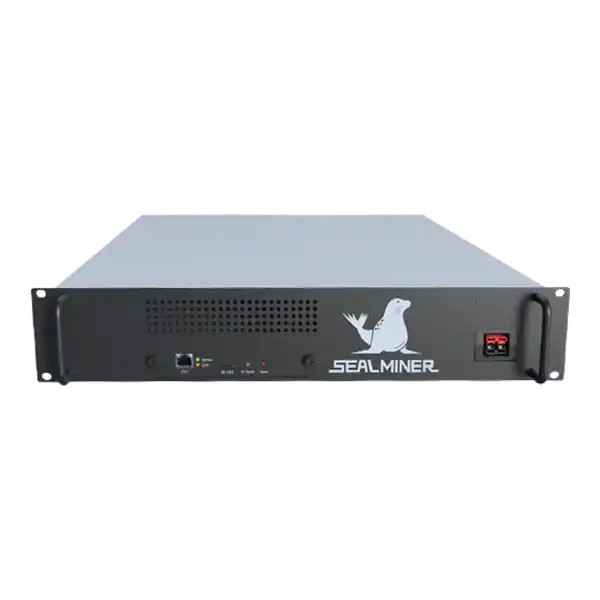

52.5GH
HASHRATE
149W/GH
EFFICIENCY
7823W
POWER
£738.34
EST. MONTHLY
NO PAYBACK
EST. ROI
BIP 89 guide to deployed Chain Code Delegation, per-spend BIP32 tweaks, multisig privacy, non-blinded and blinded signing, nonce safety and verification.
This guide explains BIP 89 Chain Code Delegation in plain English. It covers the problem behind the BIP, why it matters and whether the proposal is part of Bitcoin today.
BIP 89 Chain Code Delegation: The delegator retains a non-extended keypair but no chain code. The delegatee holds the corresponding chain code, computes child tweaks and may share its xpub with other delegatees, limiting what the delegator can scan.
A node operator is checking BIP 89 Chain Code Delegation. Its plain protocol is not concurrently secure: sessions must not overlap and every blind nonce must be single-use and erased after signing.
The delegator retains a non-extended keypair but no chain code. The delegatee holds the corresponding chain code, computes child tweaks and may share its xpub with other delegatees, limiting what the delegator can scan.
All derivation from the delegated public extended key is non-hardened because the delegatee has no private key. Hardened indices must fail rather than be silently transformed.
For each signing context the authenticated bundle maps participant base public keys to 32-byte big-endian aggregate scalar tweaks. Transport is outside the BIP, so deployments must specify authentication, replay protection and versioning.

The delegator receives the child-key tweak and message, can reconstruct the relevant script, verify inputs and optional change, and produce a BIP340 signature while learning only that signing context.
The alternative reveals only a blinded challenge and parity information. Its plain protocol is not concurrently secure: sessions must not overlap and every blind nonce must be single-use and erased after signing.
Input and change verification can confirm the supplied tweaks reproduce the expected script and help calculate outflow. Recipient, amount and organisational approval checks remain application responsibilities.
Developers test the proposal with made-up data on an isolated test network. They check normal cases and deliberately invalid cases. Different implementations should reach the same result before anyone relies on the proposal.
BIP 89 Chain Code Delegation: The delegator retains a non-extended keypair but no chain code.
The delegator retains a non-extended keypair but no chain code. The delegatee holds the corresponding chain code, computes child tweaks and may share its xpub with other delegatees, limiting what the delegator can scan.
All derivation from the delegated public extended key is non-hardened because the delegatee has no private key.
For each signing context the authenticated bundle maps participant base public keys to 32-byte big-endian aggregate scalar tweaks.
Chain Code Delegation can reduce balance and activity visibility in collaborative custody without giving away a signing key. Its safety depends on strict role separation, authenticated tweak data, complete verification and uncompromising blind-nonce lifecycle controls.
Check the current specification status and the documentation for the exact implementation you operate before moving production funds or changing a mining node.


BIP 450 guide to Draft Formosa themed mnemonic stories, entropy and checksum mapping, theme JSON, BIP39 conversion, passphrases and recovery safety.
BIP 393 guide to Draft descriptor annotations for birth height, gap limit and Silent Payment max label, checksum rules, parsing and recovery safety.
BIP 392 guide to Draft sp() descriptors, spscan and spspend encodings, watch-only and full-wallet forms, key origins, recovery and validation.
Join the ASIC Mining Discussion
Members can read and join the discussion
Log in to read comments from other miners. Create a free account if you would like to ask a question or share your experience.
Membership helps us protect the discussion from spam and keep answers useful.