

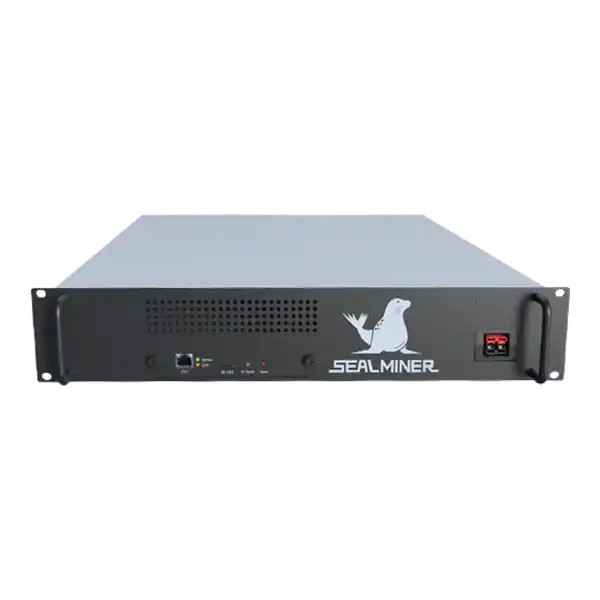
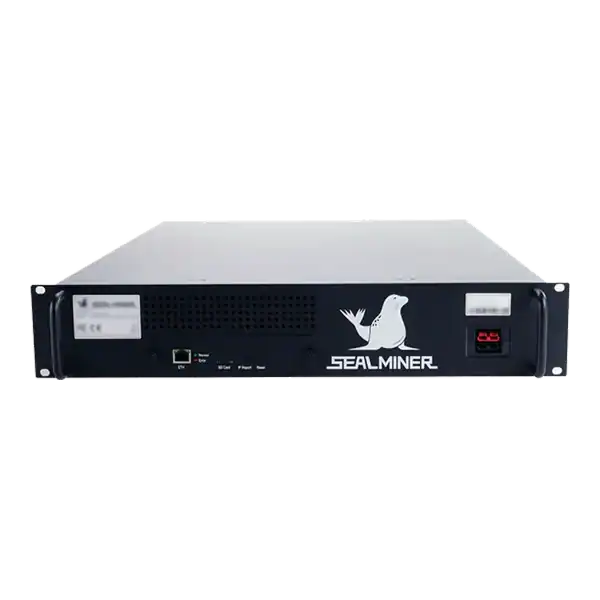
Sealminer A4 Ultra Hydro
Bitcoin & Bitcoin Cash ASIC Miner
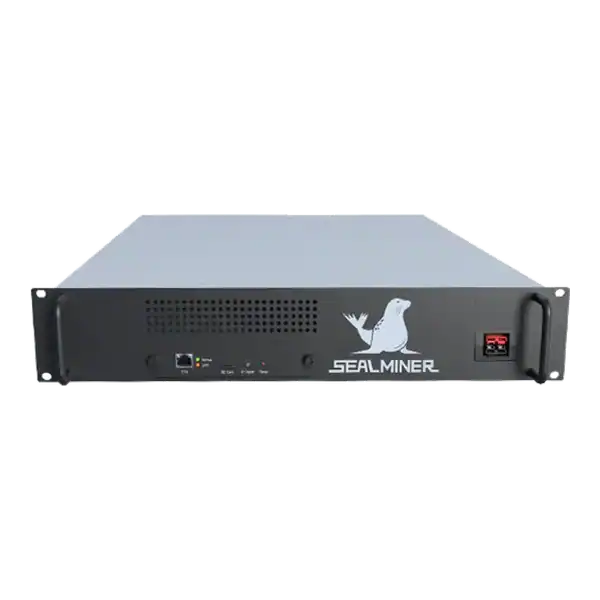

886TH
HASHRATE
9.45W/TH
EFFICIENCY
8373W
POWER
£884.60
EST. MONTHLY
NO PAYBACK
EST. ROI
BIP 374 guide to Draft 64-byte discrete-log equality proofs, generation, verification, auxiliary randomness, message binding, Silent Payments and testing.
This guide explains BIP 374 Discrete Log Equality Proofs in plain English. It covers the problem behind the BIP, why it matters and whether the proposal is part of Bitcoin today.
BIP 374 Discrete Log Equality Proofs: A valid DLEQ proof can show an ECDH share uses the input secret, but it does not independently verify transaction amounts, recipients or all signer policy.
A node operator is checking BIP 374 Discrete Log Equality Proofs. BIP 374 is Draft, Specification, version 0.2.0 at the Applications layer. Their hash forms challenge e and response s combines nonce and secret.
BIP 374 is Draft, Specification, version 0.2.0 at the Applications layer. Implementations must pin the exact transcript and encoding rules.
For public points A, B, C and generator G, the prover knows scalar a such that A equals a times G and C equals a times B.
A nonce scalar creates two commitments. Their hash forms challenge e and response s combines nonce and secret; the encoded proof contains the challenge and response in 64 bytes.

Developers test the proposal with made-up data on an isolated test network. They check normal cases and deliberately invalid cases. Different implementations should reach the same result before anyone relies on the proposal.
Generation takes 32 bytes of auxiliary random data and can bind an optional 32-byte message. Domain separation and deterministic handling must match the specification exactly.
A valid DLEQ proof can show an ECDH share uses the input secret, but it does not independently verify transaction amounts, recipients or all signer policy.
Developers test the proposal with made-up data on an isolated test network. They check normal cases and deliberately invalid cases. Different implementations should reach the same result before anyone relies on the proposal.
BIP 374 Discrete Log Equality Proofs: A valid DLEQ proof can show an ECDH share uses the input secret, but it does not independently verify transaction amounts, recipients or all signer policy.
BIP 374 is Draft, Specification, version 0.2.0 at the Applications layer.
For public points A, B, C and generator G, the prover knows scalar a such that A equals a times G and C equals a times B.
A nonce scalar creates two commitments. Their hash forms challenge e and response s combines nonce and secret.
BIP 374 supplies a compact proof for one precise equality of discrete logarithms. Safe use depends on exact transcript construction, strict input validation and treating proof success as one component of a larger transaction-authorisation decision.
Check the current specification status and the documentation for the exact implementation you operate before moving production funds or changing a mining node.

BIP 128 guide to Draft timelock-recovery plan storage, presigned transaction pairs, relative delay, checksums, monitoring, cancellation and reorg safety.
BIP 433 guide to Draft keyless Pay to Anchor outputs, CPFP fee bumping, standardness, ephemeral dust, TRUC anti-pinning and wallet safety.
What is BIP-110? Learn what Bitcoin’s reduced-data soft-fork proposal restricted, why it was controversial and why it later closed.
Join the ASIC Mining Discussion
Members can read and join the discussion
Log in to read comments from other miners. Create a free account if you would like to ask a question or share your experience.
Membership helps us protect the discussion from spam and keep answers useful.