

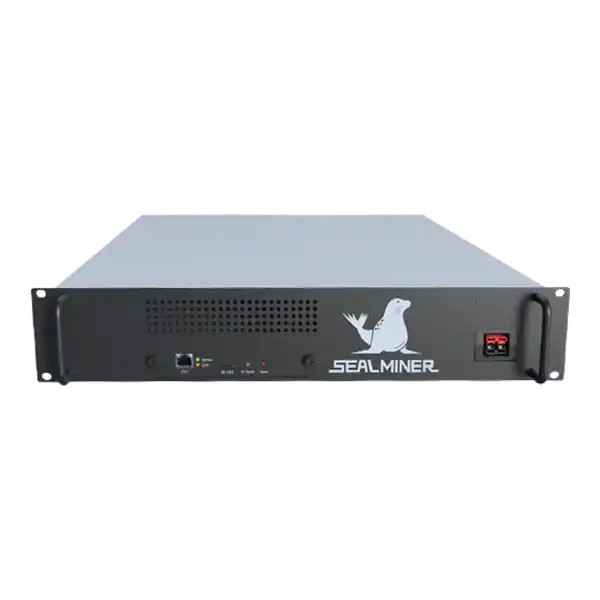
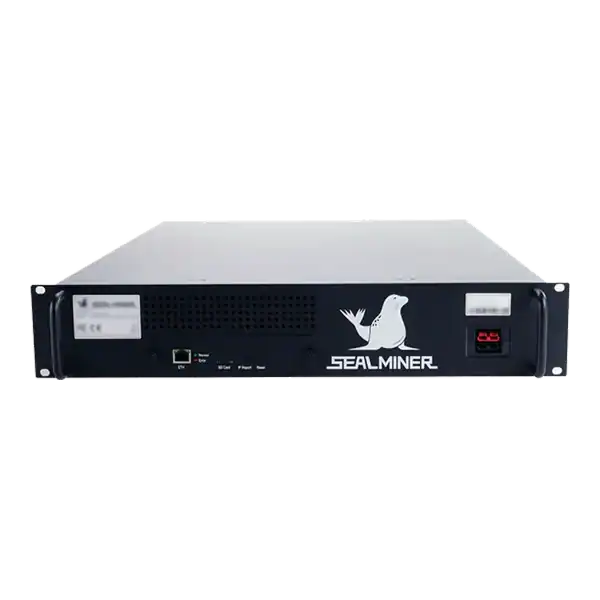
Sealminer A4 Ultra Hydro
Bitcoin & Bitcoin Cash ASIC Miner
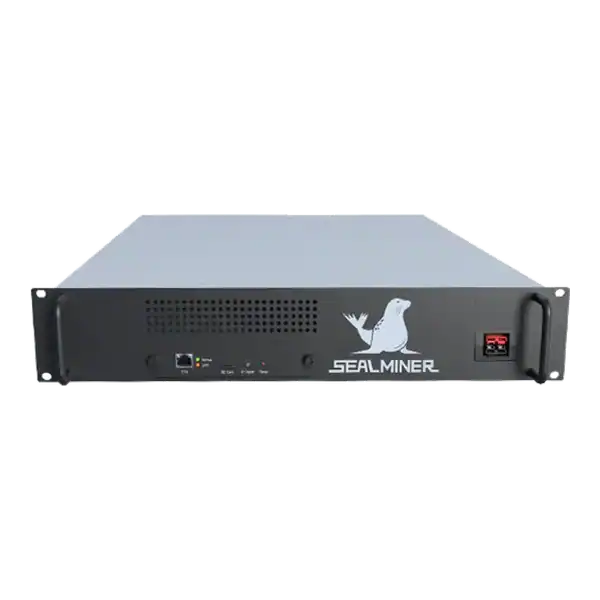

886TH
HASHRATE
9.45W/TH
EFFICIENCY
8373W
POWER
£903.43
EST. MONTHLY
NO PAYBACK
EST. ROI
BIP 361 guide to the Draft informational post-quantum migration and legacy-signature sunset proposal, phases, prerequisites, risks and readiness planning.
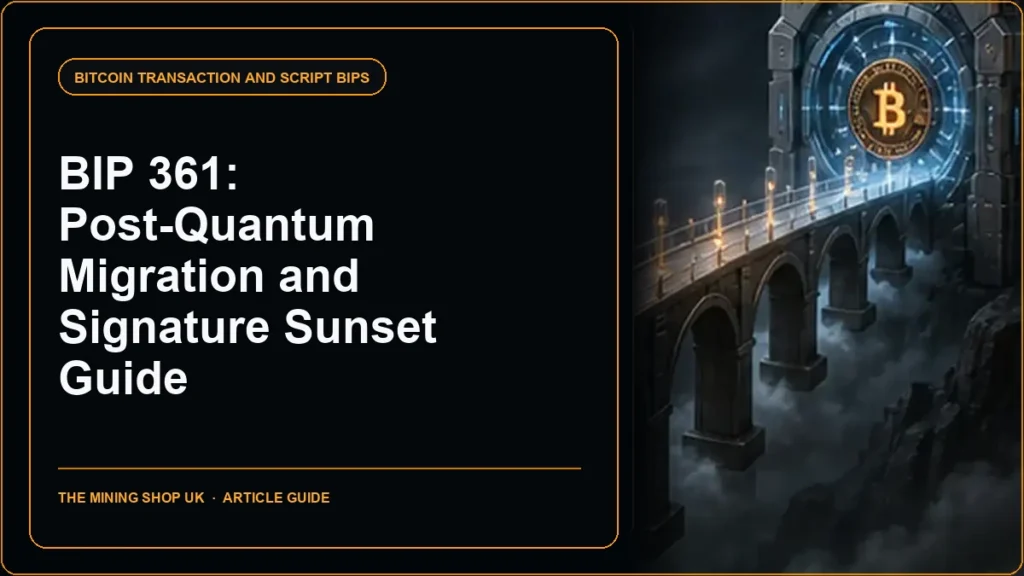
BIP 361 Post-Quantum Migration Proposal: This guide explains BIP 361 Post Quantum Migration and Legacy Signature Sunset in plain English. It covers the problem behind the BIP, why it matters and whether the proposal is part of Bitcoin today.
BIP 361 Post-Quantum Migration Proposal: The proposal would permit migration from legacy scripts to post-quantum scripts while disallowing new outputs to vulnerable types after 160,000 blocks, described as roughly three years after activation.
A node operator is checking BIP 361 Post-Quantum Migration Proposal. BIP 361 is Draft and Informational and explicitly requires a still-to-be-defined post-quantum signature BIP.
BIP 361 is Draft and Informational and explicitly requires a still-to-be-defined post-quantum signature BIP. Its dates and phases are proposals, not scheduled network events.
The proposal would permit migration from legacy scripts to post-quantum scripts while disallowing new outputs to vulnerable types after 160,000 blocks, described as roughly three years after activation.
Two years later at a predetermined height, nodes would tighten verification for ECDSA and Schnorr spends and require a quantum-safe rescue protocol intended to distinguish authentic holders.

The document discusses hardened BIP32 parent knowledge, zero-knowledge proofs and commit-reveal designs as possibilities. Coverage, efficiency and exact consensus rules are unresolved.
Custodians can prepare without claiming activation by inventorying script types, exposed public keys, address reuse, signer capabilities, cold-storage access times and migration dependencies.
A signature sunset could make some coins harder or impossible to spend and creates distribution, coordination and fiduciary questions. Scenario planning must include stakeholder review and reversible testing.
Separate quantum capability estimates, proposal assumptions and deployed facts. Never create urgency-driven transfers, request seed material or imply a deadline before consensus and wallet support exist. Build a revision-pinned evidence pack on an isolated node, wallet or protocol harness.
BIP 361 Post-Quantum Migration Proposal: The proposal would permit migration from legacy scripts to post-quantum scripts while disallowing new outputs to vulnerable types after 160,000 blocks, described as roughly three years after activation.
BIP 361 is Draft and Informational and explicitly requires a still-to-be-defined post-quantum signature BIP.
The proposal would permit migration from legacy scripts to post-quantum scripts while disallowing new outputs to vulnerable types after 160,000 blocks, described as roughly three years after activation.
Two years later at a predetermined height, nodes would tighten verification for ECDSA and Schnorr spends and require a quantum-safe rescue protocol intended to distinguish authentic holders.
BIP 361 is a roadmap proposal for a severe future risk, not an instruction to move funds today. Useful preparation is an accurate custody and script inventory plus adaptable signing architecture while research and consensus remain unresolved.
Check the current specification status and the documentation for the exact implementation you operate before moving production funds or changing a mining node.

BIP 441 guide to the Draft tapleaf 0xC2 script-restoration proposal, varops, stack limits, unsigned arithmetic, restored opcodes and safety testing.
BIP 440 guide to the Draft transaction-wide variable-operation budget, weight scaling, opcode cost classes, benchmarks, validation and soft-fork status.
BIP 443 guide to Draft OP_CCV state-carrying UTXOs, Taproot data commitments, output constraints, amounts, fee handling, use cases and activation.
Join the ASIC Mining Discussion
Members can read and join the discussion
Log in to read comments from other miners. Create a free account if you would like to ask a question or share your experience.
Membership helps us protect the discussion from spam and keep answers useful.