

Sealminer A4 Ultra Hydro
Bitcoin & Bitcoin Cash ASIC Miner
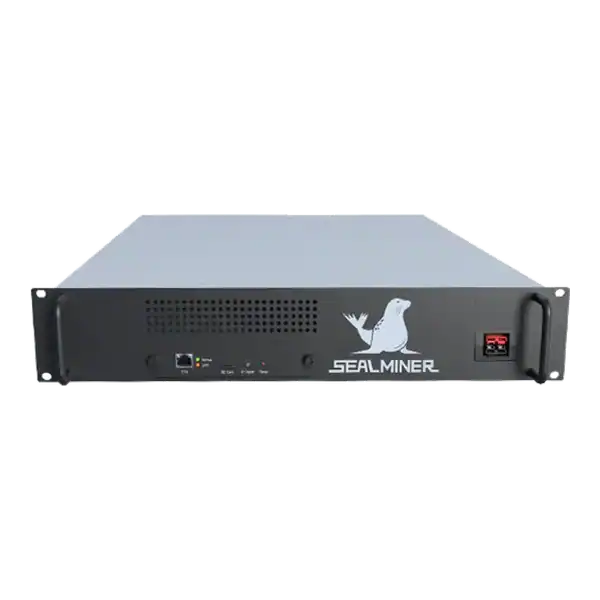

886TH
HASHRATE
9.45W/TH
EFFICIENCY
8373W
POWER
£903.43
EST. MONTHLY
NO PAYBACK
EST. ROI
BIP 440 guide to the Draft transaction-wide variable-operation budget, weight scaling, opcode cost classes, benchmarks, validation and soft-fork status.
This guide explains BIP 440 Varops Budget For Script Runtime Constraint in plain English. It covers the problem behind the BIP, why it matters and whether the proposal is part of Bitcoin today.
BIP 440 Varops Budget For Script Runtime Constraint: Costs are charged during execution, and a transaction exceeding budget fails validation. Static analysis can prove some scripts remain under budget for all inputs, but runtime accounting remains consensus-sensitive.
A node operator is checking BIP 440 Varops Budget For Script Runtime Constraint. BIP 440 is Draft and not active Bitcoin consensus. The budget is transaction-wide and equals total transaction weight multiplied by 10,000.
BIP 440 is Draft and not active Bitcoin consensus. It is a cost framework other proposals can reference, intended to bound worst-case CPU and memory work without arbitrary feature-specific limits.
The budget is transaction-wide and equals total transaction weight multiplied by 10,000. Transaction scope permits cross-input designs but means scripts share one finite resource.
Signature checks cost 500,000 units; hashing costs 50 per byte; copying 3 per output byte; fast comparisons 2; arithmetic 6; other variable operations 4; OP_ROLL adds cost per moved stack element.

The specification distinguishes visible byte length from wordspan rounded to eight-byte boundaries. Implementations must use the formula’s named measure exactly.
Costs are charged during execution, and a transaction exceeding budget fails validation. Static analysis can prove some scripts remain under budget for all inputs, but runtime accounting remains consensus-sensitive.
Costs were benchmarked across fourteen x86-64 and ARM64 machines on Linux, macOS and Windows. The published data supports the design but does not itself activate the rules.
Developers test the proposal with made-up data on an isolated test network. They check normal cases and deliberately invalid cases. Different implementations should reach the same result before anyone relies on the proposal.
BIP 440 Varops Budget For Script Runtime Constraint: Costs are charged during execution, and a transaction exceeding budget fails validation.
BIP 440 is Draft and not active Bitcoin consensus. It is a cost framework other proposals can reference, intended to bound worst-case CPU and memory work without arbitrary feature-specific limits.
The budget is transaction-wide and equals total transaction weight multiplied by 10,000.
Signature checks cost 500,000 units. Hashing costs 50 per byte. Copying 3 per output byte.
BIP 440 proposes a general deterministic meter for data-dependent script work. Its value depends on exact consensus arithmetic, conservative worst-case costs and independent cross-platform verification before any activation discussion.
Check the current specification status and the documentation for the exact implementation you operate before moving production funds or changing a mining node.

BIP 441 guide to the Draft tapleaf 0xC2 script-restoration proposal, varops, stack limits, unsigned arithmetic, restored opcodes and safety testing.
BIP 361 guide to the Draft informational post-quantum migration and legacy-signature sunset proposal, phases, prerequisites, risks and readiness planning.
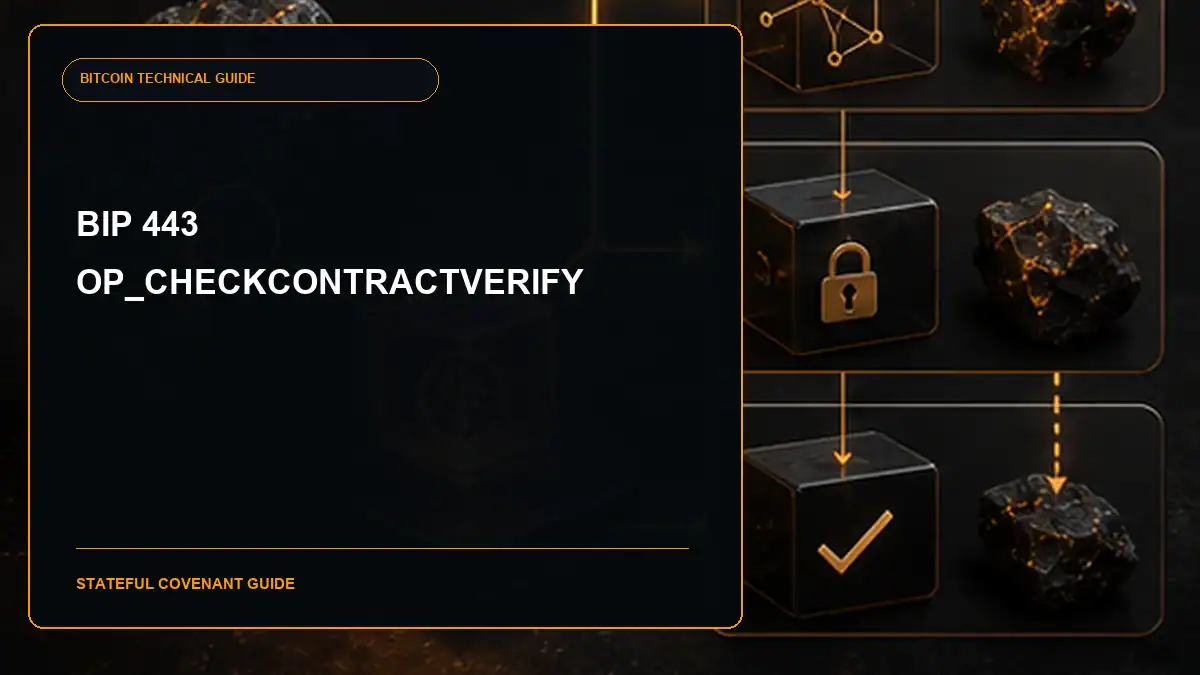
BIP 443 guide to Draft OP_CCV state-carrying UTXOs, Taproot data commitments, output constraints, amounts, fee handling, use cases and activation.
Join the ASIC Mining Discussion
Members can read and join the discussion
Log in to read comments from other miners. Create a free account if you would like to ask a question or share your experience.
Membership helps us protect the discussion from spam and keep answers useful.