

Sealminer A4 Ultra Hydro
Bitcoin & Bitcoin Cash ASIC Miner
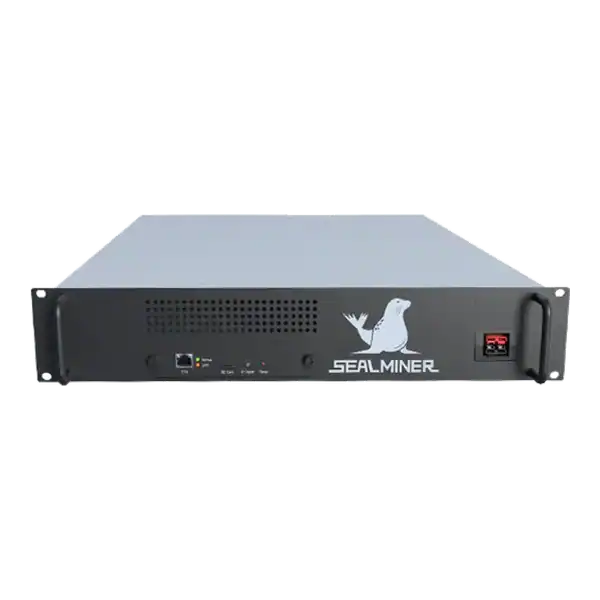

886TH
HASHRATE
9.45W/TH
EFFICIENCY
8373W
POWER
£884.60
EST. MONTHLY
NO PAYBACK
EST. ROI
BIP 347 guide covering Complete specification status, OP_SUCCESS126 redefinition, stack order, 520-byte limit, soft-fork boundary, use cases and testing.
This guide explains BIP 347 OP_CAT in Tapscript in plain English. It covers the problem behind the BIP, why it matters and whether the proposal is part of Bitcoin today.
BIP 347 OP_CAT in Tapscript: The proposal redefines tapscript OP_SUCCESS126, decimal 126 and hexadecimal 0x7e, using the historical OP_CAT opcode value. The proposal applies to Tapscript and depends on BIP 340, 341 and 342 context.
A node operator is checking BIP 347 OP_CAT in Tapscript. Execution fails when fewer than two elements exist or when the concatenated result would exceed the 520-byte maximum script element size.
BIP 347 is Complete, version 1.0.0, and specifies a consensus soft fork. No article or test should describe that status as deployed network rules.
The proposal redefines tapscript OP_SUCCESS126, decimal 126 and hexadecimal 0x7e, using the historical OP_CAT opcode value.
For a stack ending x1 then x2 with x2 on top, OP_CAT replaces them with x1 concatenated with x2. Reversing operands changes the byte string.

Execution fails when fewer than two elements exist or when the concatenated result would exceed the 520-byte maximum script element size.
The proposal applies to Tapscript and depends on BIP 340, 341 and 342 context. It does not reactivate legacy-script OP_CAT by editorial assumption.
The BIP discusses hashed data structures, tree signatures, Lamport signatures, covenants and atomic-swap constructions as possibilities, not deployed product guarantees.
Developers test the proposal with made-up data on an isolated test network. They check normal cases and deliberately invalid cases. Different implementations should reach the same result before anyone relies on the proposal.
BIP 347 OP_CAT in Tapscript: The proposal redefines tapscript OP_SUCCESS126, decimal 126 and hexadecimal 0x7e, using the historical OP_CAT opcode value.
BIP 347 is Complete, version 1.0.0, and specifies a consensus soft fork.
The proposal redefines tapscript OP_SUCCESS126, decimal 126 and hexadecimal 0x7e, using the historical OP_CAT opcode value.
For a stack ending x1 then x2 with x2 on top, OP_CAT replaces them with x1 concatenated with x2.
BIP 347 specifies a deliberately small byte-concatenation primitive with broad possible composition. Its operational boundary remains clear: a complete specification is not active consensus until a separate deployment occurs.
Check the current specification status and the documentation for the exact implementation you operate before moving production funds or changing a mining node.

BIP 441 guide to the Draft tapleaf 0xC2 script-restoration proposal, varops, stack limits, unsigned arithmetic, restored opcodes and safety testing.
BIP 440 guide to the Draft transaction-wide variable-operation budget, weight scaling, opcode cost classes, benchmarks, validation and soft-fork status.
BIP 361 guide to the Draft informational post-quantum migration and legacy-signature sunset proposal, phases, prerequisites, risks and readiness planning.
Join the ASIC Mining Discussion
Members can read and join the discussion
Log in to read comments from other miners. Create a free account if you would like to ask a question or share your experience.
Membership helps us protect the discussion from spam and keep answers useful.