

Sealminer A4 Ultra Hydro
Bitcoin & Bitcoin Cash ASIC Miner
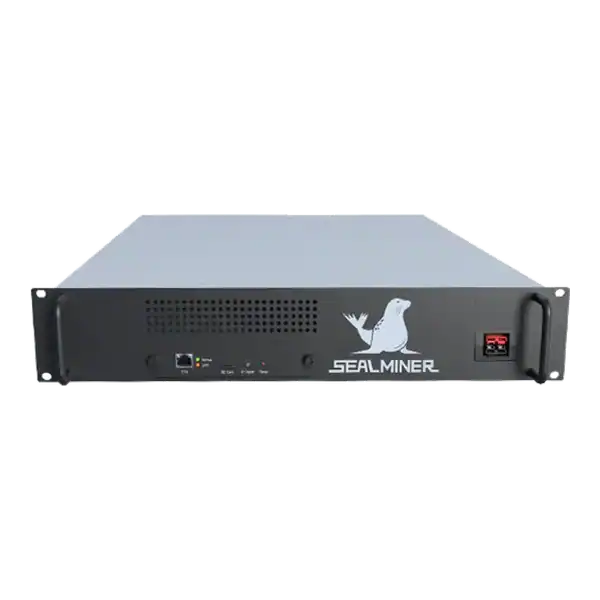

886TH
HASHRATE
9.45W/TH
EFFICIENCY
8373W
POWER
£796.12
EST. MONTHLY
NO PAYBACK
EST. ROI
BIP 337 guide to compressed Bitcoin transactions, packed metadata, variable integers, signature recovery, lossy outpoints, RPCs and safe interoperability.
This guide explains BIP 337 Compressed Transactions in plain English. It covers the problem behind the BIP, why it matters and whether the proposal is part of Bitcoin today.
BIP 337 Compressed Transactions: For supported inputs, ECDSA signatures and public keys may be compressed using recoverable information. The decoder must reconstruct and verify the exact data before accepting the resulting normal transaction.
A node operator is checking BIP 337 Compressed Transactions. BIP 337 is Draft, Specification, at the API/RPC layer. The encoding begins by compactly representing version, locktime, input and output counts and the information needed to choose later encodings.
BIP 337 is Draft, Specification, at the API/RPC layer. It defines an interchange encoding and proposed tools, not a new consensus transaction format or a deployed network requirement.
The encoding begins by compactly representing version, locktime, input and output counts and the information needed to choose later encodings. Decoders must reject impossible combinations and trailing ambiguity.
Values that commonly occupy fixed-width fields can use compact or variable-length forms. Implementations need canonical encoding rules so two byte streams cannot silently represent the same logical value in incompatible ways.

For supported inputs, ECDSA signatures and public keys may be compressed using recoverable information. The decoder must reconstruct and verify the exact data before accepting the resulting normal transaction.
The lossy method replaces a 36-byte transaction identifier and output index with block height and transaction position. Reconstruction therefore needs access to the referenced chain history and an unambiguous chain context.
The specification describes handling for custom scripts and common P2PK, P2PKH, P2SH, P2WPKH, P2WSH and P2TR patterns. Unknown or non-matching cases need an explicit fallback rather than guesswork.
Developers test the proposal with made-up data on an isolated test network. They check normal cases and deliberately invalid cases. Different implementations should reach the same result before anyone relies on the proposal.
BIP 337 Compressed Transactions: For supported inputs, ECDSA signatures and public keys may be compressed using recoverable information.
BIP 337 is Draft, Specification, at the API/RPC layer. It defines an interchange encoding and proposed tools, not a new consensus transaction format or a deployed network requirement.
The encoding begins by compactly representing version, locktime, input and output counts and the information needed to choose later encodings.
Values that commonly occupy fixed-width fields can use compact or variable-length forms.
BIP 337 aims to make transaction exchange smaller without redefining Bitcoin transactions. Safe adoption depends on deterministic reconstruction, clear handling of lossy chain references and explicit version negotiation between every sender and receiver.
Check the current specification status and the documentation for the exact implementation you operate before moving production funds or changing a mining node.

BIP 441 guide to the Draft tapleaf 0xC2 script-restoration proposal, varops, stack limits, unsigned arithmetic, restored opcodes and safety testing.
BIP 440 guide to the Draft transaction-wide variable-operation budget, weight scaling, opcode cost classes, benchmarks, validation and soft-fork status.
BIP 361 guide to the Draft informational post-quantum migration and legacy-signature sunset proposal, phases, prerequisites, risks and readiness planning.
Join the ASIC Mining Discussion
Members can read and join the discussion
Log in to read comments from other miners. Create a free account if you would like to ask a question or share your experience.
Membership helps us protect the discussion from spam and keep answers useful.