ASIC Hosting Reliability: Uptime, Repairs and Contracts
Assess ASIC hosting reliability through measured uptime, exclusions, repair response, credits, insurance, monitoring and practical exit rights before signing.
ASIC hosting reliability cannot be proved by a percentage on a sales page. A useful assessment defines what counts as available hashrate, how the measurement is made. This outages are excluded, how quickly faults are identified and repaired, and what remedy applies when the service misses its commitment. The contract, pool records, facility evidence and removal process must describe the same service.
ASIC Hosting Reliability in Simple English
ASIC hosting reliability is a chain of measurable outcomes: suitable power and cooling, worker-level performance, rapid fault detection, controlled repairs, useful records and a workable exit.
Simple Example
A site operator is checking ASIC hosting reliability. If the provider cannot complete it, the headline offer is not ready for comparison. Translate every headline promise into a definition, evidence source, exclusion and remedy.
Key Terms in Plain English
ASIC:
A computer built to do one specialised job. A mining ASIC is designed for a particular proof-of-work algorithm.
Hashrate:
The amount of mining work a machine attempts each second. More hashrate does not guarantee more profit.
Mining pool:
A service that combines work from many miners and shares rewards using stated rules.
Share:
Proof sent by a miner to show completed work. A pool uses accepted shares when calculating rewards.
Firmware:
Software stored on the miner that controls its hardware. Use a trusted source and check model compatibility.
Define What Hosting Reliability Actually Means
A facility can have electrical supply while a particular miner is offline, hashing below specification or submitting rejected work. Conversely, a miner can be healthy while a pool endpoint is unavailable. The service description should state whether availability is measured at the incoming supply, rack, miner, local controller or pool.
For a customer, accepted hashrate is usually the most useful commercial outcome. It still needs a measurement window and source. A ten minute pool reading is too volatile for a monthly service assessment. At the same time, a facility average can conceal one failed customer machine. Agree the worker identifiers and reporting source in advance.
Reliability also includes detection and recovery. Ask how the provider learns that a fan, power supply, hashboard, switch, pump or pool route has failed, who receives the alert and what happens outside normal office hours.
Quick reference for ASIC hosting reliability.
Calculate Uptime from a Written Measurement Boundary
Choose a monthly measurement period and define scheduled operating minutes. Deduct only the exclusions stated in the contract. Measured uptime is the eligible minutes in which the worker met the agreed condition divided by eligible scheduled minutes, multiplied by 100.
Suppose a month contains 43,200 minutes. If 240 minutes of agreed planned maintenance are excluded, the eligible period is 42,960 minutes. A further 430 minutes below the agreed operating threshold gives 98.999 per cent uptime, before rounding. The contract should say how partial performance and rounding are treated.
Questions behind a hosting uptime figure
Term
What to define
Evidence
Measurement point
Rack power, worker state or accepted hashrate
Meter, controller and pool export
Performance threshold
Online only or minimum expected hashrate
Model and approved power profile
Time window
Sample interval and monthly aggregation
Timestamped data with time zone
Exclusions
Maintenance, grid events, pool and customer actions
Ticket or event record
Remedy
Credit, make-good hashrate or termination right
Contract calculation and claim period
Read Every Exclusion Before Relying on an SLA
Planned maintenance can be reasonable. But the notice period, permitted hours and annual limit should be clear. Emergency electrical or cooling work may need a different rule. A provider should not be able to label an ordinary fault as maintenance after the event merely to protect the reported figure.
Grid instruction, network interruption, pool failure, manufacturer fault, customer wallet error and force majeure are different causes. Decide who controls each cause and who carries its cost. If a facility participates in demand response or curtailment, the contract should explain notice, billing and any hashrate make-good arrangement.
A service credit is not the same as compensation for theoretical mining revenue. Credits are often capped and may be the agreed remedy. Check whether they arise automatically, require a claim within a short period or disappear when an exclusion applies.
Test Monitoring and Evidence Before Delivery
Request a demonstration of the customer dashboard using sample data. It should identify the customer’s workers and show historical hashrate, state, power where metered, alerts and maintenance events without exposing another customer’s information. Braiins Manager, for example, documents provider and hosting-customer roles with real-time and historical fleet metrics. But the provider’s actual configuration still matters.
Keep independent pool access. Compare the facility dashboard with accepted worker hashrate and payout reports. A monitoring view should never require the provider to control the customer’s wallet or reveal a payout credential.
Agree data retention and export. If a dispute arises after several months, a current green status icon is not enough. Monthly exports, event tickets and serial-number records make service and tax reconciliation possible.
Examine Repair Capacity and Decision Authority
The repair process starts with triage. Record who may reboot, change pools, install firmware, alter a power profile, remove a machine from service or open it. An automatic reboot can restore ordinary faults. But repeated restarts can hide overheating, PSU instability or a failed board.
Ask which parts and skills are available on site. This work is sent elsewhere and how a quotation is approved. Measure response time, diagnosis time and return-to-service time separately. A fast acknowledgement does not guarantee a fast repair.
Manufacturer routes have their own ticket, shipping, warranty and location rules. Bitmain’s published material distinguishes warranty and paid work, and its repair guidance identifies faults that require board or control-board repair. Hosting terms should say who manages that process, who pays carriage and whether substitute capacity is available.
Check Power, Cooling, Network and Operational Resilience
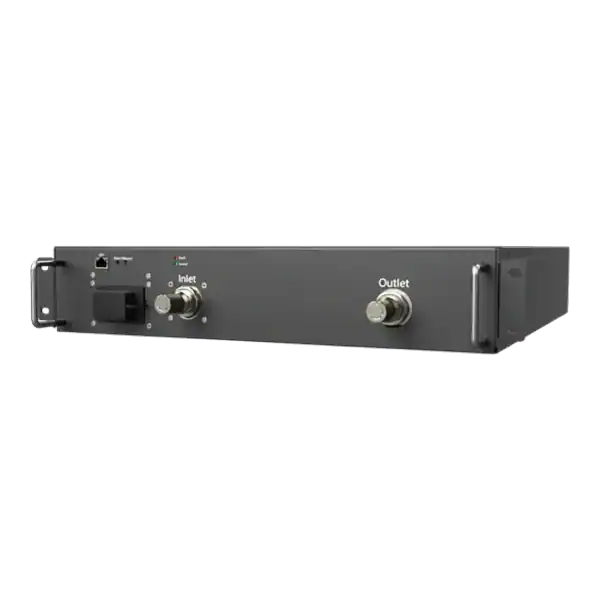
Ask for the electrical single-line responsibility boundary, protection and isolation method, cooling design basis, alarm path, maintenance plan and restart procedure. Liquid-cooled installations also need leak detection, water quality or coolant control, pumps, heat rejection and a safe response to lost flow.
Internet bandwidth is rarely the largest requirement for mining. But stable low-latency routing affects stale and rejected shares. Confirm diverse routes where promised, pool failovers, network segregation and secure remote access. Miner administration should not be exposed directly to the public internet.
Resilience claims must be specific. A generator does not prove uninterrupted mining if it cannot carry the cooling system, has limited fuel, needs manual transfer or is not permitted to operate continuously. Ask what is actually supported and tested.
Review Insurance, Ownership and Exit Rights
The contract should identify each miner by serial number, confirm that ownership remains with the customer and explain liens or rights arising from unpaid charges. Verify the declared insurance scope, valuation basis, excess, exclusions and claim process rather than assuming the word insured guarantees full replacement.
Set out the notice, account settlement, shutdown, preparation, collection, packaging, carriage and storage process. A theoretical termination right has little value if the provider can withhold equipment under unclear charges or no removal timetable exists.
Consider provider failure, facility closure and relocation. Ask who pays relocation, whether the customer can collect through an authorised carrier and how configuration and wallet information are removed before the machine leaves.
Decide Whether the Hosting Contract Is Dependable
When the Service Makes Sense
The service makes sense when the facility can show a consistent measurement boundary, customer-level evidence, competent electrical and cooling operation, defined repair authority, documented insurance and a workable removal route.
Commercial terms should remain understandable under an outage, miner fault, curtailment event, late payment and contract end, not just during normal operation.
When to Pause
Pause when uptime has no definition, exclusions are unlimited, the provider needs custody of payout credentials, serial ownership is unclear or access to historical data depends entirely on goodwill.
Do not send equipment until the final site, tariff, siting charge, minimum term, repair process and exit cost are written into the agreement.
Common Hosting Reliability Mistakes
Comparing providers by an uptime percentage with different measurement boundaries.
Treating building power availability as proof that every worker submitted accepted shares.
Ignoring planned maintenance, curtailment and customer-fault exclusions.
Giving a provider unnecessary control of the payout wallet.
Assuming a repair acknowledgement is a return-to-service commitment.
Accepting insurance without checking value, excess and exclusions.
Signing a minimum term without a priced and practical removal process.
Build a one-page service schedule with the exact model, quantity, power profile, location, price, measurement rule, exclusions, repair authority, credit and exit route. If the provider cannot complete it, the headline offer is not ready for comparison.
Frequently Asked Questions
How Should You Define What Hosting Reliability Actually Means?
A facility can have electrical supply while a particular miner is offline, hashing below specification or submitting rejected work. Conversely, a miner can be healthy while a pool endpoint is unavailable.
How Do You Calculate Uptime from a Written Measurement Boundary?
Choose a monthly measurement period and define scheduled operating minutes. Deduct only the exclusions stated in the contract.
How Do You Examine Repair Capacity and Decision Authority?
The repair process starts with triage. Record who may reboot, change pools, install firmware, alter a power profile, remove a machine from service or open it.
How Do You Decide Whether the Hosting Contract Is Dependable?
The service makes sense when the facility can show a consistent measurement boundary, customer-level evidence, competent electrical and cooling operation, defined repair authority, documented insurance and a workable removal route.
What Are the Common Hosting Reliability Mistakes?
Build a one-page service schedule with the exact model, quantity, power profile, location, price, measurement rule, exclusions, repair authority, credit and exit route. If the provider cannot complete it, the headline offer is not ready for comparison.
Key Points to Remember
ASIC hosting reliability is a chain of measurable outcomes: suitable power and cooling, worker-level performance, rapid fault detection, controlled repairs, useful records and a workable exit. Translate every headline promise into a definition, evidence source, exclusion and remedy. The strongest provider is not the one with the largest uptime number. But the one whose contract and operating records make the number reproducible.
Next Steps
Review The Mining Shop UK’s hosting service and hosting terms, then ask for a site-specific schedule showing tariff, siting charges, uptime measurement, repair authority and removal terms before committing equipment.
Define uptime at worker or accepted-hashrate level, not merely as power being available at the building. Separate facility outages, planned maintenance, grid curtailment, pool faults, miner faults and customer instructions before comparing providers.
Darren Waggott is the visionary Founder and CEO of The Mining Shop UK, with over a decade of leadership in the cryptocurrency mining sector. Renowned for driving innovation, Darren has built a company dedicated to providing high-quality ASIC miners and comprehensive hosting services. His forward-thinking approach places The Mining Shop UK at the forefront of the industry.
Membership helps us protect the discussion from spam and keep answers useful.
ASIC MINING SUPPORT
Need Help Choosing an ASIC Miner?
Tell us what you want to mine, your electricity cost and where the machine will run. We can help you compare hardware, power requirements, hosting and repairs.
We use necessary cookies to run the shop and optional analytics cookies to understand how visitors use the site and improve shopping and checkout. You can accept analytics, use only necessary cookies, or choose settings. You can change your choice at any time.
Functional
Always active
The technical storage or access is strictly necessary for the legitimate purpose of enabling the use of a specific service explicitly requested by the subscriber or user, or for the sole purpose of carrying out the transmission of a communication over an electronic communications network.
Preferences
The technical storage or access is necessary for the legitimate purpose of storing preferences that are not requested by the subscriber or user.
Statistics
The technical storage or access that is used exclusively for statistical purposes.The technical storage or access that is used exclusively for anonymous statistical purposes. Without a subpoena, voluntary compliance on the part of your Internet Service Provider, or additional records from a third party, information stored or retrieved for this purpose alone cannot usually be used to identify you.
Marketing
The technical storage or access is required to create user profiles to send advertising, or to track the user on a website or across several websites for similar marketing purposes.





Join the ASIC Mining Discussion
Members can read and join the discussion
Log in to read comments from other miners. Create a free account if you would like to ask a question or share your experience.
Membership helps us protect the discussion from spam and keep answers useful.